- Font size
- PJM translator
- UniLodz accessibility
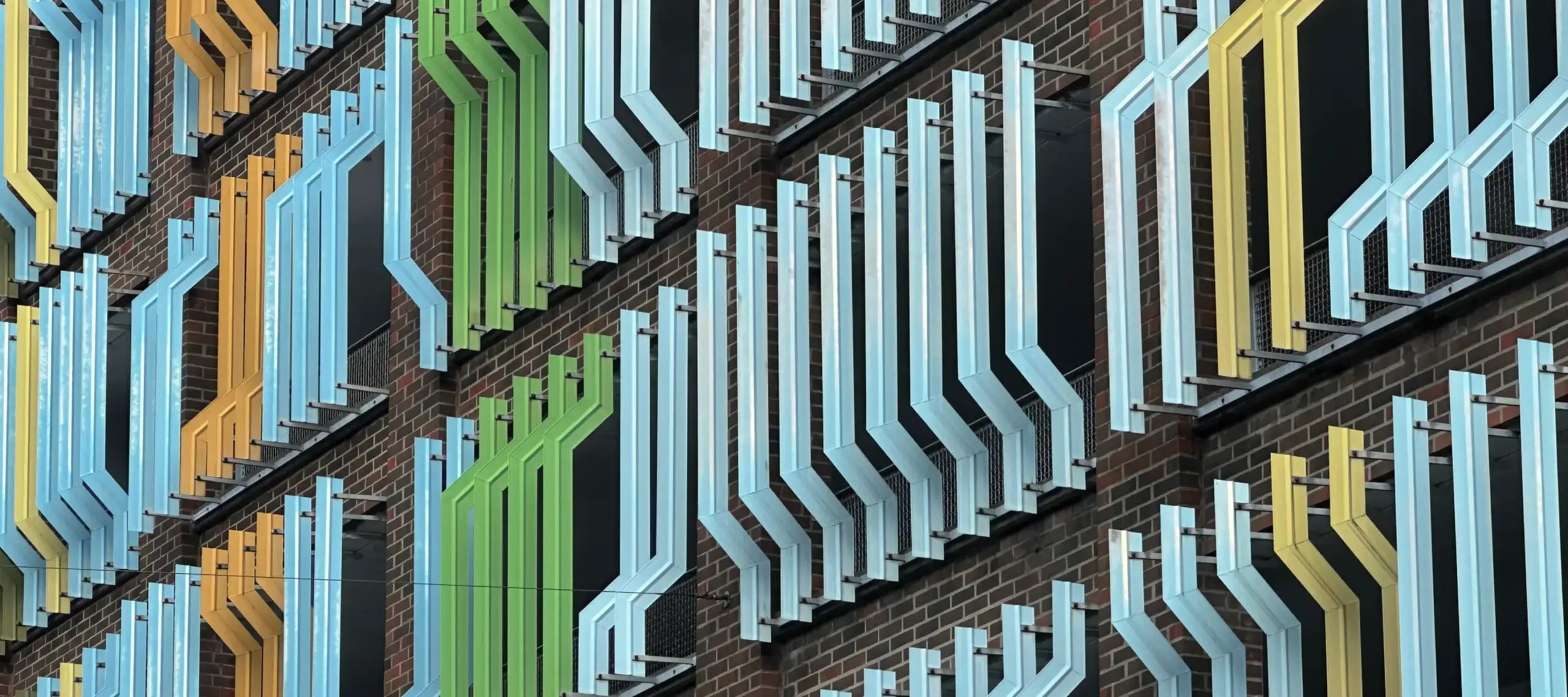
UNiCalność
UNiCalność/UNiCality
"UNiCality" is the result of three five-day student study visits to Cork, Malmö, and Rotterdam. Participants – representing various disciplines (art history, pedagogy, journalism, and others) – worked in international teams to create photographic and textual portraits of the places they visited.
The work involved not only photographing but also taking field notes and exchanging cultural experiences with the local community. After returning from the visits, online and hybrid seminars were held, during which participants analyzed the collected materials, refined the curatorial concept, and prepared texts accompanying the exhibition.
As part of the "UNiCality. Exhibition of Student Photographic Works" project, implemented by the Faculty of Philosophy and History of the University of Lodz within the UNIC (European University of Post-Industrial Cities) network, a series of three five-day study visits to the alliance's partner cities took place. The trips took place between June and October 2025. Six students, selected through open recruitment, participated, representing various fields of study (art history, pedagogy, journalism). The participants were supervised by prof. Aneta Pałowska, dr Adam Drozdowski, and dr Alicja Piotrowska. The aim of the project was to prepare an interdisciplinary photographic exhibition showcasing the culture and contemporary life of the cities where UNIC partner universities operate. Each student duo explored the host city through photographs, field notes, and cultural reflections collected during the trip. This material was the basis for creating a series of reportage photographs showing local urban contexts from the perspective of young artists.
We assume that the project will be continued in the coming years in the form of new editions of photographic exhibitions and joint publications and curatorial workshops, developing cooperation within the thematic line UNIC Arts, Culture & Creativity (UNICART)
![[Translate to English:] Mural Rotterdam](/fileadmin/Projekty/UNiCalno%C5%9B%C4%87/pliki/20250912-DSC08796.jpg)
![[Translate to English:] Hala Marina Cork](/fileadmin/Projekty/UNiCalno%C5%9B%C4%87/pliki/DSC_6890.jpg)
![[Translate to English:] UCC Cork](/fileadmin/Projekty/UNiCalno%C5%9B%C4%87/pliki/DSM00241.png)
![[Translate to English:] Van Nelle Rotterdam](/fileadmin/Projekty/UNiCalno%C5%9B%C4%87/pliki/nogifabryka.JPG)
![[Translate to English:] Port Cork](/fileadmin/Projekty/UNiCalno%C5%9B%C4%87/pliki/DSC_6926.jpg)
![[Translate to English:] Uniwersytet Malmö](/fileadmin/Projekty/UNiCalno%C5%9B%C4%87/IMG_2621.jpg)
Cork
During our week-long stay in Cork, we met many people and had the opportunity to hear their perspectives on the changes taking place throughout the city. It was a huge surprise to us that with each day spent in Cork, we saw more and more similarities between the city and our hometown of Łódź! Cork, like Łódź, is a post-industrial city. On the outskirts, you'll find numerous industrial buildings, some dating back to the 19th century. Their architectural style and red brickwork are strikingly reminiscent of Łódź's textile mills and alcohol bottling plant, now known as Manufaktura, Geyer Gardens, or Monopolis. Many of these buildings in Cork have also undergone revitalization, serving as apartments, modern office centers, and shopping malls, among other uses.
![[Translate to English:] Cork słońce](/fileadmin/Projekty/UNiCalno%C5%9B%C4%87/pliki/DSM00934.png)
![[Translate to English:] 1](/fileadmin/Projekty/UNiCalno%C5%9B%C4%87/pliki/DSC_7324.jpg)
![[Translate to English:] 3](/fileadmin/Projekty/UNiCalno%C5%9B%C4%87/pliki/DSC_7915.jpg)
![[Translate to English:] 2](/fileadmin/Projekty/UNiCalno%C5%9B%C4%87/pliki/DSC_7840_1.jpg)
![[Translate to English:] 5](/fileadmin/Projekty/UNiCalno%C5%9B%C4%87/pliki/DSM01131_1.png)
![[Translate to English:] 8](/fileadmin/Projekty/UNiCalno%C5%9B%C4%87/pliki/obraz-20251008-094830-fab61560.jpeg)
![[Translate to English:] 6](/fileadmin/Projekty/UNiCalno%C5%9B%C4%87/pliki/DSM01175.png)
![[Translate to English:] 7](/fileadmin/Projekty/UNiCalno%C5%9B%C4%87/pliki/DSM01460.png)
![[Translate to English:] 4](/fileadmin/Projekty/UNiCalno%C5%9B%C4%87/pliki/DSM00905.png)
![[Translate to English:] budynek Cork](/fileadmin/Projekty/UNiCalno%C5%9B%C4%87/pliki/DSM00819_1.png)
One of the symbols of Cork's post-industrial rebirth is Horgan's Quay – a building complex completed in 2022 that combines some of the preserved original warehouses with newly incorporated development. Another prime example is a former warehouse – now the bustling Marina Market, an art and food space filled with vendors offering cuisine from around the world. Unfortunately, some of the abandoned factories and warehouses, just like in Łódź, still haunt with broken windows. Another place where we felt a similar atmosphere to Łódź was the English Market. It's a covered market space filled with the aromas and bustle of the Green Market. This visit confirmed our belief that Cork residents – like those in Łódź – value the opportunity to buy fresh produce directly from local vendors. We share not only the similar paths that Łódź and Cork have taken to transform from factory towns into centers of culture and new technologies, but also the similar challenges these cities currently face. These include the housing crisis, which seems to be even more acute in Cork. The issue was raised by almost everyone we met. We even witnessed a street protest aimed at raising awareness of the issue among residents.
Julia Fiks & Julia Kwiatkowska
Malmö
The city of Malmö in Sweden is a unique city that combines Swedish culture and history, but is also heavily inhabited by immigrants. This, along with Malmö's proximity to the Danish capital, Copenhagen, adds a multifaceted social dimension to the city. A particularly interesting element was the large presence of cyclists. Special bicycle parking spaces near the university buildings were full, and people were more likely to walk, run, or simply spend time actively outdoors, a significant difference compared to Poland, where cars still dominate city centers.
![[Translate to English:] Latarnia morska Malmö](/fileadmin/Projekty/UNiCalno%C5%9B%C4%87/IMG_3093.jpg)
![[Translate to English:] Zamek Malmohus](/fileadmin/Projekty/UNiCalno%C5%9B%C4%87/IMG_2627.jpg)
![[Translate to English:] Budynek pofabryczny](/fileadmin/Projekty/UNiCalno%C5%9B%C4%87/IMG_3042.jpg)
![[Translate to English:] Molo Malmö](/fileadmin/Projekty/UNiCalno%C5%9B%C4%87/IMG_2745.jpg)
Despite the city's post-industrial character, Malmö is situated by the sea, which adds to its coastal charm. Architecturally, the city certainly combines modernism with history. In the city center, you'll find Art Nouveau townhouses and historic residences, while nearby, you can admire modern glass and concrete buildings. One of the city's most important landmarks is the harbor itself, where Malmö's famous and popular sea saunas stretch along the shore. A must-see is Malmö Castle – the former royal residence, now converted into a museum and art gallery. The city also houses a branch of the Moderna Museet, headquartered in Stockholm. Malmö also boasts street art, including murals and sculptures, often found in tourist-friendly locations, further enhancing the artistic atmosphere.
Gabriela Brodziak
![[Translate to English:] Studnia Malmö](/fileadmin/Projekty/UNiCalno%C5%9B%C4%87/IMG_3076.jpg)
![[Translate to English:] port Malmö](/fileadmin/Projekty/UNiCalno%C5%9B%C4%87/IMG_2574.jpg)
A better-thought-out home.
The starting point for this diptych was a reflection on what is most commonly associated with Sweden. The artist chose the Swedish retail chain IKEA. This work is a critical statement
directed at furniture store advertisements, which portray home as a safe and warm space where people are always smiling and their relationships are exemplary. Nowadays, there is a growing conversation about childhood traumas born in the places where we grow up. Many of us go through life repairing what was broken by the physical or psychological abuse we experienced. The second critical layer is the portrayal of globalization in the photographs. Although these photos were taken in Malmö, and the posing couple are native Swedes, the visual unification and availability of the same products mean that this photo could have been taken anywhere else in the world. These photos are therefore an attempt to regain authenticity in the presentation of domestic space, revealing its less ideal, yet truly human face, and at the same time drawing attention to the blurring of cultural differences and the unification of aesthetics that make contemporary spaces, thanks to global corporations, similar regardless of location.
![[Translate to English:] LPD Malmö](/fileadmin/Projekty/UNiCalno%C5%9B%C4%87/LPD_1_100x70.jpg)
![[Translate to English:] LPD Malmö](/fileadmin/Projekty/UNiCalno%C5%9B%C4%87/LPD_2_100x70.jpg)
Jakriborg. Longing for heritage.
"One immediately thinks of the demolition of old parts of cities in record years, with even more devastating consequences than in those European countries devastated by war. Just as today, antiquities were not particularly sought after then. This can easily be seen by looking at photos of Swedish urban developments lost forever. [...] In the years 1960-1970, forty percent of residential buildings built before 1900 were demolished." – F. Kullberg, The War on Beauty. A Report on the Disfigurement of Sweden
This quote, which became a kind of motto for the photojournalism, powerfully illustrates the Swedish approach to heritage. Sweden had always seemed very modern to the photographer, but it was Kullberg's book that revealed its extreme nature in this regard. The thoughts she retained after reading it influenced her search for the subject matter. Even before leaving for Sweden, she found Jakriborg on maps – a settlement near Malmö, built in the 1990s by Jan Berggren and Krister Berggren. This place captivates with its architecture, which is meant to imitate a medieval village. The internet described this place as ideal for taking photos, but also as a lifeless place.
The author sees this urban design as a longing for a heritage that has been and continues to be destroyed in the name of modernity. A heritage that is, however, distorted and globalized, because instead of reflecting local style, it invokes Hanseatic principles.
Despite its similarity, a historicizing place doesn't convey the same message as a historical site, and so the people who visit it pick up on its strangeness – winding asphalt streets, walls that seem too straight, gaps between the city walls and the buildings, planned for parking spaces, an overly clean style and lack of a natural transition between the city center and the fields, and above all, the absence of people who, if it weren't a modern development, would flock to this place, ultimately giving it character. Jakriborg thus becomes a symbol of the paradox of modernity – a longing for history that has been replaced by its own imitation.
Paulina Zawada
![[Translate to English:] Jakriborg. W tęsknocie za dziedzictwem](/fileadmin/Projekty/UNiCalno%C5%9B%C4%87/Projekt_bez_nazwy__1_.jpg)
Rotterdam
![[Translate to English:] mural Rotterdam](/fileadmin/Projekty/UNiCalno%C5%9B%C4%87/pliki/20250912-DSC08806.jpg)
![[Translate to English:] Rotterdam](/fileadmin/Projekty/UNiCalno%C5%9B%C4%87/pliki/20250912-DSC08868.jpg)
![[Translate to English:] all caps Rotterdam](/fileadmin/Projekty/UNiCalno%C5%9B%C4%87/pliki/20250915-DSC08887.jpg)
![[Translate to English:] Rotterdam](/fileadmin/Projekty/UNiCalno%C5%9B%C4%87/pliki/20250915-DSC08903.jpg)
![[Translate to English:] mural](/fileadmin/Projekty/UNiCalno%C5%9B%C4%87/pliki/20250912-DSC08843.jpg)
![[Translate to English:] znak](/fileadmin/_processed_/f/c/csm_20250912-DSC08827_095c60988b.jpg)
Both Rotterdam and Łódź are cities indelibly marked by the legacy of the industrial revolution and the trauma of war. Almost completely razed to the ground in 1940, Rotterdam was rebuilt according to modernist principles. Rotterdam's multiculturalism is its foundation, and the fact that it is home to over 170 nationalities is reflected in its district structure. Its China Town is the largest in Europe, yet its proximity to the city center fosters a constant intermingling of cultures and ideas. Much of the urban fabric was designed as a welcoming and inclusive space, where modernity does not exclude human warmth. Native residents are remarkably open to dialogue, as long as visitors respect their culture. The ubiquitous bicycles, which completely dominate the streetscape, are a symbol of modern mobility. This underscores the dynamism of city life and the Dutch respect for the environment. All of this stands in striking contrast to the ever-developing Łódź.
Małgorzata Francuz
![[Translate to English:] Ulica Rotterdam](/fileadmin/Projekty/UNiCalno%C5%9B%C4%87/pliki/ulica.jpg)
![[Translate to English:] Gosia lustro](/fileadmin/Projekty/UNiCalno%C5%9B%C4%87/pliki/gosia_lustro.png)
![[Translate to English:] Mochi shop](/fileadmin/Projekty/UNiCalno%C5%9B%C4%87/pliki/mochi.jpg)
![[Translate to English:] Twopy](/fileadmin/Projekty/UNiCalno%C5%9B%C4%87/pliki/twopy.jpg)
![[Translate to English:] okno](/fileadmin/Projekty/UNiCalno%C5%9B%C4%87/pliki/okno.jpg)
![[Translate to English:] Ulica](/fileadmin/_processed_/b/f/csm_ulicarower_%E2%80%94_kopia_9722c621b6.jpg)

The project „We are UNIC!” is funded by the European Union under the programme „Support for European University Alliances”. NAWA project FERS.01.05-IP.08-0219/23, EU’s funding amount PLN 62,705,297.60.
UNIVERSITY OF LODZ
Narutowicza 68, 90-136 LODZ
fax: 00 48 42/665 57 71, 00 48 42/635 40 43
NIP: 724 000 32 43


Projekt Multiportalu UŁ współfinansowany z funduszy Unii Europejskiej w ramach konkursu NCBR