

Project: Natural Allies in the Protection of Urban Greenery: Research on the Occurrence of Entomopathogenic Fungi as Biological Antagonists of Pests
The project was supervised by Dr Monika Nowak-Marczyk and Dr Marta Nowak-Lange from the University of Lodz, in cooperation with Prof. Silvija Černi from the University of Zagreb. Students from the University of Lodz – Maria Szpakowska and Maciej Krasowski – as well as a student from the University of Zagreb, Alina Gojšić, were also actively involved in the project. The project partner was the Department of Environmental Management of the City of Lodz Office, which supported activities related to the analysis of urban green areas and the implementation of the fieldwork component of the project.
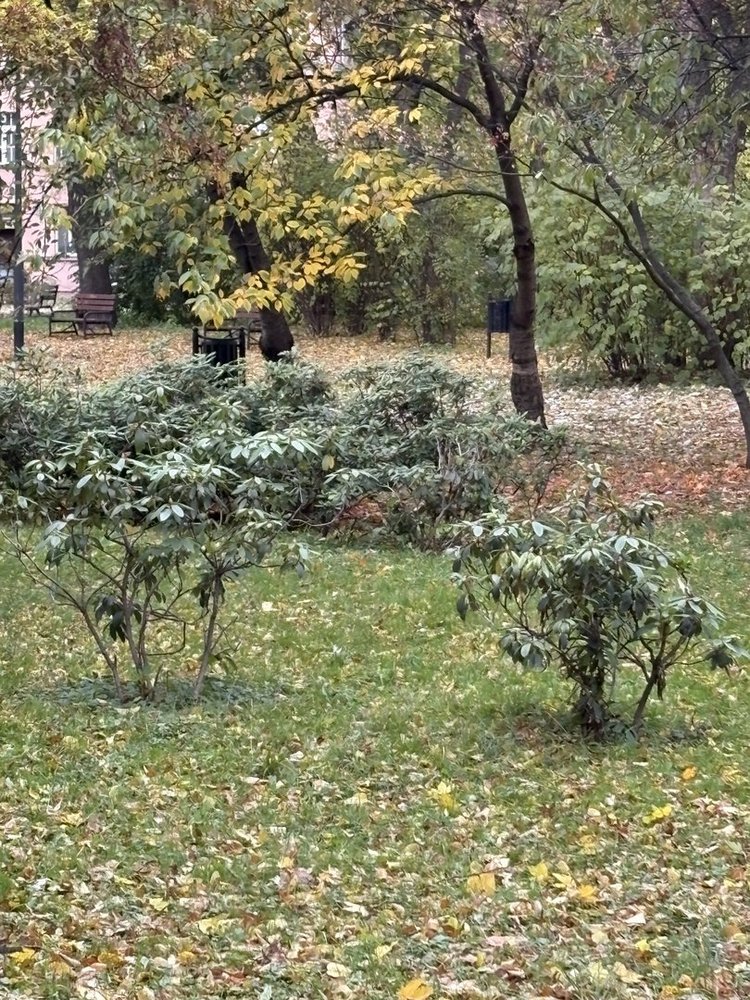
The research involved analysing soil samples collected from 10 locations across Lodz, including Staromiejski Park, Helenów Park, Stanisław Staszic Park and Jan Matejko Park. The samples were collected in both autumn and spring, as seasonality and environmental conditions may influence the presence and diversity of entomopathogenic fungi in urban ecosystems.
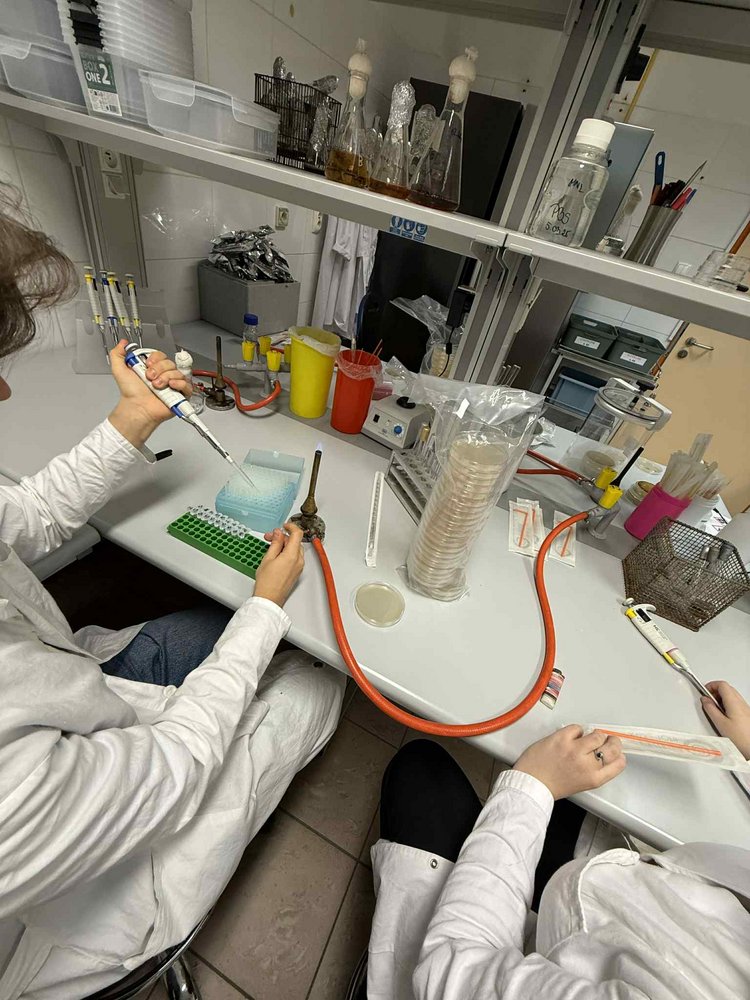
The collected samples were analysed using two complementary methods. In the first approach, prepared soil dilutions were cultured on specialised microbiological media containing additives that limit the growth of bacteria and certain other microorganisms, thereby facilitating the isolation of potentially present entomopathogenic fungi. After an incubation period, the number of fungal colony-forming units was determined, and isolates showing characteristics typical of fungi capable of reducing pest populations were selected.
The second method involved the use of Tenebrio molitor larvae, which were placed directly in the analysed soil samples. This made it possible to verify whether microorganisms present in the environment were capable of infecting insects. Larvae covered with mycelium were then transferred to microbiological media, and the obtained isolates were subjected to further analyses and tests confirming their entomopathogenic potential.
A total of 25 isolates with characteristic morphology were obtained, thus fulfilling the objectives of subsequent stages of the project. Two of the most promising isolates from autumn samples and two from the spring collection were selected for further analysis.
Among the autumn isolates, fungi belonging to the genera Metarhizium and Cordyceps were initially identified. Genetic analyses confirmed that selected strains belonged to the species Metarhizium robertsii and Cordyceps fumosorosea. In the case of isolates obtained from spring samples, fungi resembling representatives of the genera Metarhizium and Beauveria were identified based on their macroscopic features.
The study also revealed differences between the samples collected in autumn and spring – both in terms of the number of fungal colonies obtained and the diversity of isolates. The most notable result was obtained for soil sample no. 5 from Helenów Park, where a high abundance of entomopathogenic fungi belonging to the genus Metarhizium was detected.
Importantly, no growth of entomopathogenic fungi was observed in one of the autumn locations (no. 6) and one spring location (no. 8), which may indicate local environmental differences influencing the presence of these microorganisms in the soil.
The project also contributed to the development of international cooperation and the exchange of experience between teams from Poland and Croatia. On 17–20 March, the laboratories of the Faculty of Biology and Environmental Health, University of Lodz were visited by Alina Gojšić, a student from the University of Zagreb. During her visit, she was introduced to the methods used in the project for isolating and identifying entomopathogenic fungi.
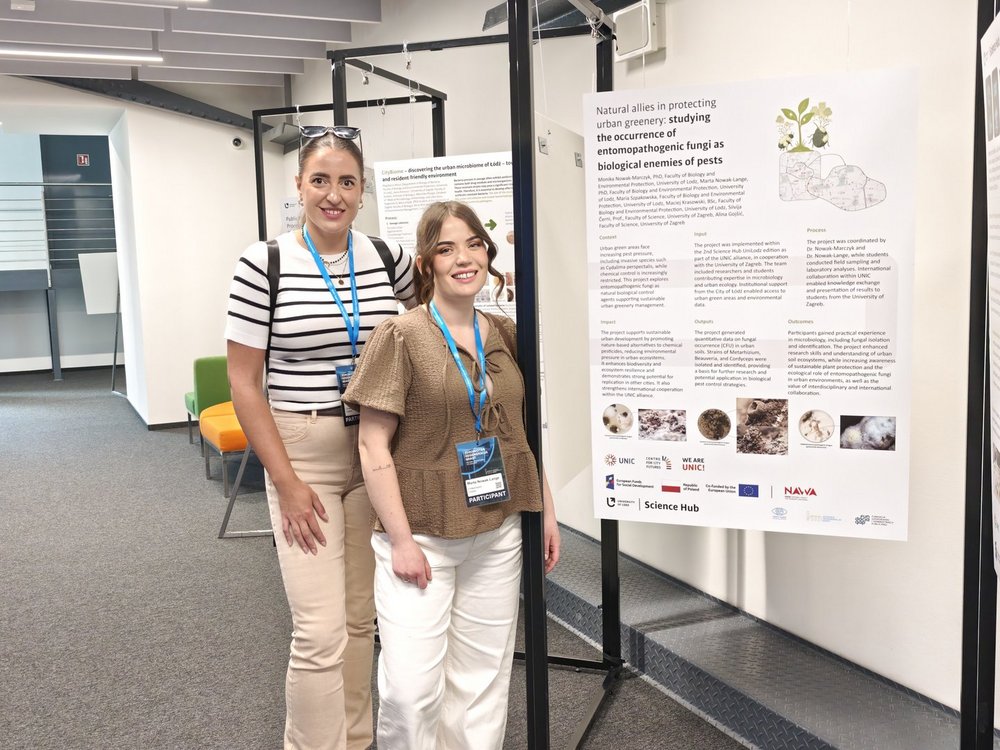
The research results were also presented at the Urban Regeneration Congress in Lodz, held on 5–6 May. The findings may contribute in the future to the development of more environmentally friendly methods of protecting urban greenery and reducing the use of chemical plant protection products. As the researchers emphasise, cooperation with the Department of Environmental Management of the City of Lodz Office demonstrates the importance of combining scientific research with a practical approach to the protection and management of urban greenery.
The project carried out within Science Hub UniLodz shows that urban ecosystems may harbour natural allies that support plant protection and biodiversity in urban spaces.
Science Hub UniLodz
Science Hub UniLodz (SH) is a cooperation platform of the University of Lodz that brings together students, academic experts and external partners, supporting them in the implementation of innovative research and applied projects. Teams operating within SH jointly address real scientific challenges submitted by partner organisations.
More about Science Hub (visit the Science Hub website).
Partners of the poster session and panel discussion include: International Urban Regeneration Congress, Open Eyes Economy Summit (OEES), GAP Foundation, University of Lodz Interdisciplinary Centre for Urban Studies, University of Lodz Brand Communication Centre (poster design: Hanna Swaczyna), University of Lodz Internationalisation Centre, University of Lodz Centre for External Relations and Social Responsibility.
The Science Hub UniLodz – UNIC Edition competition is carried out within the project “We are UNIC!”. The “We are UNIC!” project is funded by the European Union under the programme “Support for European University Alliances”, NAWA project FERS.01.05-IP.08-0219/23, amount: PLN 62,705,297.60.