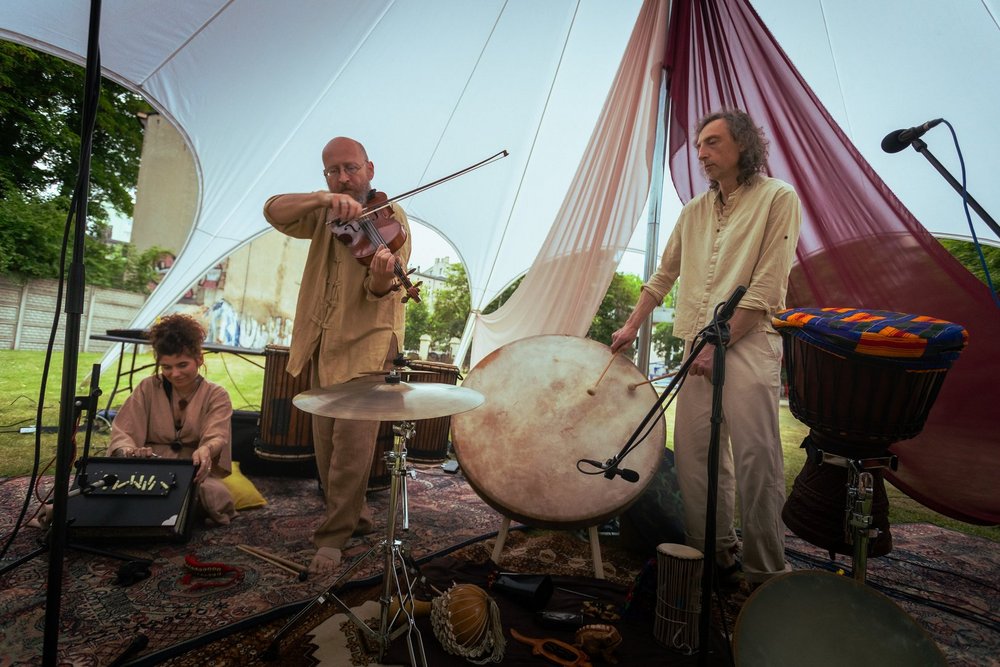
Exhibitions, festivals, concerts, open-air cinema screenings, author meetings, educational events and discussions devoted to important contemporary issues ensured that the historic residence and the surrounding park remained vibrant throughout the year. The former industrialists’ residence attracted not only students and employees of the University of Lodz, but also residents of Lodz and visitors from outside the city. Through a wide range of initiatives, the venue became a space for dialogue, inspiring encounters and the exchange of experiences, connecting the academic and artistic communities with local residents.
Here is a look back at the most important events and initiatives that helped the palace play a significant role on Łódź’s cultural and academic scene during the 2025–2026 academic year.
History Accessible to Everyone
Established a year and a half ago, the University of Lodz Centre for Organising Cultural Events and Conferences initiates and delivers cultural projects, supports conference organisation and ensures that University of Lodz facilities serve the academic community, city residents and the university’s partners.
One of the Centre’s key objectives is to open the University of Lodz to the local community and demonstrate that history need not remain confined within a museum display case. The Biedermann’s Palace, its architecture and the stories of its former residents became a starting point for meetings, discussions and the shared exploration of Lodz’s past.
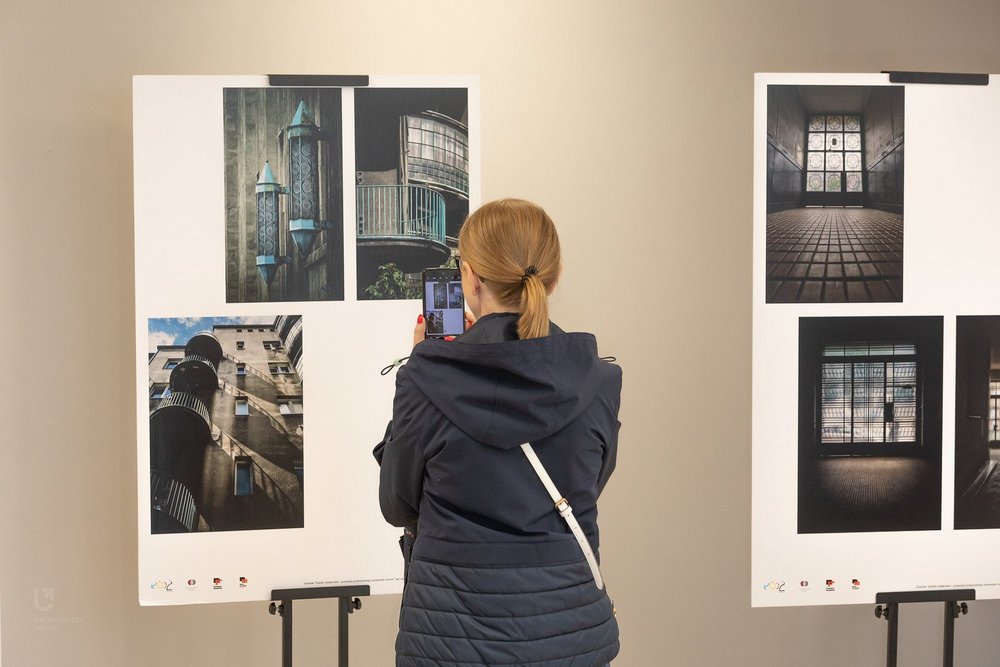
In 2025, such an opportunity was created through the European Heritage Days programme held at the Biedermann’s Palace as part of the Festiwal Detalu Architektonicznego DetalFest [Festival of Architectural Detail DetalFest]. The programme included a photography exhibition devoted to interwar architecture and a meeting with Prof. Krzysztof Stefański. Maria Nowakowska, a graduate of the University of Lodz VIP Alumni programme and Director of DetalFest, delivered a lecture on the architectural details of the residence, combined with a guided tour of the building and an opportunity to examine the discussed elements at close range.
The idea of opening the palace to a wider audience was also reflected during the Night of Museums. Crowds of visitors admired the representative interiors, learned about the history of the Biedermann family and discovered the story of the University of Lodz. The historic building was presented not only as the former residence of an industrial family but also as a place that continues to play an important role in the life of the city.
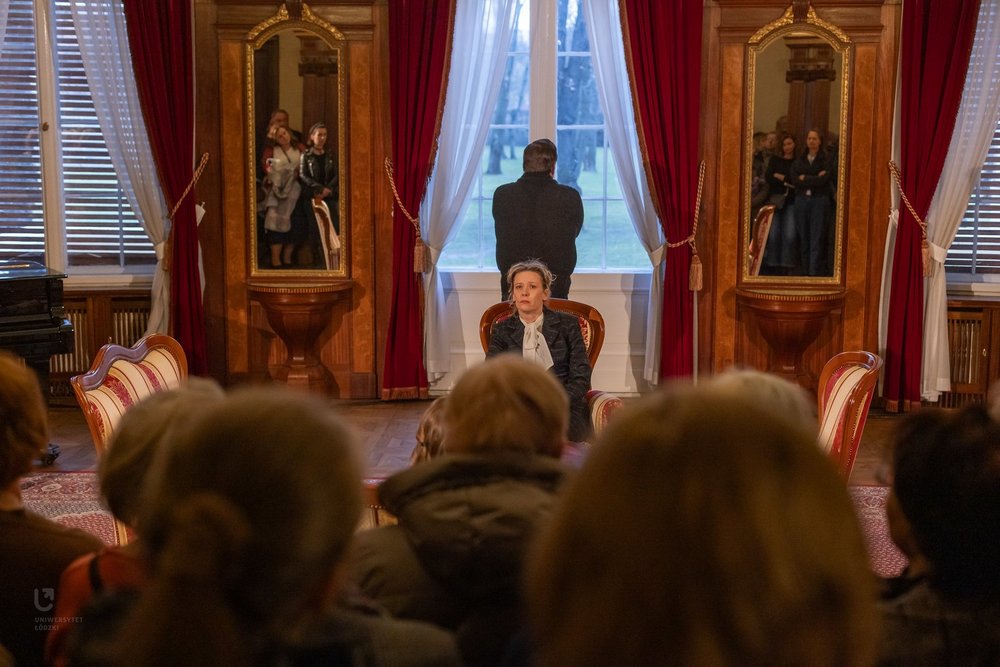
Events combining art with the history of the palace and its former residents were particularly meaningful. To mark International Theatre Day, the University of Lodz and the Powszechny Theatre in Lodz prepared the theatrical installation "Biedermannowie. Powrót do domu” [The Biedermanns. Homecoming]. Inspired by a play by Anna Wakulik, the production symbolically restored the story to the place where its dramatic finale unfolded. The authentic interiors strengthened both the historical and emotional dimensions of the performance.
The Biedermann’s Palace once again became part of the programme celebrating the anniversary of the city of Lodz. The occasion featured Dr Paweł Hikisz’s photography exhibition “Podziemna Łódź” [Underground Lodz], a nature walk entitled ”Drzewa w mieście – jak je rozpoznać i zrozumieć” [Trees in the City: How to Identify and Understand Them], and guided tours of the historic interiors.
At the Intersection of Art and Science
Exhibitions and artistic-scientific projects formed an important element of the Centre’s activities. They addressed current issues and frequently offered the University of Lodz students and emerging artists an opportunity to present their own work.
The exhibition "Między dokumentacją a kreacją” [Between Documentation and Creation] was one of the first initiatives. It was prepared as the outcome of documentary photography classes for first-year students of the University of Lodz History of Art study programme. More than forty photographs were presented to the public. Their authors explored where documentation ends and individual interpretation of reality begins. For the students, the project offered an opportunity to experience the entire creative process, from taking photographs to presenting them publicly.
In April, the palace also became a space for encountering Czech culture. As part of the project “Czechy blisko Łodzi” [The Czech Republic Close to Lodz], initiated by the Honorary Consul of the Czech Republic in Lodz, Prof. Krzysztof Skotnicki, visitors could see Marzena Ewa Krajewska’s photography exhibition ”Moje czeskie impresje. Praga – miasto wyobrażone” [My Czech Impressions. Prague: The Imagined City]. The exhibition was complemented by poetry, music and the author’s reflections on her diplomatic experiences and fascination with Czech culture.
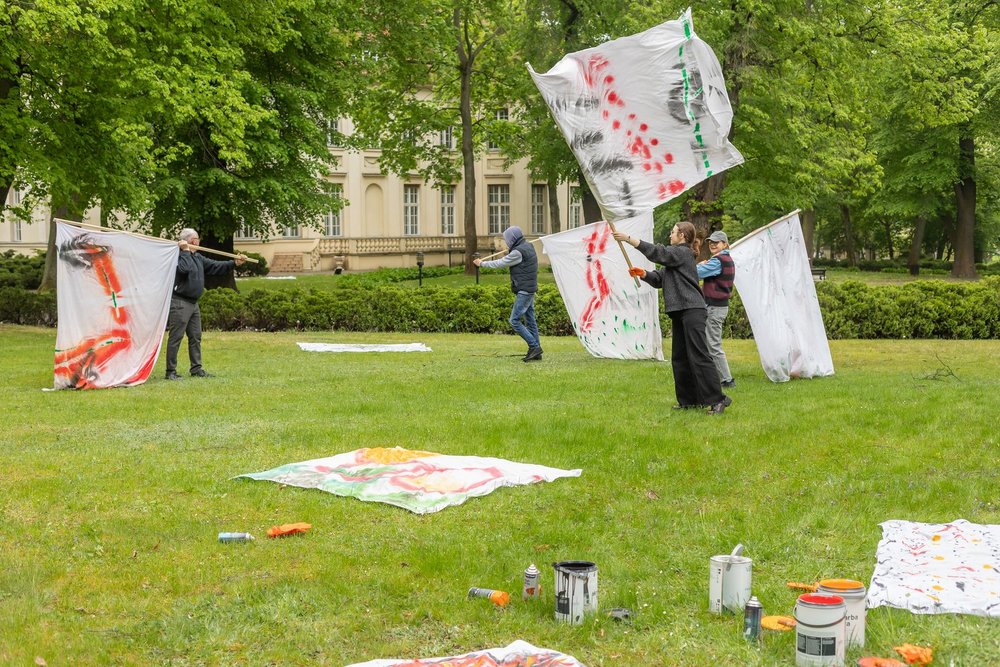
The programme also extended beyond the palace interiors into the surrounding park. The project "Chodź do parku… jest Twój!” [Come to the Park… It’s Yours!] brought together art, science and nature. Artistic installations created by artists and members of the University of Lodz community appeared among the greenery, while the project’s participatory character encouraged mindful engagement with the urban environment, relationship-building and renewed contact with nature.
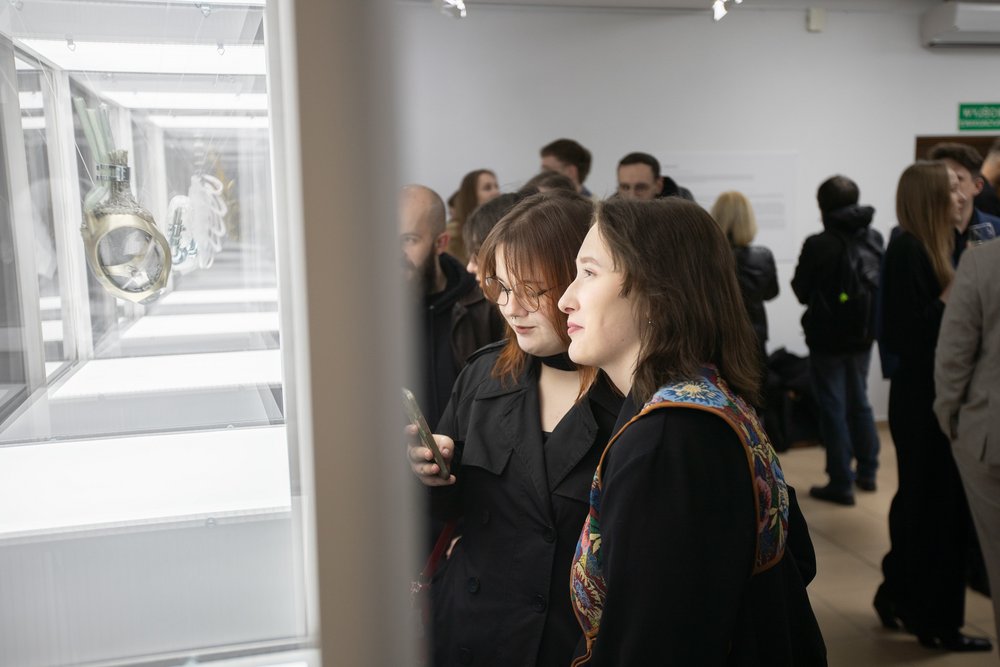
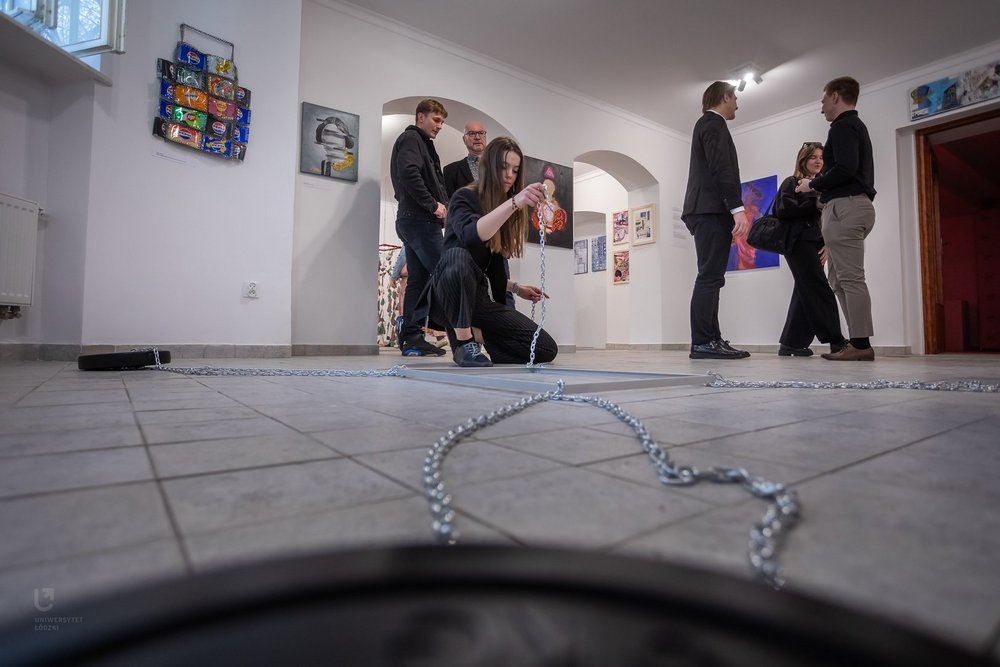
As part of its public engagement activities, the Centre made palace spaces available to research centres, institutes and groups associated with the University of Lodz. The exhibition "Piespektywa” [Dogspective] explored human-animal relationships, while the project "(Nie)dopasowane” [(Mis)Matched] emerged at the intersection of artistic practice and biological and social research. The post-plein-air exhibition„Radziejowice ’25” [Radziejowice ’25] showcased the creative work of participants of the Third Age University in Lodz.
An important example of cooperation between the University of Lodz and the Strzemiński Academy of Fine Arts Łódź was Klaudia Stańko’s exhibition “Tomorrow You”, which addressed transhumanism, the boundaries of humanity and the social and ethical consequences of technological development. Presented at Wozownia 1/5 Gallery, the exhibition was the result of the University of Lodz Award granted to the artist in the Prime Time 2024 competition. Discussions, workshops and student-led activities exploring transhumanism accompanied the exhibition.
The Student Science Club PARADYGMAT project "Na styku światów. Spotkanie sztuki z ekonomią” [At the Crossroads of Worlds. Where Art Meets Economics] brought together artists, economists, researchers and students from the University of Lodz, the Strezmiński Academy of Fine Arts and Lodz University of Technology. Issues related to production, markets, consumption, entrepreneurship and value were presented through paintings, objects and visual metaphors. The exhibition was accompanied by workshops, panel discussions, a debate on the ecological aspects of performance art and a lecture devoted to value in culture and economics.
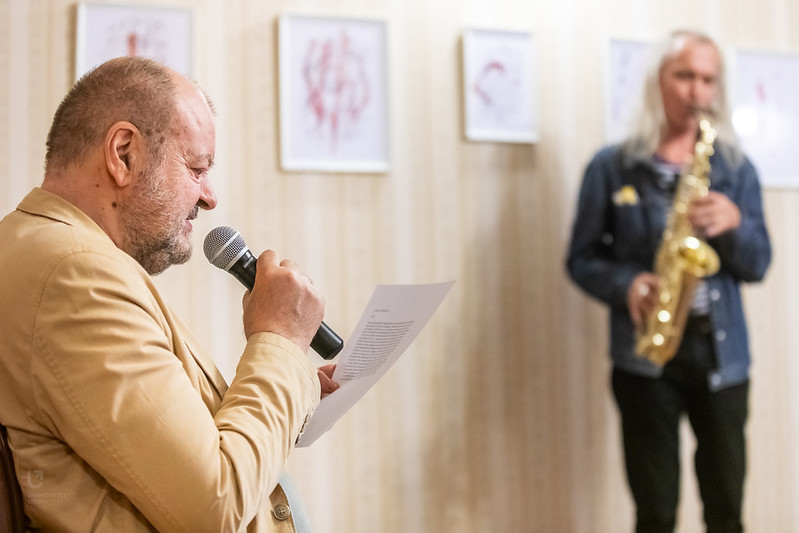
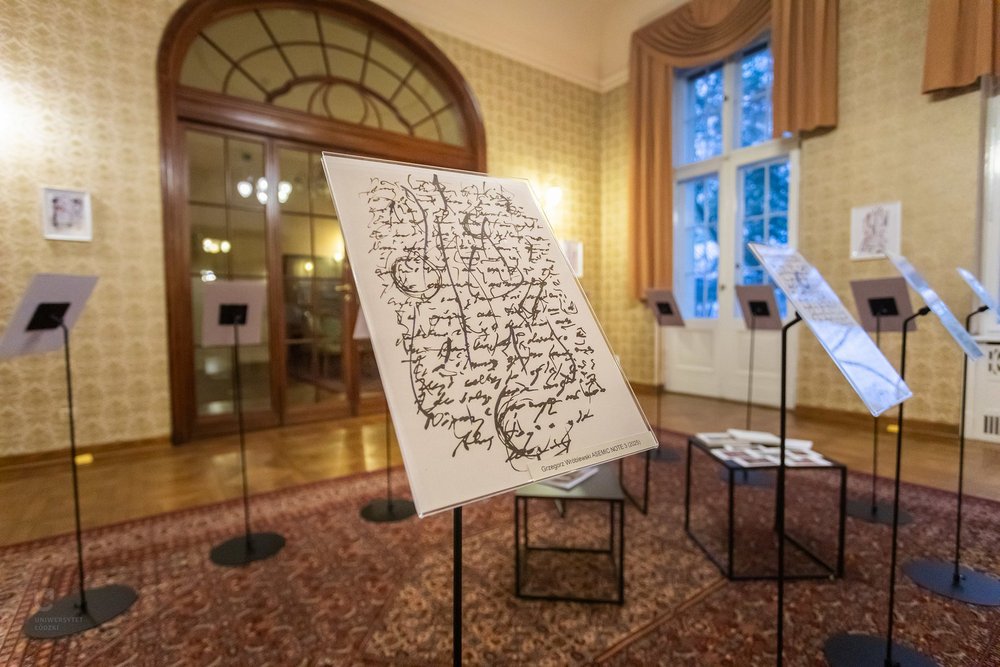
October brought events juxtaposing different artistic disciplines. The opening of Grzegorz Wróblewski’s exhibition “Asemic Writing – między kaligrafią a malarstwem” [Asemic Writing: Between Calligraphy and Painting] became a point of departure for discussions on asemic writing and the relationships between poetry, calligraphy, painting and sound.
The Palace at the Heart of Photography
The University of Lodz’s long-standing cooperation with Fotofestiwal reminded visitors of the initiative’s academic roots. The festival was originally founded by people associated with the University of Lodz and has since become one of the most important photography events in Central Europe.
During this year’s jubilee 25th edition of Fotofestiwal, the Biedermann’s Palace served as the festival’s main venue for ten days in June. Exhibitions were displayed throughout the building, from the basement to the attic. Integrated into the historic interiors, the exhibitions created a unique atmosphere. The programme included curator-led tours, meetings with artists, photography book presentations, debates and workshops, as well as discussions concerning the future of visual culture and the impact of artificial intelligence on photography. It is estimated that more than four thousand visitors came to the Biedermann’s Palace during the festival.
Literature, the City and Contemporary Challenges
The historic Fireplace Hall also hosted discussions devoted to literature. The series “Biedermann: - Czytałbym!” [Biedermann: I’d Read That!] was inaugurated with a meeting featuring Jerzy Jarniewicz, poet, essayist and translator, combined with the launch of his essay collection ”TRANS, czyli transfer, transgresja, translacja” [TRANS: Transfer, Transgression, Translation].
This year also saw the return of the series "Jarniewicz i Świerkocki pytają…” [Jarniewicz and Świerkocki Ask…]. In May, the guest was Prof. Urszula Zajączkowska, a botanist, poet, essayist and filmmaker. The discussion focused on plant communication, responses to environmental change, relationships between people and nature, and the ways in which science and poetry can complement one another in describing the world.
A different way of exploring the city was proposed by the project "Pogłosy miast / Resonant Cities – współsłyszenie postindustrialnej przeszłości i dźwiękowej przyszłości” [Resonant Cities – Listening Together to Post-Industrial Pasts and Sonic Futures], delivered within the Science Hub UniLodz – UNIC edition programme by the University of Lodz, University College Cork and the Association for New Culture and Education / W Y Gallery.
The project began with the meeting "Nagrania terenowe jako narzędzie poznania miasta” [Field Recordings as a Tool for Understanding the City]. The programme included discussions on documenting soundscapes, presentations of recordings, the spatial installation „Pole siłowe” [Force Field], and a concert by Joanna Szumacher and Justyna Anders-Morawska. Subsequent activities focused on aural histories, rhythmanalysis, soundscapes and graphic scores.
Issues related to new technologies also featured in the independent debate “Transhumanizm – kim się stajemy?” [Transhumanism: What Are We Becoming?], devoted to overcoming biological limitations and the ethical consequences of technological development. During the discussion ”O samotności i relacjach w erze sztucznej inteligencji” [On Loneliness and Relationships in the Age of Artificial Intelligence], participants reflected on how new technologies are transforming human bonds and communication. Can artificial intelligence provide emotional support? Does it facilitate relationships or deepen loneliness? These are questions increasingly present in everyday life.
Science and artistic creativity came together during the conference "100 lat radia: teksty, technologie, społeczności” [100 Years of Radio: Texts, Technologies, Communities], organised in cooperation with Radio Łódź. Researchers, journalists, artists and radio practitioners discussed the history of the medium, its contemporary transformations and possible future directions. On this occasion, one of the palace rooms hosted the sound installation "Sala radiowa” [Radio Room] by Justyna Banaszczyk, performing as FOQL, with a visual layer created by Darek Pietraszewski (Copy Corpo).
Film, Music Videos and Audiovisual Culture
Film and contemporary audiovisual culture occupied an important place in the programme throughout the past academic year.
During the Halloween edition of Ekstra Polówka, a screening of The Substance was combined with a night-time tour of the palace and stories about its history. The event attracted not only regular participants in lectures, exhibitions and concerts but also new audiences. It demonstrated that the history of a place can be told in many ways, including through film and popular culture.
In December, the Biedermann’s Palace hosted events connected with the PL Music Video Awards. During the Night of Polish Music Videos, audiences watched nominated productions presenting the most interesting works combining film, music, animation, choreography and new technologies. The programme was complemented by workshops and industry meetings devoted to artificial intelligence, film production, music and post-production.
Music at Biedermann’s and New Soundscapes
A permanent place in the calendar was occupied by the series “Muzyka u Biedermanna” [Music at Biedermann’s], organised for many years in cooperation with the Grazyna and Kiejstut Bacewicz Academy of Music in Lodz and showcasing the achievements of its students and academic staff. Monthly Thursday concerts provided young performers with opportunities to gain stage experience and offered audiences the chance to discover emerging artistic talent.
Alongside classical music, the programme featured “Interferencje” [Interferences], a series devoted to experimental music and sound art. The project was inaugurated by a concert by Tymek Papior. Subsequent editions featured artists from the Polish and Ukrainian experimental music scenes, including Antonina Nowacka, Katarina Gryvul, Paweł Kulczyński, Olga Anna Markowska and Lutto Lento. The series was organised by Radio Kapitał Association in cooperation with the University of Lodz.
Summer Cinema in the Garden
The University of Lodz once again became a partner of the TME Polówka Summer Film Festival. Together, we created the original section “OFFLINE”, presenting films that approached nature, freedom, loneliness, relationships and the need to escape the pace of everyday life from various perspectives.
Open-air screenings fostered social connections. Visitors came to the palace garden not only to watch films but also to spend summer evenings together. The screenings aligned perfectly with the idea behind the project "Chodź do parku… jest Twój!” [Come to the Park… It’s Yours!], which encouraged a mindful and shared use of the palace’s green spaces.
A Palace for the University Community
The Centre’s programme presented the University of Lodz as an institution that extends beyond lecture halls. Science met art, history engaged with the present and the academic community connected with local residents.
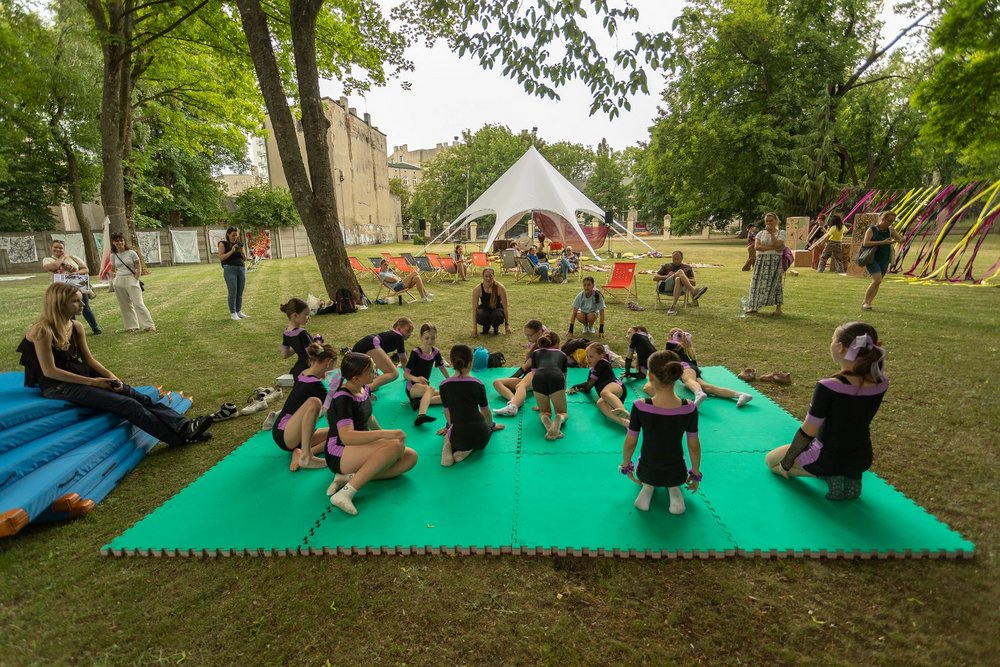
The palace and its gardens also helped strengthen the UniLodz community. During the outdoor Children’s Day celebration, students, university employees and their families spent time together and enjoyed attractions prepared for the youngest participants. The family-oriented nature of the event demonstrated that the University creates a space not only for learning and work but also for building relationships and celebrating together.
The past academic year confirmed that a historic palace can be more than a place of memory. It can also be a vibrant meeting space. Its history, architecture and atmosphere helped shape a programme through which the University of Lodz strengthened its community, supported young creators and remained closely connected with the residents of the city.
Text: Krzysztof Kowalewicz (Centre for Organising Cultural Events and Conferences, University of Lodz)
Photos: Maciej Andrzejewski (Centre for Brand Communications, University of Lodz)
More information about exhibitions and events can be found on the Culture at UniLodz website (in Polish). We encourage you to follow future initiatives created by the University of Lodz community.