Curiosity – the First Step Towards Science Communication
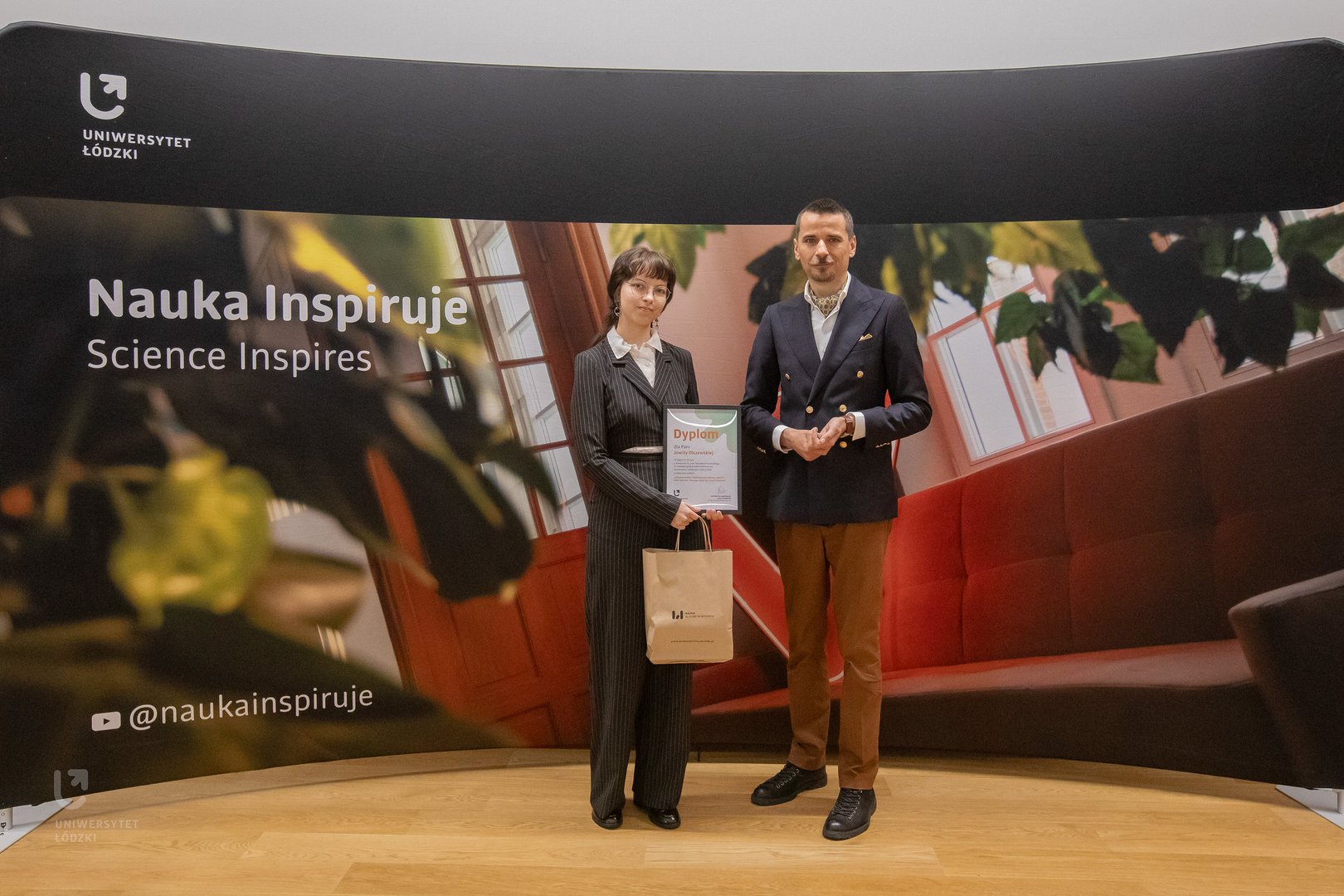
Why have tools based on generative artificial intelligence become so quickly embedded in social media, and who actually benefits the most from this development? What seemed like an innocent question led Jowita Olszewska to much broader issues related to the automation of the Internet, the role of algorithms and the impact of artificial intelligence on contemporary communication.
I started reading about the processes of interaction automation and the significance of algorithms in the functioning of websites, until I realised that the scale of this phenomenon was far greater than I had initially assumed. I have decided to write about it in order to help others better understand the infrastructure behind the phenomena they encounter every day
– says the author of the award-winning article.
The Dead Internet – a Theory That Encourages Questions
The award-winning article concerns the so-called Dead Internet Theory. This hypothesis assumes that a significant share of online activity is now generated not by humans, but by automated systems – from bots posting comments and artificially generated profiles to algorithms responsible for website traffic.
The author emphasises that, regardless of how one assesses the theory itself, the phenomenon of Internet automation is becoming increasingly visible, especially in the era of the rapid development of generative artificial intelligence.
Today, particularly as a result of the emergence of genAI tools, which make it easier to build simple automation systems and create content without human input, this is becoming an increasingly serious problem. It concerns me because it not only makes access to reliable information more difficult, but also creates additional social barriers by placing users in information bubbles
– the student notes.

Who Are Digital Zombies and Electronic Golems?
The title of the award-winning article immediately captures attention. However, the terms “digital zombies” and “electronic golems” are far from accidental.
The first refers to fake profiles impersonating real people. They use photographs and personal data that may come from the Internet, stock image databases or be generated by artificial intelligence. At first glance, they appear to be ordinary users, although in reality they are merely tools designed to generate activity automatically.
“Electronic golems”, on the other hand, are bots that perform specific tasks without pretending to be human – much like the mythical golems which, after receiving an instruction, would consistently carry out their assigned function.
Science That Speaks Human Language
Although Jowita studies and works with academic texts on a daily basis, science communication holds a special place in her interests.
I have a great deal of respect for researchers who thoroughly understand a subject while also being able to explain it to someone who is completely unfamiliar with it, in a way that additionally encourages the reader to explore the topic independently. For example, I would recommend “The Secret Lives of Planets: Order, Chaos, and Uniqueness in the Solar System” by Paul Murdin. Although it is not particularly connected with the subject of my article, it is a very enjoyable starter book for anyone interested in space
– explains Jowita.
While writing the article, the student had to contend not only with a character limit but also with the lack of Polish-language academic studies devoted to the topic. This experience showed her how important science communication is, especially in the field of new technologies, which develop more quickly than the available literature.
Think. And Verify
The key message of the award-winning article is simple:
Think critically about what you encounter on the Internet. We cannot know what the Internet will look like in the future, and although most modern technologies promise to relieve users of the burden of independent thinking, I believe this is not the right path. The most important thing is to nurture our natural human curiosity and, among the ever-growing pile of content generated by algorithms, search for things that are still created by real people.
Jowita also stresses that the ability to verify information should be the fundamental skill of today’s Internet user.
If we come across information that seems shocking or provokes strong emotions, our first step should be to check it against other sources. It is also worth considering whether we are genuinely interacting with another person. It is surprising how often this simple reflection changes the way we perceive online content.
A Strong Start to an Academic Journey
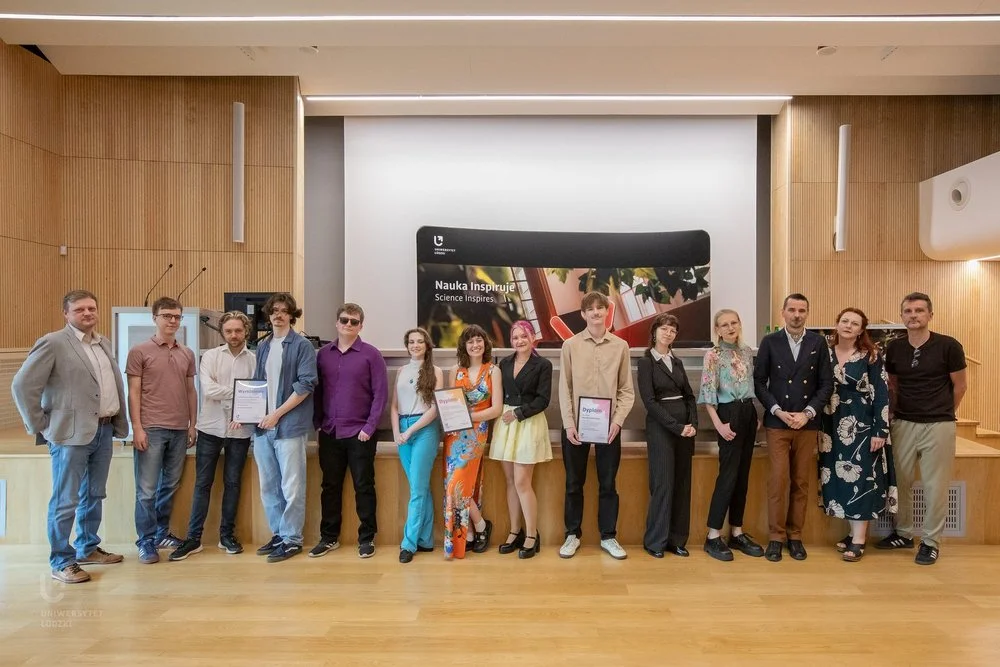
Winning second place in the Prof. Mirosław Przybylski Competition is not only a success for Jowita Olszewska but also a motivation for further work.
This distinction is something truly special to me. I think that thanks to the competition I now have a greater awareness of how much work is actually required to create material like this, but also a sense that my voice can matter as well. I see it as a good beginning to my future research and literary activity
– concludes the young researcher.
Photos: Dr Bartosz Kałużny (Centre for External Relations and Social Responsibility of the University)