Art for everyone
The project is based on the idea of “aesthetic self-awareness”, developed by the researcher and a philosopher Irena Wojnar. According to her concept, art does not serve solely an aesthetic function – it can become a path towards building a harmonious personality, a space for reflection and authentic self-expression. The organisers translate this idea into practice by creating an experience engaging multiple senses and artistic disciplines.
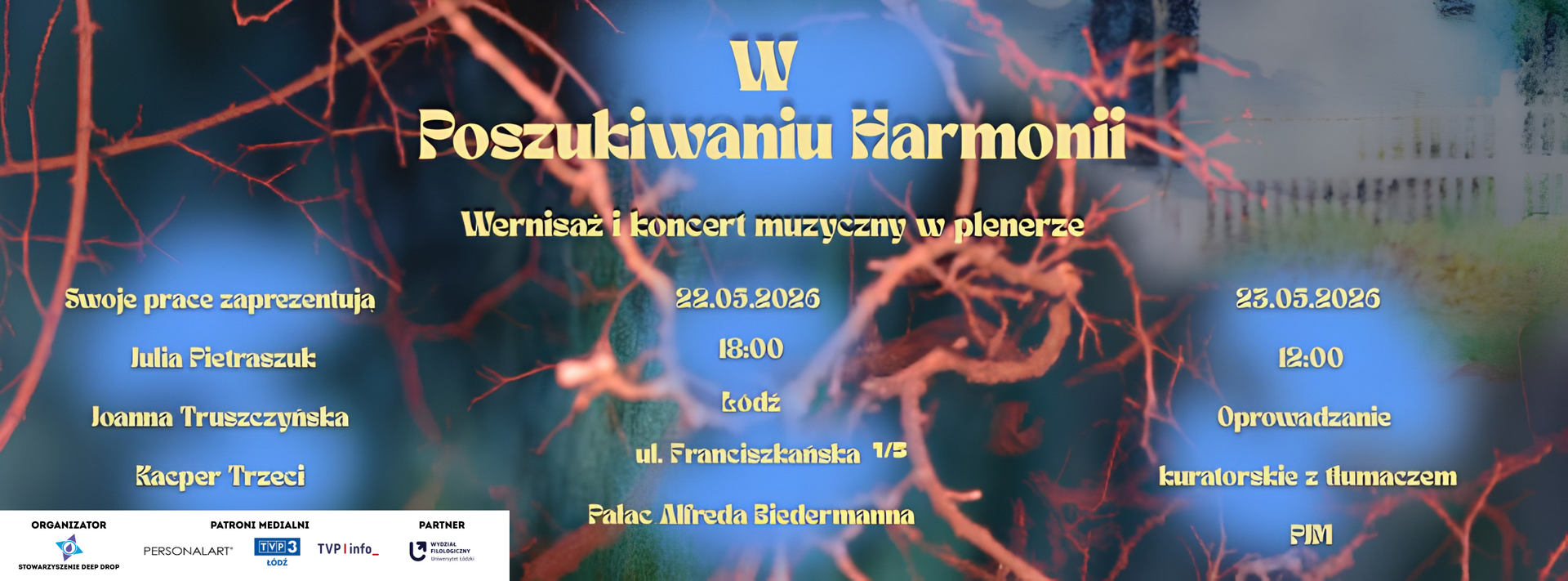
People from various backgrounds are involved in the event and the programme also takes into account the needs of people with hearing and visual impairments. On 23 May at 12:00 p.m., a guided tour will take place with a guide using Polish Sign Language. Three original photographic series, whose common denominator is nostalgia – understood not as an escape from reality but as an attempt to find meaning, a sense of security and one’s own identity – constitute the central element of the event.
Longing for humanity
The project by Julia Pietraszuk transports viewers into a world resembling an urban jungle. The protagonists of the photographs, dressed in animal costumes, function within the city space as if engaged in a constant struggle for status, recognition and survival. The series becomes a symbolic story about the contemporary human being – torn between the need for dominance and a longing for lost authenticity.
The series is also a commentary on the social and political tensions that shape contemporary identity – from local hierarchies to global mechanisms of power. Nostalgia in these images is not an escape, but a quiet protest against the fact that we must pretend in order to survive
– explains Julia.
A return to space
The series by Joanna Truszczyńska, entitled “Weź głęboki wdech” [Take a Deep Breath], tells a story of longing for space – both physical and symbolic. The artist returns to her family village, whose landscapes have become synonymous for her with safety, freedom and hope. The photographs are complemented by sculptures created by the artist herself, giving the entire project a surreal character.
In order to combine these two spheres, the main subject of the photographic series will be the picturesque landscapes of Czechów, my family village, which accompanied me throughout my upbringing. These vast sceneries, emanating calmness and ancient wisdom, shaped by a glacier, form the background. Within these spaces, I placed sculptures I created, which allowed me to achieve a surreal atmosphere of evolving memory and a sense of nostalgia
– says Joanna.
Memories of the past
In turn, Kacper Trzeci, in his project "Nie-miejsca dzieciństwa" [Non-Places of Childhood], creates a photographic and audio map of memories connected with Częstochowa. Courtyards, sandpits and housing estate alleys cease to be anonymous fragments of the city – they become personal sites of memory.
This is a project that redefines the concept of a non-place, moving it into the realm of personal memory and nostalgia. It is accompanied by sound material: recordings of conversations with residents, creating an intimate and subjective urban landscape. Through photographic interventions, images of these places acquire the qualities of memory – they are blurred, elusive and filled with emotion. As a result, a kind of magical map of Częstochowa emerges, based on memory and shared experience
– adds Kacper.
Art as an experience of community
The organisers emphasise that the project also has a social dimension. “W Poszukiwaniu Harmonii” has been created to demonstrate that the University of Lodz can be an active part of the urban fabric and that student initiatives do not have to remain confined within the academic environment.
The interdisciplinary nature of the event also develops the idea of cooperation between young artists representing different artistic fields. As a result, the project becomes a space for experimentation, exchange of experiences and the creation of new forms of culture.
How long will the exhibition run?
The exhibition will be open from 22 to 29 May 2026. In addition to photography, visitors will also be able to see films, sculptures, costumes and audiovisual elements prepared by students of the University of Lodz and the Lodz Film School.