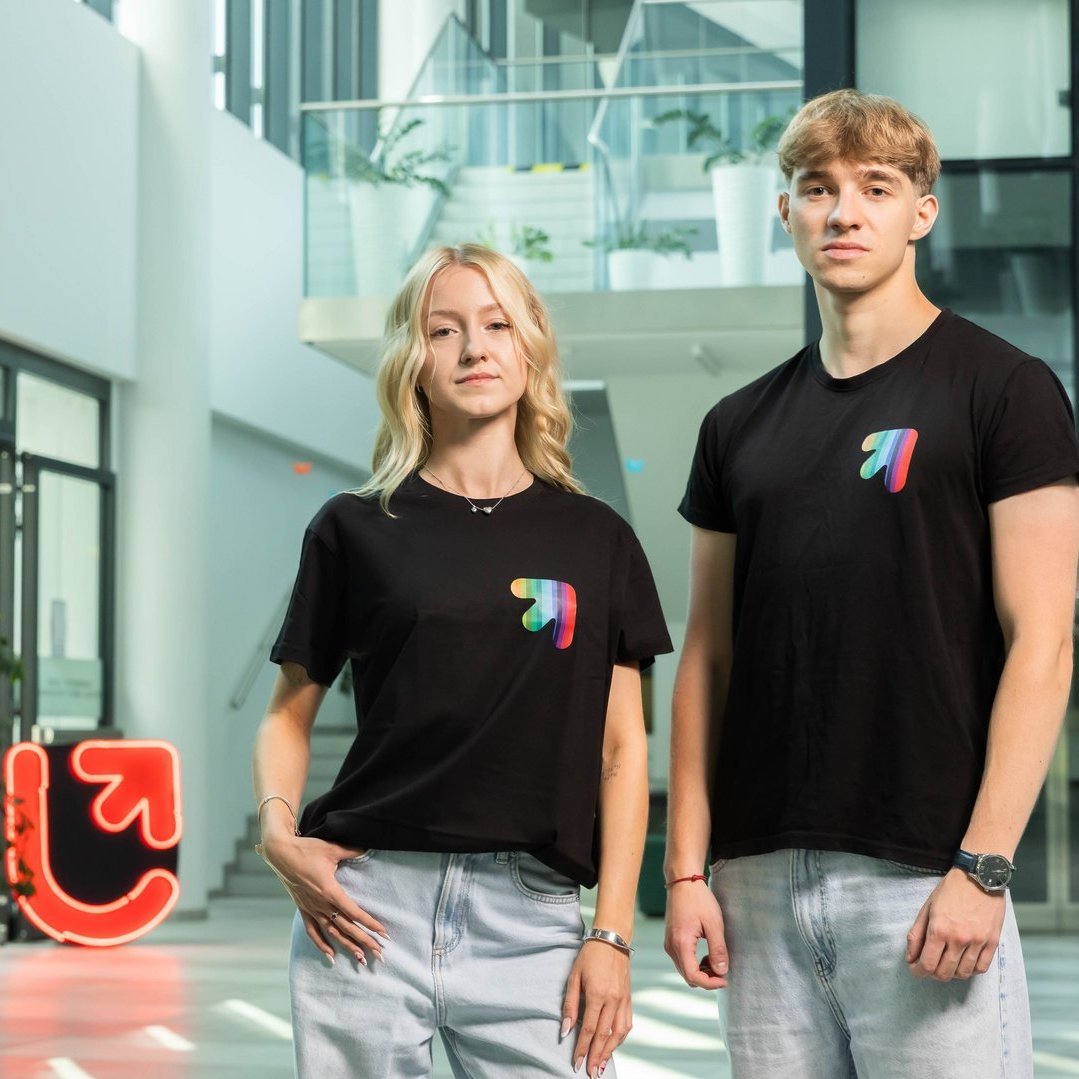
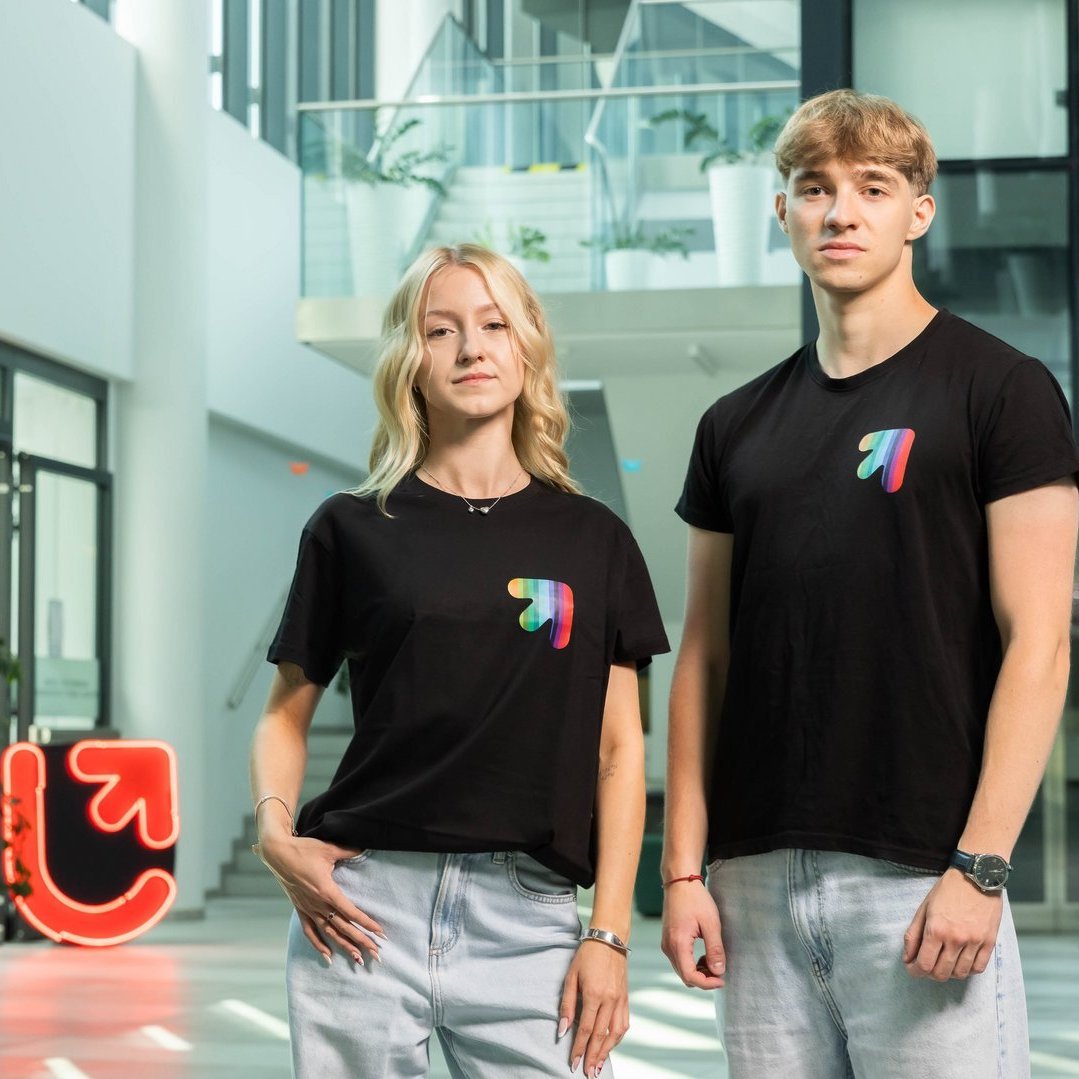
At UniLodz people come first. We are an open and diverse academic community where different perspectives meet, ideas develop through dialogue and knowledge helps us better understand and shape the world around us.
Whether you want to study, conduct research, teach or simply create something together with us, UniLodz is a place for you.
MA - Master's Degree
Programme details:
Degree: Master’s (Second-cycle studies)
Duration: 2 years (4 semesters)
Format: Full-time
Faculty: Faculty of Management
The tuition fee of 2500 EUR per year
Curriculum: The courses you will participate in include, for example: Digital Applications for Business, Managerial Economics and Evidence-Based Management, Google Analytics, Logic Critical Thinking, Content and Community Management Analytics.
Goal: The goal of the programme is to prepare graduates to operate effectively in international and intercultural business environments by developing advanced digital‑era competencies, analytical and critical‑thinking skills, and the ability to evaluate and enhance organisational performance using credible data.
Career opportunities: The graduate will find employment in companies characterized by modern and professional management, operating in international and multicultural environments.
The study programme is addressed to people aspiring to work in an international and intercultural environment, both in global corporations and companies operating on domestic markets. The course addresses two key challenges and, at the same time, interests of the labor market, namely it develops the competencies of functioning in the digital environment, industry 4.0 or the Internet, as well as the ability to analyse and evaluate the operation of an organisation with emphasis on increasing efficiency. Contemporary business success is built on a synergistic combination of creativity with critical thinking, innovation, analytical view, and empathy, with the agility to make accurate decisions. In all these areas, access to reliable data and information becomes a key element. In the age of fake news, the ability to assess a situation based on credible data determines the effectiveness of management.
There is a reason behind the saying that if you do not measure something, you cannot manage it. This belief is of particular importance in the digital world.
If you are considering your future in business world, especially in digital, it is worth having the following competences:
- analysing data;
- building measurement systems of websites, social media, or e-commerce activities;
- designing business models in the digital sphere;
- using data from available systems, e.g. Google Analytics;
- assessing the effectiveness of market activities;
- conducting market research in both the qualitative and quantitative dimensions;
- doing financial analytics;
- determining a company's value and its ability to compete;
- analysing the profitability of business investments;
- performing efficient and effective data visualisation;
- preparing business reports;
- applying new technologies and IT solutions to data analysis and visualisation.
Programme details:
Degree: Master’s (Second-cycle studies)
Duration: 2 years (4 semesters)
Format: Full-time
Faculty: Faculty of Management
The tuition fee of 2500 EUR per year
Curriculum: The courses you will participate in include, for example: Complexity Management, Human Side of the Company, Market and Competition, Business Reporting, Customer Equity, Business Culture and Ethics
Goal: The studies at the master level of Business Management aim at providing the future graduates with a multi-dimensional, managerial understanding of business, and business organisations.
Career opportunities: The graduates shall be prepared to serve as managers of support units or consultants for managers in their business decision making and analysis at any level of an organisation.
The studies at the master level of Business Management aim at providing the future graduates with a multi-dimensional, managerial understanding of business and business organisations. The graduates shall be prepared to serve as managers of support units or consultants for managers in their business decision-making process and analysis at any level of an organisation.
The M.A. in Business Management programme has been accredited by the International Accreditation Council for Business Education (IACBE). The accreditation confirms compliance with the requirements for efficient functioning, excellence in teaching, professional management, and good relations with business. The accreditation guarantees that the students will obtain state-of-the-art professional knowledge and skills as well as a degree that is valued on the labour market.

This programme is addressed to people who possess a creative ability to learn and are willing to put their both old and newly acquired knowledge contents in a new context, namely that of business organisations. This programme is for those who are prepared to share knowledge, skills, and attitudes with other people of different backgrounds. The students will be exposed to diversity as well as to decision-making in the class, where they will attempt at addressing problems through participation in business simulations and projects undertaken in real business organisations.
This programme is open for people with a Bachelor's degree in any specialisation. Beyond the academic quality of the bachelor diploma, the decisive element in the recruitment process will be an individual interview with each candidate. The candidates are also expected to deliver a candidate statement in line with the instructions.
Programme details:
Degree: Master’s (Second-cycle studies)
Duration: 2 years (4 semesters)
Format: Full-time
Faculty: Faculty of Mathematics and Computer Science
The tuition fee of 3000 EUR per year
Curriculum: Analysis of scientific texts, Artificial Intelligence, Algorithmic Techniques, Operations Research, Graph and Network Theory, Programming Paradigms and Languages, IT Projects Management, Machine Learning.
Goal: To provide professional knowledge for a career in computer science and enable students to solve computer problems and implement solutions.
Career opportunities: The graduates are awarded the Master’s degree in Computer Science. The graduates of this programme will acquire: knowledge of the rudiments of Computer Science that enables them to solve computer problems single-handedly and implement their solutions, proficiency in programming, the understanding of problem's specification and program’s computational complexity, basic skills in preparation, implementation and verification of computer software, ability to use computer tools in practice and knowledge that facilitates fast adaptation to dynamically changing computer reality. The graduate can find employment as a supervisor of computer systems, a programmer, an operator and service attendant of information systems as well as, after completing additional requirements, a Computer Science teacher
The Computer Science programme encompasses algorithms analysis, network programming, distributed systems, databases, internet portals, artificial intelligence, neural networks and genetic algorithms. In the course of the studies participants get professional knowledge that enables them to work at the offices of public administration, as well as the institutions of the European Union.
Programme details:
Degree: Master’s (Second-cycle studies)
Duration: 2 years (4 semesters)
Format: Full-time
Faculty: Faculty of Economics and Sociology
The tuition fee of 2500 EUR per year
Curriculum: Advanced Microeconomics, Advanced Macroeconomics, History of Economic Thought, Development Economics, International Economics, Econometrics and Forecasting.
Goal: One of the main goals of education is to prepare graduates to the needs of the labor market, to pursue the profession of economist in various economic entities, and to set up and run their own business. Therefore, the curriculum for Economics, combining knowledge, skills, and competences in the field of economics, accounting and finance, takes into account both national and international patterns as well as the needs of the labor market.
Career opportunities:
As a graduate of ECONOMICS, you will acquire skills in:
• Conducting advanced economic and financial analyses
• Modelling economic phenomena using statistical and econometric methods and tools
• Preparing reports, analyses, and in-depth expert assessments to facilitate sound economic decision-making under conditions of uncertainty and risk
• Working in teams and leading research projects
• Implementing and executing your own innovative business initiatives
ECONOMICS will enable you to find employment in the following positions:
• Specialist in economic affairs and management
• Business and sales manager
• Finance manager
• Business analyst
• Financial adviser
• Entrepreneur/startup founder
• Commercial director
• Sales director
• Academic researcher
The MA in Economics teaches critical thinking and how to analyse the world that surrounds us. If you want to find out what really drives the business world, this course is made for you!
ECONOMICS is a programme designed for people who:
- Hold a bachelor’s degree in economics, finance, management, or related disciplines
- Are interested in the world of finance, business, and the economy
- Enjoy data analysis, statistics, and drawing conclusions
- Are considering a career in business, banking, consulting, public administration, or international organisations
- Plan a career as a CFO, business, or financial analyst
- Are considering further academic studies (PhD, research)
- Focus on self-development, a satisfying salary, and career stability
By studying ECONOMICS you will:
- Understand how markets, businesses, and entire economies work.
- Forecast economic trends and “read” future events
- Make business decisions based on facts, not feelings
- “Get a handle on” economic models and interpret data and reports in a way that makes others want to listen to you
- Analyse foreign markets and seek opportunities there
- Create a business model that actually works, not just looks good in a presentation
- Everything you need to conduct research and prepare for doctoral studies
Within this study programme you will be able to choose from several specialisations:
1. Entrepreneurship and Startup
-
Have you ever dreamed of running your own business?
-
Find out what a start-up is
Core subjects: Creating startups: from idea to implementation, Startup ecosystems, E-business, Application of AI and modern technologies in business
2. International Markets
-
Do you want to operate globally?
-
Discover the mechanisms of the global economy and trade
Core subjects: Foreign market research, Business strategies, International financial markets, Cultural diversity of international business
3. Advanced Economic Analysis
-
Are you considering a PhD or a research career?
-
Gain top-level analytical skills
Core subjects: Methods of economic research, Advanced panel data econometrics, Academic writing in economics, Academic presentations techniques
Programme details:
Degree: Master’s (Second-cycle studies)
Duration: 2 years (4 semesters)
Format: Full-time
Faculty: Faculty of Philology
The tuition fee of 2200 EUR per year
Curriculum: Practical English, Academic Writing, Argumentation, Introduction to Linguistics / Literary Studies / Cultural Studies, Presentation skills, Advanced courses in either Linguistics (including Corpus Linguistics, Semantics, Pragmatics and Sociolinguistics) or Literary Studies (including Literature in the context of Critical Theory, Philosophy, History and Myth, Politics and Society)
Goal: The goal of the programme is to develop advanced linguistic, analytical and interpretive competencies in English that prepare graduates for careers in education, translation, publishing, culture, advertising and business, while also equipping them with solid linguistic, literary and cultural knowledge necessary for pursuing third‑cycle (doctoral) studies.
Career opportunities:
The second‑cycle English Studies programme offers broad qualifications that prepare graduates for employment in diverse areas requiring excellent command of the English language and deep understanding of Anglophone cultures. Many graduates pursue careers as translators or English teachers, supported by dedicated professional specialisations such as teaching, translation, and culture–media–communication (also tailored to international students). The programme’s varied curriculum equips students for work across multiple sectors, with common career paths including teacher, language instructor, methodological consultant, translator, editor, journalist, researcher, specialist in English‑speaking countries, and qualified professional in the cultural and media industries.
The second cycle English Studies courses are organized into three modules:
Module 1: Basics - Compulsory courses in Practical English as well as introductory courses in Literary Studies, Linguistics and Cultural Studies
Module 2: Students choose a second cycle thesis seminar and additional courses within the following areas: General Linguistics, Applied Linguistics, Linguistic Pragmatics, Translation Studies, British and American Literature and Culture.
Module 3: Specialist courses: - Culture, Media and Communication - Professional training in Teaching English as a Foreign Language in Polish Education System (competence in the Polish language required) - Professional training in Translation (competence in the Polish language required) - Professional training in Teaching Polish as a Foreign Language (competence in the Polish language required).
Programme details:
Degree: Master’s (Second-cycle studies)
Duration: 2 years (4 semesters)
Format: Full-time
Faculty: Faculty of Philology
The tuition fee of 9000 EUR per year
Curriculum: MediaAC answers the needs of the evolving fields related to the future and heritage of Media Arts Cultures through internationally advanced teaching in the Media Arts with an innovative combination of pedagogical foci, trans-disciplinary approaches, and critical thinking in connection to the needs of academic and non-academic stakeholders.
Goal: MediaAC validates learning outcomes in an integrated manner to contribute both to the recognition of the skills and competences of the students, but also consistent building up the quality of the course. Knowledge specific to each course and the methods of assessment in the program are detailed in the curriculum.
Career opportunities:
Exhibition curation, conference organization, artistic production, unique scholarship and ground-breaking new ideas are developed during the students studies, after graduation they continue to develop the field of the new media cultural and creative sector. Read more to find out more about MediaAC Alumni or Students successes.
The Media Arts Cultures Joint Master is a collaborative project whose total is greater than the sum of its parts. Developed between 3 higher education partners with their scholars and specialists, it remains unique in the world. The curriculum draws upon the strengths of each partner and offers students an unusual chance to study in Europe on culture in the media age.
In the MediaAC curricula, the students achieve internationally advanced historical and theoretical knowledge in Media Arts in an innovative combination with creative, artistic, curatorial, and technological practices. They will get language competences and intercultural training for European and world-wide cooperation.
University of Lodz, Poland / Aalborg University, Denmark / University of Continuing Education Krems, Austria.
Programme details:
Degree: Master’s (Second-cycle studies)
Duration: 2 years (4 semesters)
Format: Full-time
Faculty: Faculty of International and Political Studies
The tuition fee of 2900 EUR per year
Curriculum: Key subjects: Methodology of political sciences, Political theories and concepts, Influence, persuasion, International relations in the regions of the world, Protection of human rights, Communication media, Comparative politics, Social and political movements, Specialization courses.
Goal: The goal of the programme is to provide students with interdisciplinary knowledge and analytical skills in international relations, political science, economics and cultural studies, enabling them to understand the complexity of contemporary global processes and preparing them for professional work in national and international political, socio‑economic, cultural and media institutions.
Career opportunities:
Graduates of the second‑cycle International and Political Studies programme are prepared for careers in national and international political, socio‑economic, cultural and media institutions—including embassies, ministries, public administration, international organizations (IGOs, NGOs, TBOs), cultural exchange agencies, media, advertising and public relations—supported by strong analytical and synthesis skills that also enable them to work in analytical centres such as think tanks and expert groups.
International and Political Studies combine knowledge in international relations, political science, economics and cultural studies. The program allows you to gain an interdisciplinary education in social sciences and the humanities. Through an interdisciplinary integration of the content of social science and humanities, whose common denominator remains policy, students will have a solid bases for developing sectoral interests – in the blocks of chosen specializations. In addition, the studies are oriented towards broadening the perception of the complexity of the contemporary world and the multidimensionality of socio-cultural phenomena and processes, and also serve to clarify the principles and mechanisms of functioning of national and international organizations and institutions dealing with broadly understood policy issues.
Within this course you will be able to choose from several specializations (Conflict Management and Negotiations, International Marketing). You will acquire:
- knowledge about politics, international relations, political systems, society (societies), philosophical-ethical and religious systems, and contemporary communication (language and its cultural connotations);
- knowledge and skills in the fields of politics, social behavior and culture in the international aspects;
- knowledge about multiculturalism, intercultural relations (including diasporas, migration processes and the situation of indigenous peoples);
- opportunity to develop your free, independent and analytical thinking skills;
- preparation for work in national and international (governmental and non-governmental) political, socio-economic, cultural and media institutions: embassies and ministries, international organizations, public administration bodies (self-government, state, supranational, etc.), cultural and social exchange institutions - economy, media, advertising, public relations, etc.;
Programme details:
Degree: Master’s (Second-cycle studies)
Duration: 2 years (4 semesters)
Format: Full-time
Faculty: Faculty of Philology
The tuition fee of 2000 EUR per year
Graduates of Master's Programme in Women’s and Gender Studies possess broad knowledge in the fields of feminist studies, human/women’s rights, minority policies, gender representations in culture and media, men and masculinities, postcolonial studies, feminist literature and philosophy. They command an advanced and critical knowledge of contemporary gender theories, apply different theoretical perspectives in the analysis of gender issues and critically scrutinize different standpoints and feminist empirical evidence through reasoned and coherent argument, demonstrating the awareness of themselves as situated experts. They are recognized as specialists of equal opportunity policies, with particular regard to policies enforced by the European Commission, but also, they are prepared to deploy them in the Polish context.
As a result, they are able to provide valuable assistance in the development of many projects funded by the European Community. Moreover, being fluent in English (both spoken and written), and having acquired the ability to combine knowledge from various areas, they may be employed in the media as well as institutions dealing with socio-cultural issues.
UNIVERSITY OF LODZ
Narutowicza 68, 90-136 LODZ
fax: 00 48 42/665 57 71, 00 48 42/635 40 43
NIP: 724 000 32 43