Taking photographs in dark canals required exceptional skills from the author. The images perfectly capture the achievements of the builders of Łódź’s sewage system. The exhibition will feature not only photographs of underground brick collectors, but also storm overflow chambers, river channels such as the Jasień, Łódka and Karolewka, as well as unusual objects connected with work in the canals.
Thanks to the support of employees of ZWiK (Water and Sewage Plant Ltd. in Łódź), it was possible to safely enter the historic brick channels designed by William Lindley and to document both their remarkable architecture and the everyday work of those who maintain the city’s infrastructure. The result of this collaboration is a series of photographs created to mark the 100th anniversary of ZWiK, revealing an unseen face of Łódź’s underground – spaces that remain inaccessible to residents on a daily basis.
An Exhibition with History in the Background
The designer of Łódź’s sewer system was the British engineer Sir William Heerlein Lindley. He opposed the use of concrete pipes beneath Łódź’s streets. Due to the high temperature and chemical aggressiveness of factory wastewater, he argued for the construction of durable brick channels with stone bases. Near factories discharging highly acidic waste, channels with stoneware lining were required. Construction of the Łódź sewer system began 101 years ago, in 1925, under the supervision of Lindley’s associate, engineer Stefan Skrzywan.
Dr Paweł Hikisz, the Author of the Images Talks About His Fascination with Łódź’s Canals and the Process of Photographing Them
Where did the idea to photograph Łódź’s canals come from?
My adventure with photography has lasted for many years, although I still consider myself an amateur. I have long been fascinated by abandoned places – factories, palaces, houses, but also underground spaces. For years, together with a colleague (a mountaineer and specialist in rope-access work), I explored various caves, bunkers and shelters. It was this fascination with underground spaces that eventually led me to the canals.
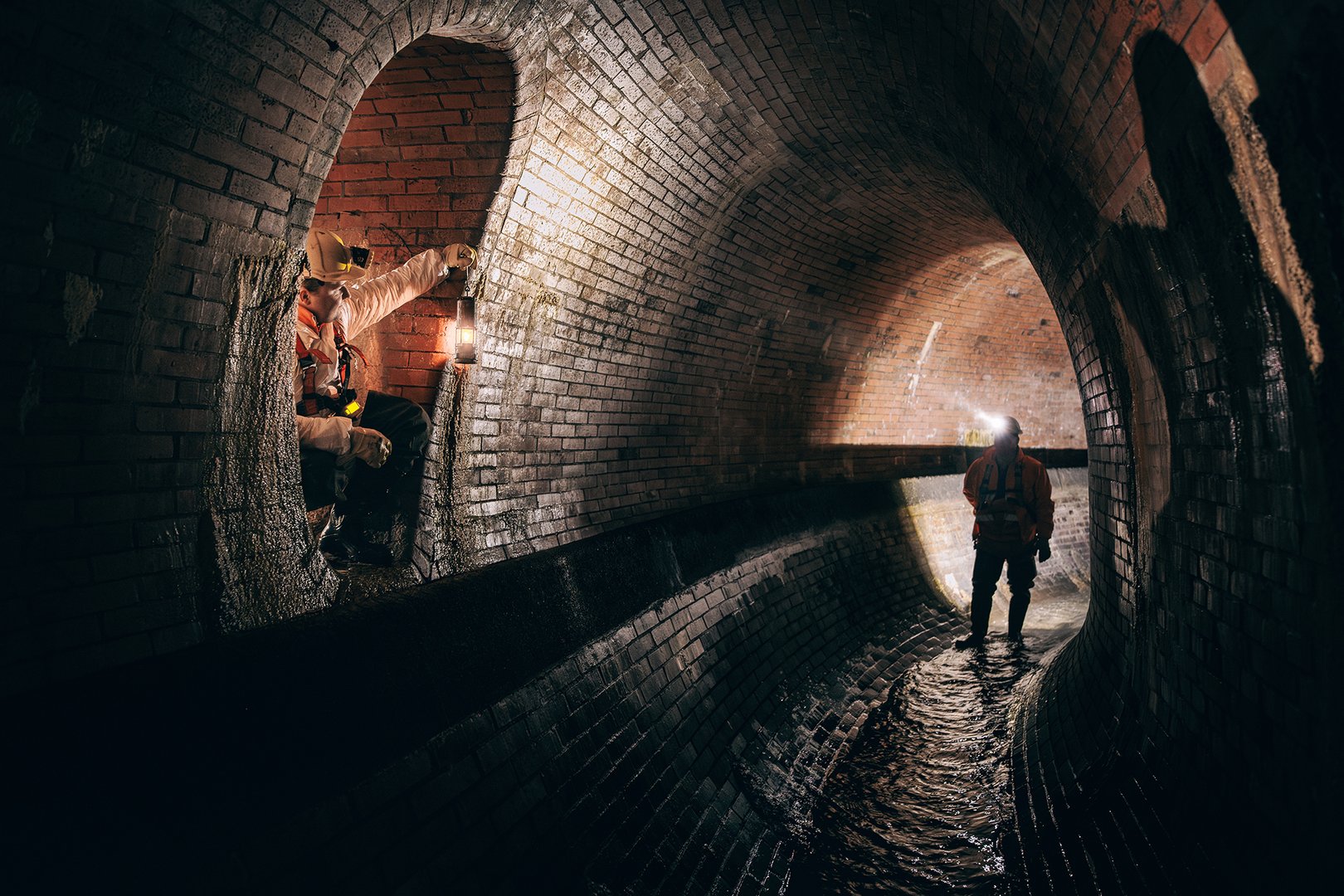
Łódź’s canals are unique on a national scale – mostly brick-built and designed, like those in Warsaw, by William Lindley. They are part of the city’s history that we do not see every day, even though we literally walk above them. Few people realise that, for example, the Łódka River flows directly beneath the Manufaktura market square.
It all began with curiosity, and then I discovered how remarkable, photogenic and diverse these spaces are.
What is unique about Łódź’s canals?
First of all, the fact that they are brick-built – this makes them resemble 19th-century underground tunnels rather than raw concrete culverts. Additionally, there is a diversity of cross-sectional shapes – egg-shaped, bell-shaped, and of impressive architectural scale. These are underground structures executed with true craftsmanship.
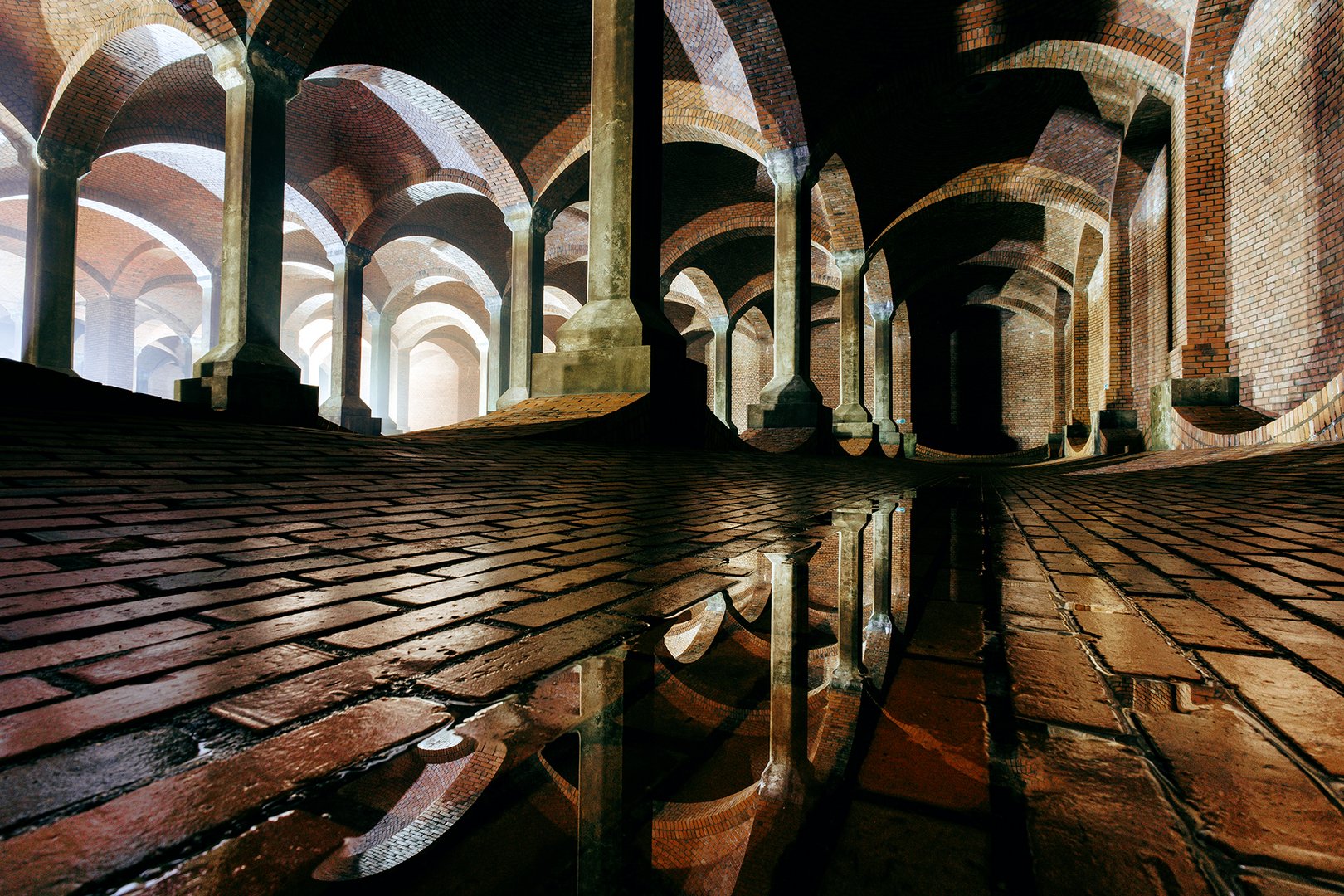
However, there is something more: mystery and inaccessibility. These are places not everyone can enter. Red-brick factories and workers’ housing have long defined the character of our city. Meanwhile, another “brick city” stretches beneath it, invisible at first glance. We see Łódź from above, but we do not know its “second layer”. We walk daily along streets beneath which brick corridors and overflow chambers are hidden.
For a photographer, this is a mine of subjects.
Where were the photographs for the exhibition taken?
The project mainly includes photographs from the most important canalised rivers in Łódź:
- Łódka – including beneath Manufaktura,
- Jasień – in the area of Tymienieckiego and Piotrkowska Streets,
- Karolewka – in Polesie, in the south-western part of Łódź,
- Bałutka – near Bałucki market,
- as well as images from the so-called “star” located beneath Łódź Kaliska railway station.
What was the greatest challenge?
Photographing people was the most difficult part…. Until now, I had only photographed the canals themselves. This time, I was asked to capture ZWiK employees at work – and that is a completely different kind of photography.
I could not spend long minutes lighting the space. I had to rely on the workers’ headlamps and lights. It was difficult to focus in complete darkness, while also ensuring that the images remained natural and not staged. The workers did not want to pose. And that was a good thing. The aim was to show authentic work and the scale of the canals in relation to the human figure.
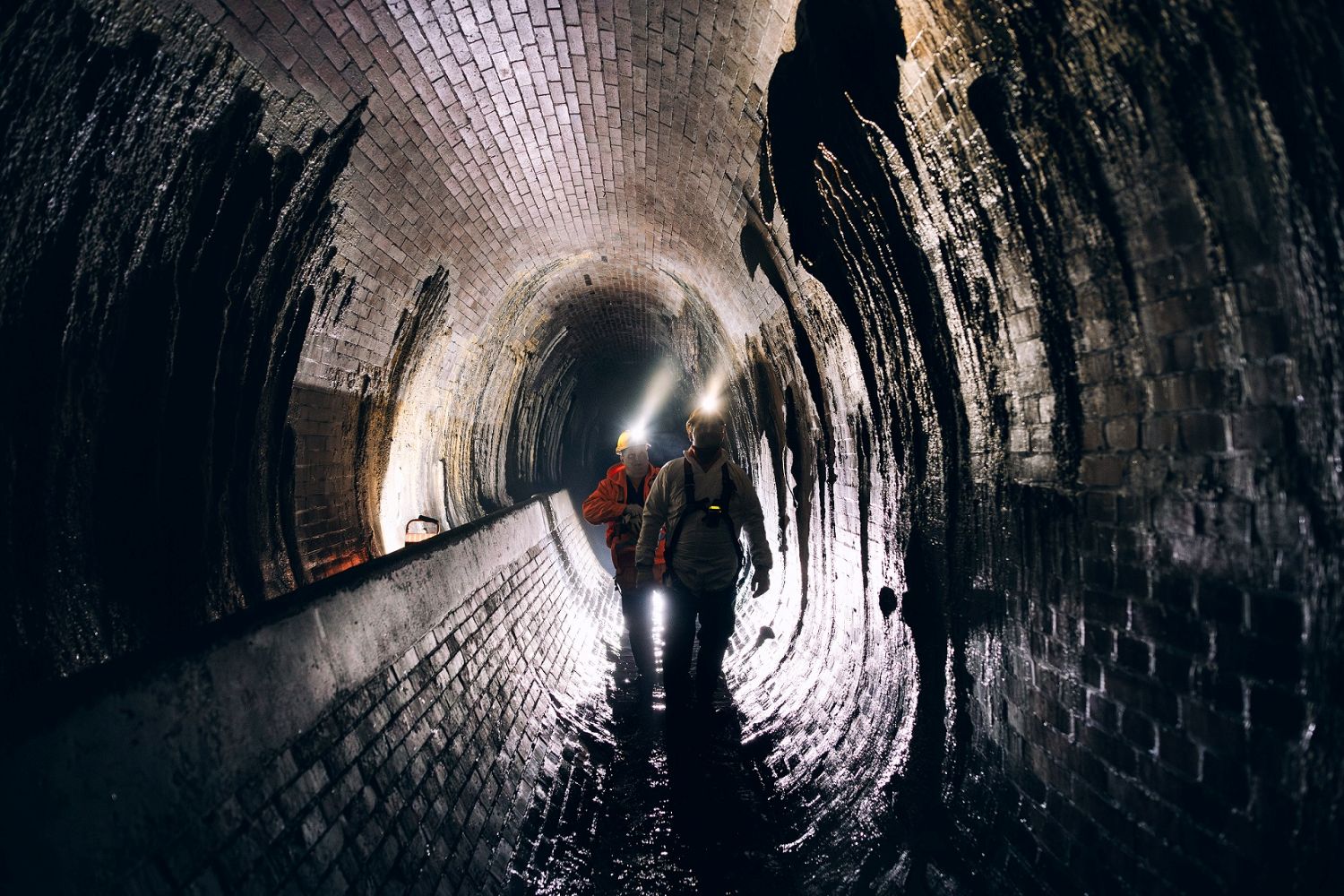
I must admit that these photographs inspired me greatly. For the first time, I saw how interesting the human figure appears in underground spaces.
The full interview with the author can be found in the article: Lodz Canals Captured in Frames – an Extraordinary Story About Passion, the City and the Underground
Dangers Underground
On the occasion of this exhibition, we should recall how dangerous work in canals can be. Toxic or explosive gases are just some of the hazards faced by ZWiK employees. Strict safety rules apply. Before work begins, each collector is ventilated and levels of oxygen, hydrogen sulphide, carbon monoxide and methane are checked. Workers entering underground wear safety harnesses, are equipped with electronic gas detectors and are secured by rescuers on the surface. The sight of ZWiK employees standing by an open manhole should not be surprising – they are ensuring the safety of colleagues working below ground. In case of evacuation, they assist in bringing them back to the surface, using an evacuation lift, ropes and emergency oxygen apparatus.
An Exceptional Photographer
The author of the works is Dr Paweł Hikisz – a Łódź-based photographer and digital creator specialising in urbex photography, as well as an adjunct at the Department of Oncobiology and Epigenetics, Faculty of Biology and Environmental Protection, University of Lodz. His key research interests lie at the intersection of molecular biology and medicinal chemistry. Dr Hikisz studies mechanisms of cell death, particularly the molecular mechanisms underlying the anticancer activity of newly synthesised organometallic derivatives. His work aims to identify new therapeutic pathways in oncology, taking into account the role of metals in medicine.
Alongside his scientific career, dr Hikisz continues to develop his passion for photography. His work focuses primarily on capturing abandoned places, industrial and post-industrial landscapes, as well as remnants of human histories – palaces, houses and forgotten spaces. Increasingly, he is also turning to photographing people, developing this aspect of his work and exploring new ways of portraying individuals within their environment.
Information About the Exhibition
The opening of the exhibition and author’s meeting “PODZIEMNA ŁÓDŹ” will take place on 24 July at 6.00 p.m. at the university Wozownia 1/5 Gallery (Franciszkańska 1/5).
The meeting will be hosted by Karina Lisiecka – a cultural studies scholar, photographer and an archivist.
Programme of Events
We invite you to take part in the following free events:
- Podziemna Łódź w ogrodach Biedermanna [Underground Łódź in the Biedermann's Gardens]– a guided walk along the route of rivers and canals within the gardens of the Alfred Biedermann Palace – details coming soon.
- Cztery spojrzenia na "Podziemną Łódź” [Four Perspectives on “Underground Łódź] – a panel discussion accompanying the exhibition by Paweł Hikisz (12 September 2026) – details coming soon.
The exhibition partner is the Managrement Board of ZWiK (Water and Sewage Plant Ltd.) in Łódź.

Edit and graphics: Mateusz Kowalski (Promotion Centre, Faculty of Biology and Environmental Protection, University of Lodz)
Photographs: Dr Paweł Hikisz (Department of Oncobiology and Epigenetics, Faculty of Biology and Environmental Protection, University of Lodz)