Discussions on the Economy, Exports, and the Future of Polish-Brazilian Cooperation
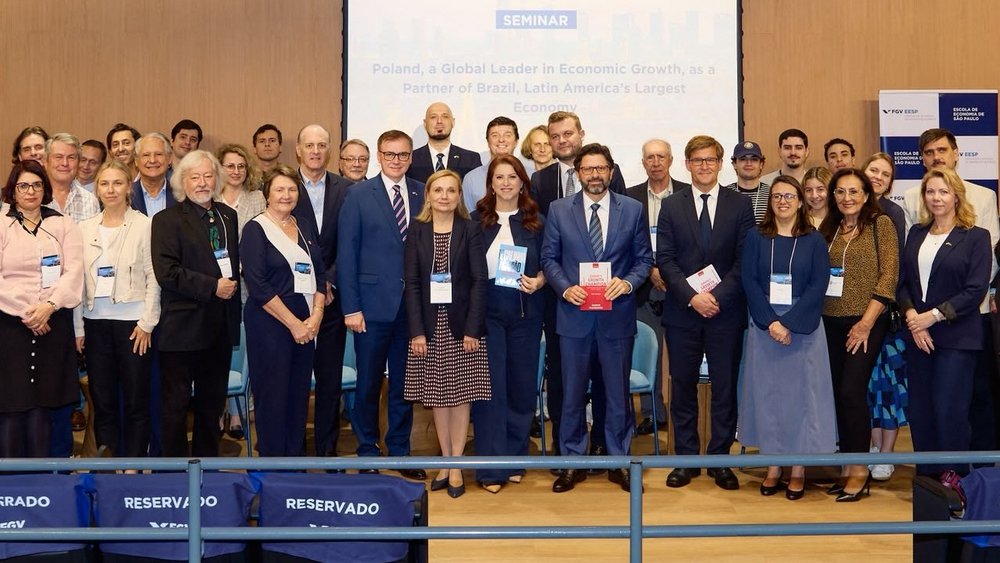
The seminars focused on Poland’s economic development experience, the transformation of the structure of Polish exports over the past four decades and prospects for further economic cooperation between Poland and Brazil in the context of the EU-Mercosur Agreement. As Prof. Kuna-Marszałek emphasised:
The EU-Mercosur Agreement should become more than a trade agreement. It should become a genuine framework that transforms relations between individual companies into a lasting economic partnership between Poland and Brazil.
Alongside dr hab. Anetta Kuna-Marszałek, Associate Professor at the University of Lodz, the events were attended by Prof. Marcin Piątkowski (World Bank, Kozminski University), as well as distinguished representatives of academia, business and public administration from the State of Paraná. The meetings provided an opportunity to exchange experiences and discuss ways of strengthening economic and academic ties between Poland and Brazil.
The EU-Mercosur Partnership Agreement
The European Union-Mercosur Agreement was signed on 17 January 2026 in Asunción, Paraguay. The agreement consists of a comprehensive partnership agreement and an interim trade agreement, which began to apply on 1 May 2026. The framework provides for political dialogue, cooperation and sectoral engagement. It also includes trade and investment provisions that will enter into full force once the agreement comes into effect.
The Partnership Agreement will help strengthen cooperation in areas such as:
- sustainable development,
- climate and environmental action,
- digital transformation,
- human rights,
- mobility,
- counter-terrorism,
- crisis management.
The agreement will also facilitate closer coordination in multilateral forums and in addressing global challenges such as climate change, peacebuilding, and migration. Furthermore, it will enable the exchange of proven solutions across a wide range of areas, from governance to technological innovation.
Sourceo: www.consilium.europa.eu