At first glance, it might seem like winter had finally arrived. There was frost, there was snow, and in some places, the snow cover persisted for extended periods. Intuition suggests a simple conclusion: if there was more snow, there should also be more water. However, is that really the case?
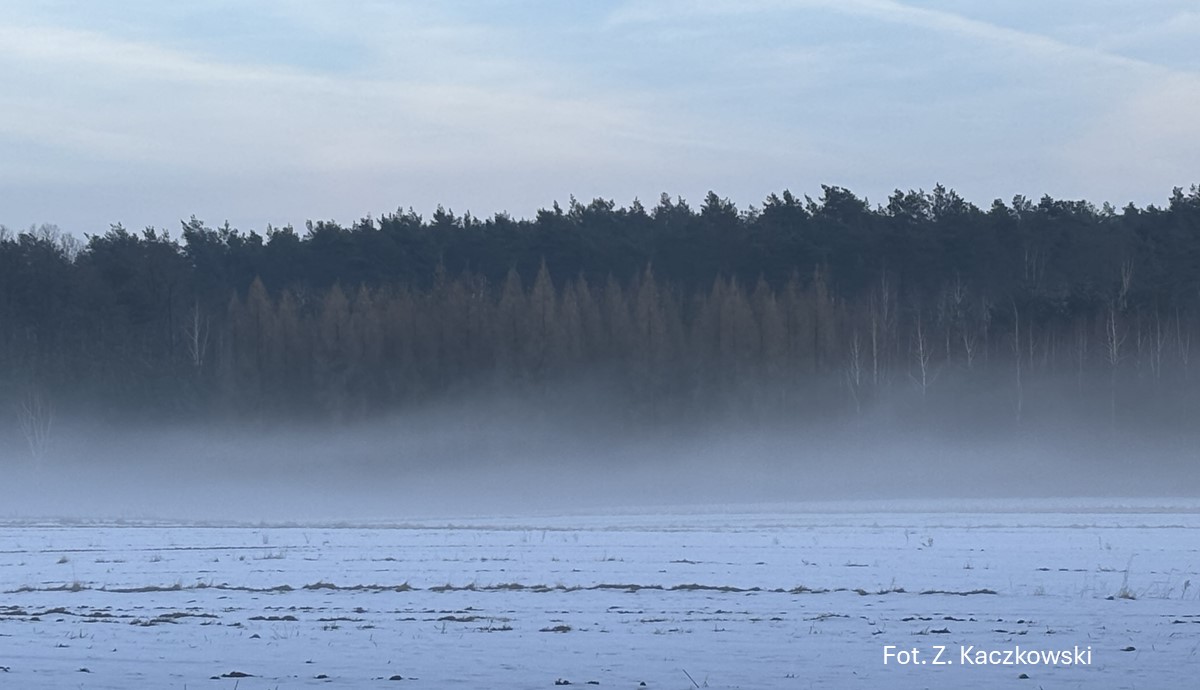
Photo 1. Steaming field on a sunny but frosty day (3:30 p.m.)
As Dr Zbigniew Kaczkowski explains:
The mere fact that snow cover appeared and then persisted for a certain period does not mean that conditions for improved water availability will arise.
What matters is not the sight of a white landscape itself, but how much water was actually in the snow and whether that water could replenish the soil. And that varied. In the Łódź area, there wasn’t an exceptionally large amount of snowfall, and on top of that, it was “dry” snow – very fluffy, containing a lot of air and relatively little water.
Right after the first major snowfall, I conducted an observation that allowed me to conclude that approximately 1,100 millimetres of snow, once melted, equalled 200 millimetres of water
– explains the researcher.
After a slight thaw later on, we managed to extract more – about 340 ml – from the wetter, more compacted snow, but these amounts were still not enough to reverse the long-term trend. Besides, for the most part it was the same snow, just slightly “worn down” by the weather. On top of that, there was another problem – frozen ground. Even when the snow began to melt, the water could only seep into the ground to a limited extent, as the ground was still frozen
– underlines Dr Kaczkowski.
Some water therefore drained away, instead of helping to rebuild local resources. Wind and sun didn't help either. Snow in open areas sometimes blew off the fields, and on sunny, frosty days, it evaporated intensely. That's why this year's winter landscape, while spectacular, won't mean any hydrological relief. The scientist's conclusion is cautious:
I'm not convinced that the rainfall observed so far will be a factor in changing the long-term unfavourable trends of decreasing available water resources
– he says, adding that real improvement will only be possible after analysing the entire year and data from measurement equipment.
Photo 2. Comparison of the amount of water melting from approximately 1100 ml of "dry" and "wet" snow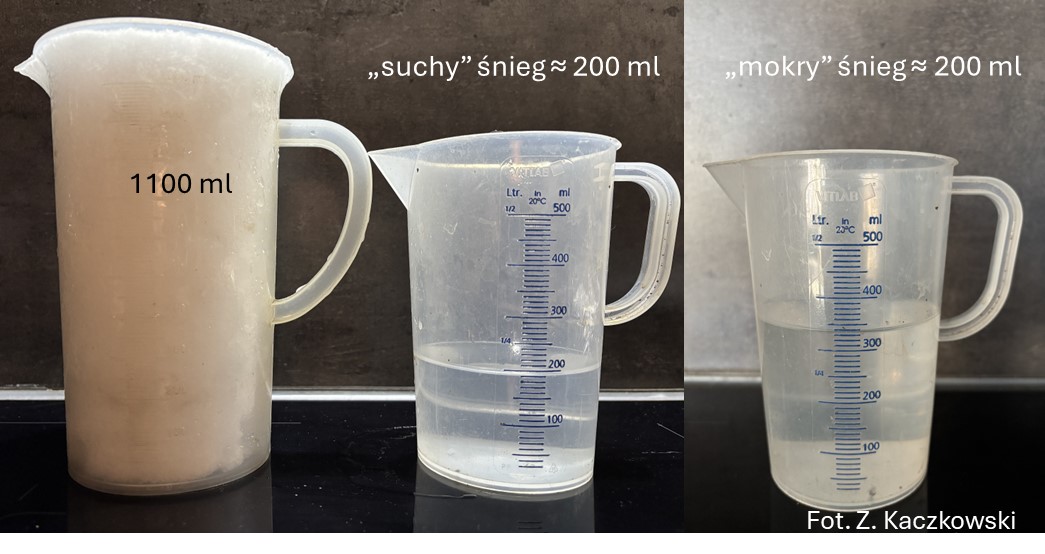
So, are we facing another hydrological drought?
In some parts of Poland, especially its central part, the hydrological drought will not end
– underlines Dr Kaczkowski.
This phenomenon has been present for years and there's no indication it'll subside on its own.
What is hydrological drought?
In simple words, hydrological drought means a long-term shortage of water in the environment. It usually begins with insufficient rainfall and then translates into lower levels of rivers, lakes and groundwater.
It is caused by a long-term negative water balance, meaning more water is lost from a given area than is gained
– explains the researcher.
The effects are felt not only by rivers and wetlands but also by soils and plants that lose access to water. It may not sound very festive, but that's precisely why Wet Monday may have a different meaning today than it did in the past.
Water remains a symbol of life, cleansing and spring rebirth, but it's also increasingly becoming a reminder that it's not a given or inexhaustible resource.
What can we do?
Dr Kaczkowski's answer is brief:
First and foremost, live smarter.
It's about, on the one hand, limiting activities that increase greenhouse gas emissions and on the other, managing the water around us more wisely. That means collecting rainwater, keeping it where it falls and not immediately discharging it into the sewer system.
Perhaps, this year, Wet Monday should be treated not only as a tradition, but also as a pretext for reflection. Even if we're unlikely to miss out on holiday watering, the question of water throughout the year is becoming less of a news item and more of a risk factor for our country's development.
Source: Dr Zbigniew Kaczkowski, Faculty of Biology and Environmental Protection, University of Lodz
Photos: Dr Zbigniew Kaczkowski
Edit: Kacper Szczepaniak, Centre for Brand Communications, University of Lodz
Graphic: Michał Strzelec, Centre for Brand Communications, University of Lodz