What is recycling?
Simply put: it's the process of recovering raw materials from waste and reprocessing them into new products. It's the heart of a circular economy, where nothing is wasted and the planet's resources are treated with respect.
Why is it so important?
- It saves energy and reduces CO2 emissions.
- It increases ecosystem protection by reducing the need for primary raw materials.
- It enables the creation of a circular economy in which products and materials remain in use for as long as possible.
Scientific support for recycling from UniLodz
Research conducted at the University of Lodz and the innovative projects of our scientists demonstrate that recycling can be applied even to the most challenging areas. For example, Prof. Marek Zieliński and his team from the Faculty of Chemistry, University of Lodz, have developed a method for recycling multi-material waste, such as pharmaceutical blister packs. These blister packs consist of permanently bonded layers of plastic (usually PVC) and aluminium foil, making them very difficult to process.
Meanwhile, the technology developed by the UniLodz scientists allows for the effective separation of these components without destroying their chemical structure. Thanks to such innovations, the recovered raw materials – pure aluminium and high-quality plastic – can be reused in industry, significantly reducing the amount of waste sent to landfills.
From a logistical and market perspective, compostable food packaging in a closed loop is being addressed by researchers from the SIMBIO team: Dr Grażyna Kędzia, Dr Marta Raźniewska and Dr Jakub Brzeziński from the Faculty of Management, Dr Beata Wieteska-Rosiak from the Faculty of Economics and Sociology, and researchers from the SGH Warsaw School of Economics.
Their research and analyses point to numerous barriers but also opportunities for the development of this sector. Barriers include the lack of uniform regulations regarding the organisation of a closed loop for this type of packaging and the underdeveloped organic recycling infrastructure. Opportunities include strengthening cooperation between supply chain stakeholders and introducing financial incentives to support local composting initiatives. The researchers proposed, among other things, solutions for the development of the compostable packaging market.
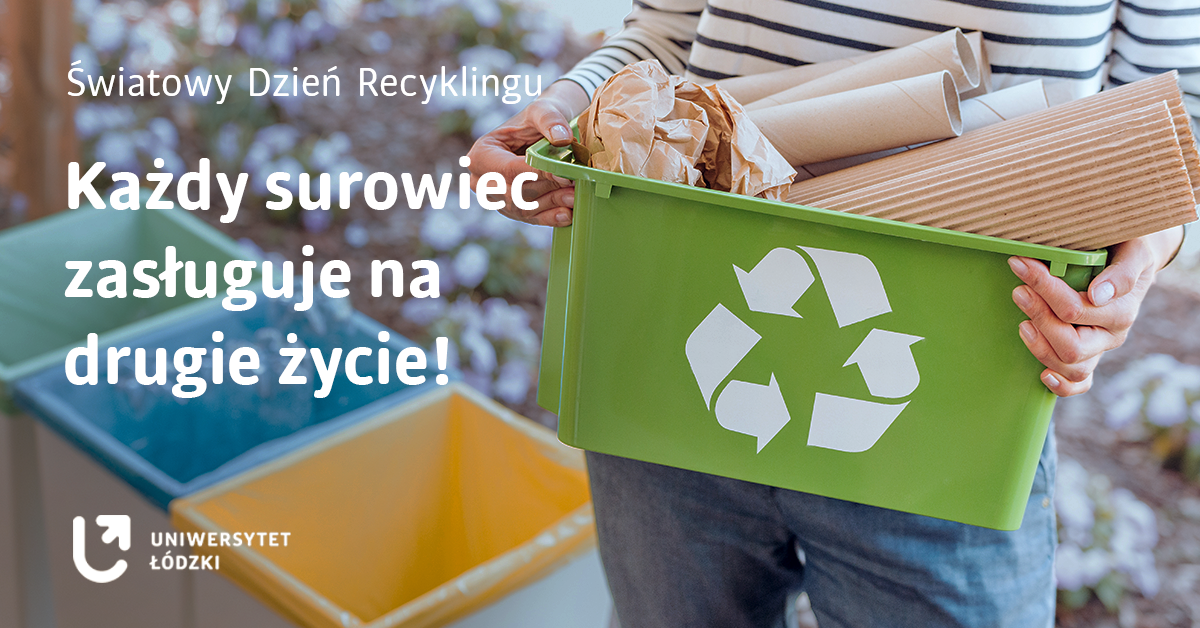
Join the recycling revolution, because every resource deserves a second life! Remember! Recycling is a shared responsibility for the future of future generations.
Source: Dr Marta Raźniewska and Dr Grażyna Kędzia
Developed by: Maria Brzozowska, Centre for External Relations and Social Responsibility of the University, University of Lodz
Graphics: Stefan Brajter, Centre for External Relations and Social Responsibility of the University, University of Lodz