The Łódź Ghetto, declared in February 1940 and operating until August 1944, was the longest-running ghetto in Polish territory. Located in the Old Town and Bałuty districts, it served as a forced labour camp, where an extensive administrative apparatus was established. A key role was played by the Archive Department, an institution that not only collected regulations but also documented the daily life of the ghetto community.
A group of researchers associated with the Archive began work on an encyclopaedia of the ghetto in 1943. By the time of its liquidation, a list of entries had been compiled and nearly 400 of them edited. Today, over eighty years later, researchers from the Philip Friedman Centre for Jewish Research at the University of Lodz have returned to this extraordinary project, undertaking its continuation and expansion.
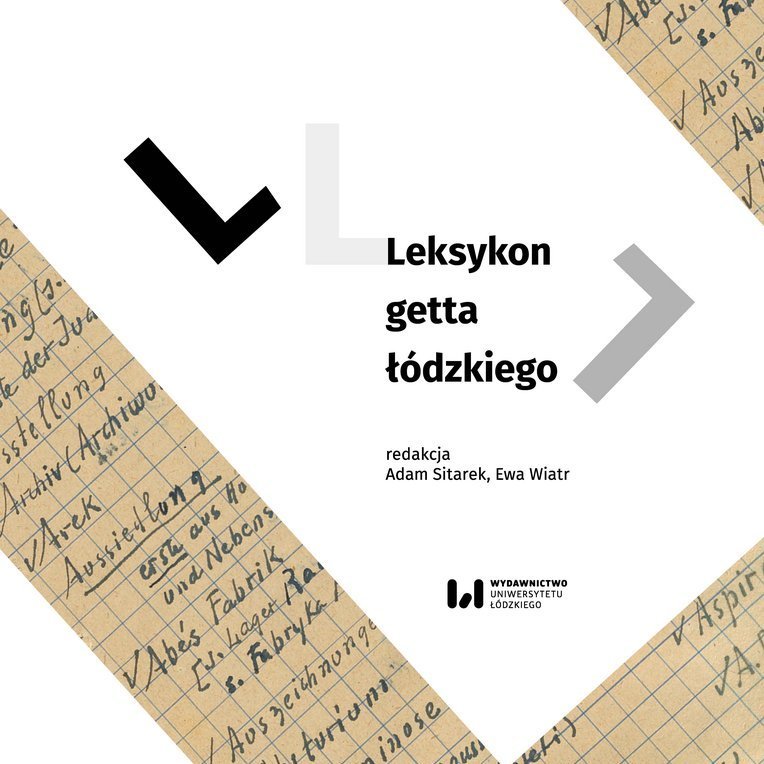
The publication "Lexicon of the Łódź Ghetto" edited by Adam Sitarekand Ewa Wiatr, in cooperation with Izabela Terela is the result of their work. In addition to the entries, readers will also find:
- a timeline of the ghetto's history,
- maps,
- and a list of streets within its boundaries (including pre-war and occupation-era names).
The "Lexicon of the Łódź Ghetto" is not only the result of years of research but also a tribute to those who, despite difficult circumstances, strived to preserve memory and document their own history. This publication is a vital compendium of knowledge for historians, researchers, teachers, students and anyone interested in the history of Lodz and the Holocaust.
More information about the book: Lexicon of the Łódź Ghetto – University of Lodz bookstore
For those who want to save space on their shelves, there's a dedicated website where oyou'll find much more material over time.