How to apply for the UNIC VIP FUND? (go to the project website)
***
Bartosz Kałużny (Centre for External Relations and Social Responsibility of the University, University of Lodz): How did the idea of creating a joint course on the Moomins as part of the UNIC VIP Fund come about?
Jarosław Płuciennik: The idea came almost immediately when I learned that universities in Oulu and Malmö had joined the UNIC Alliance. I immediately thought: The Moomins! They're the perfect common denominator. On the one hand, they are the heart of Nordic culture, and on the other, they have strong roots in Łódź thanks to the tradition of Se-Ma-Fora and the collections of the Film Museum.
My knowledge of Swedish was also crucial – while researching Tove Jansson's work, I wanted to remind everyone that she wrote in that language. I sent an open invitation to the Alliance partners and thus initiated collaboration with researchers from Finland and Sweden. Thanks to the very efficient support of the UNIC team at the University of Lodz Rector's Office, we quickly transformed this grassroots initiative into a professional international course.
BK: What benefits do you see in the UNIC VIP Fund model, in which courses are co-taught by researchers from different universities?
JP: The multi-voice nature is the greatest value. Students don't listen to a single lecturer but observe a dialogue between two different academic traditions and methodologies. This presents the humanities as a field of discussion, not a monologue.
This model also changes the dynamics of the classes – instead of a traditional lecture, we have something more like a research seminar, where live discussions can take place. Furthermore, the remote format allows us to easily invite guests: curators and creators from around the world, who would normally be elusive.
BK: Do students see the value of classes co-taught by lecturers from two different countries? How does this impact their engagement?
JP: At first, it can be challenging – some feel excited, others a little nervous about interacting with a foreign professor or the language barrier. However, this distance quickly disappears. When students see that the diversity of perspectives is an invitation to conversation, not an exam, they begin to open up. The presence of a lecturer from Finland is invaluable – for them, it provides access to knowledge "from the source" and a sense of participating in something that goes beyond the local context.
BK: Many people associate the Moomins primarily with children's literature. What makes them such a fascinating academic resource and cultural phenomenon?
JP: The Moomins are much more than a children's story – they are a powerful multimedia ecosystem, ideal for cultural, media and narrative research. Tove Jansson created newspaper comics for adults, full of irony, political satire and existential depth.
For today's students, Generation Z, the Moomins are fascinating because they perfectly fit into modern storytelling. Their story flows seamlessly between books, animation, games and social media. It's a great tool for exploring contemporary culture.
BK: What are the most important skills students develop during the course?
JP: We primarily learn conscious storytelling. Students learn how the same event changes meaning when transferred from a book to a film or game. We place a strong emphasis on "double addressing" – how to create content that will delight children and inspire adults to think.
Beyond theory, students create their own projects, learn critical self-reflection and work in an international, interdisciplinary team. These are skills that are useful in every creative industry today.
BK: What were the most impressive results of the students' work – whether in a textual, visual or a multimedia form?
JP: It was definitely their boldness in form. They created brilliant podcasts and short films that brought theory to life. The students masterfully used sound and image, creating an atmosphere that text alone couldn't convey. The literary experiments inspired by Jansson's universe were equally compelling. I'm most pleased when I see the theory from the lecture become a practical creative tool for them.
BK: Do you believe that the competencies reinforced during the course have applications beyond literature and art? If so, what are they?
JP: Absolutely. Working with storytelling is fundamental to communication in marketing, journalism and the NGO sector today. Transmedia thinking – how to scale an idea across various channels – is incredibly valuable in business and management. In addition, there's the intercultural sensitivity and empathy promoted by the Moomins. These are essential qualities in any modern work environment.
BK: The course has already had three editions and a fourth anniversary edition is planned for 2026, celebrating the 80th anniversary of the Moomins. What new elements would you like to introduce?
JP: We're constantly evolving. This year we have a record group of 25 students from various countries.
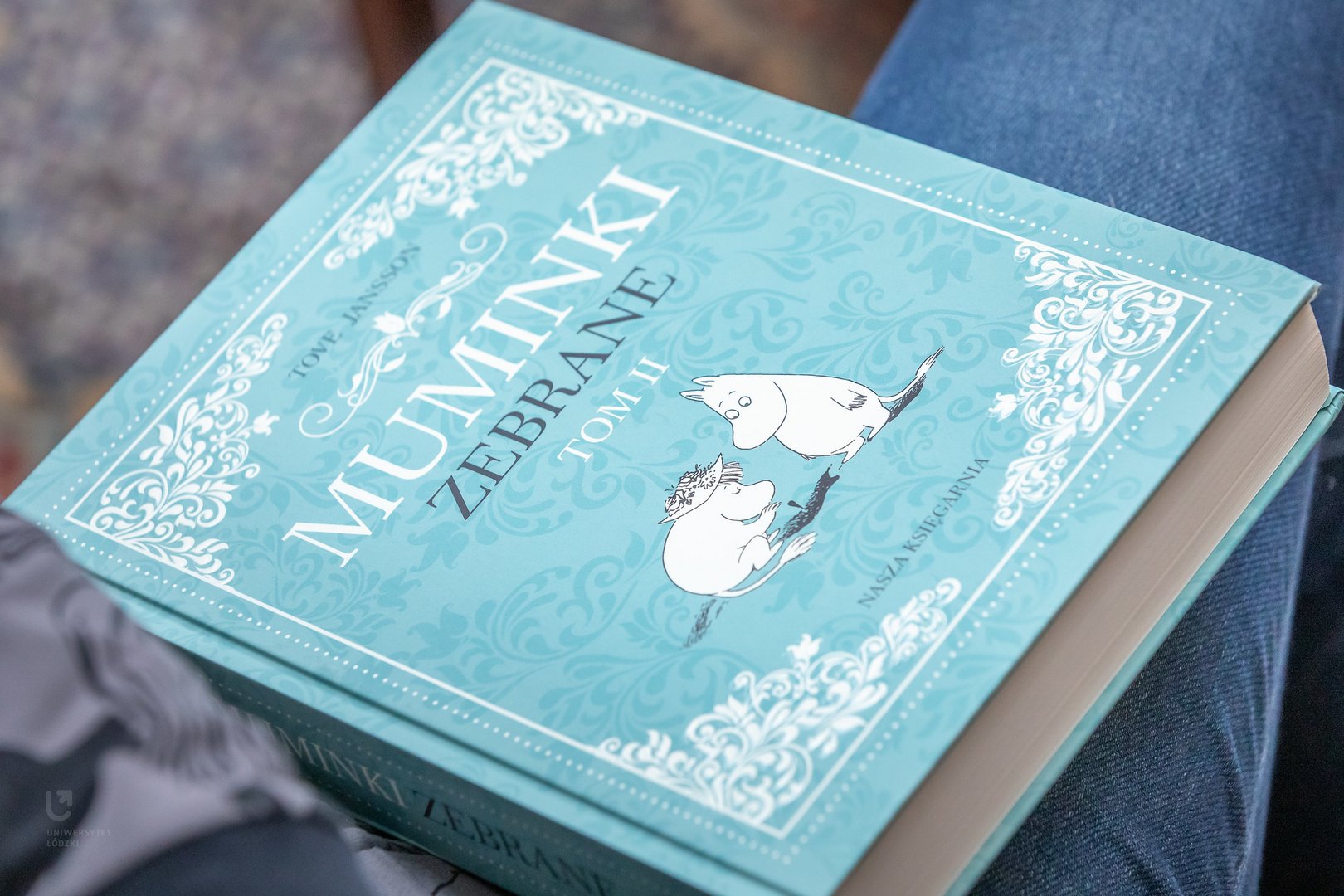
We are significantly strengthening our teaching resources. We have included a bilingual (Polish-English) book published by the Lodz Film Museum to commemorate the anniversary of the Moomin exhibition. It's a wonderful read, combining historical and exhibition perspectives. Furthermore, thanks to the UNIC funding, we have purchased a substantial collection of literature for the faculty's library. Students no longer have to rely solely on scattered digital sources – they have access to a robust database on-site.
Our research on the "Moomin management," which we are conducting in collaboration with the Faculty of Management at the University of Lodz, is an interesting new development. We analyse the world of the Moomins as a model of leadership based on empathy and community.
BK: How do you envision the future of courses created through the VIP Fund – in terms of teaching, internationalisation and innovation?
JP: As laboratories for modern teaching. The VIP Fund represents internationalisation "at home" – giving students a taste of a global career without having to travel. The future lies in flexible courses that combine the humanities with business and new technologies. These aren't just extracurricular activities; they're a space for experimentation that benefits both students and us, the faculty.
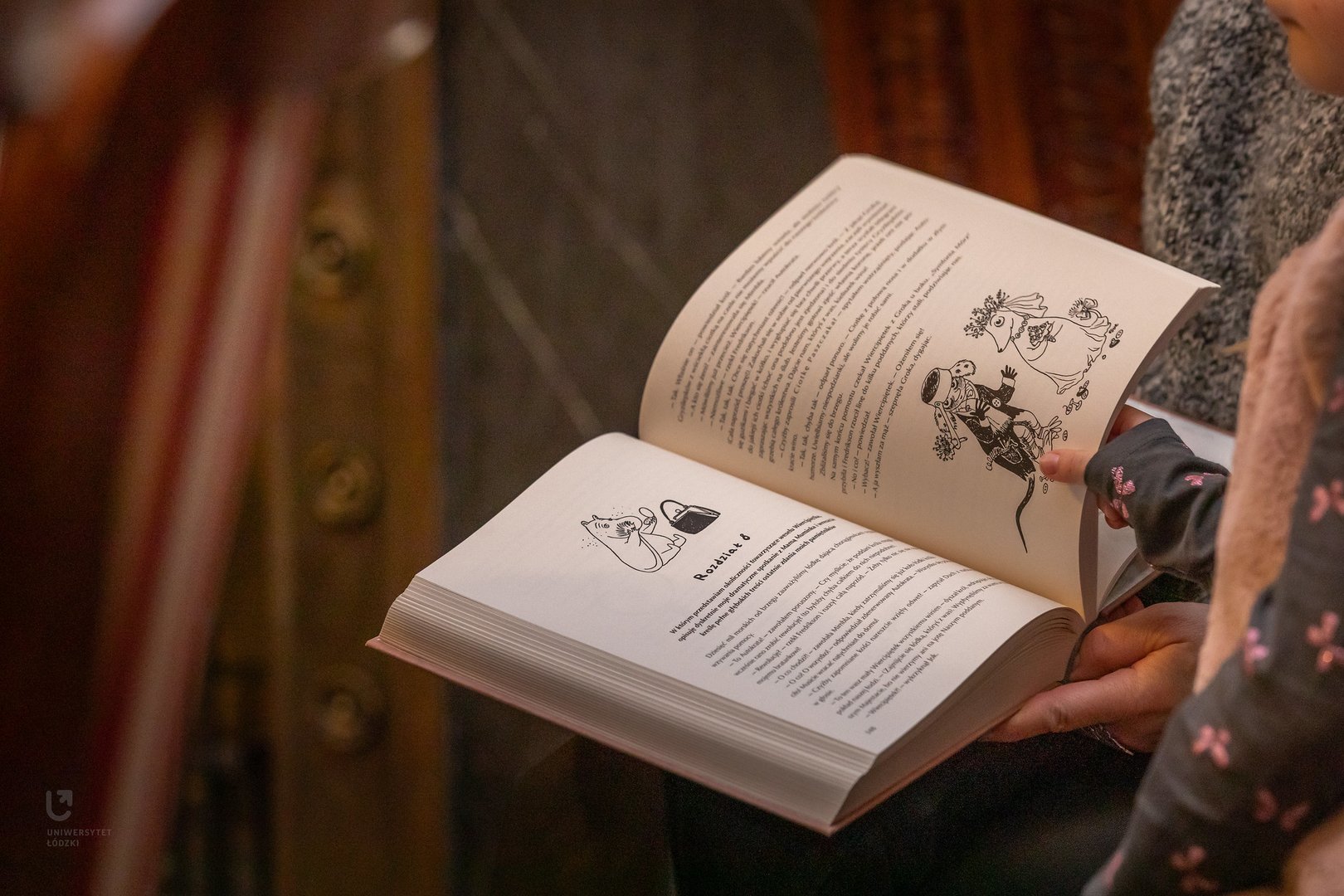
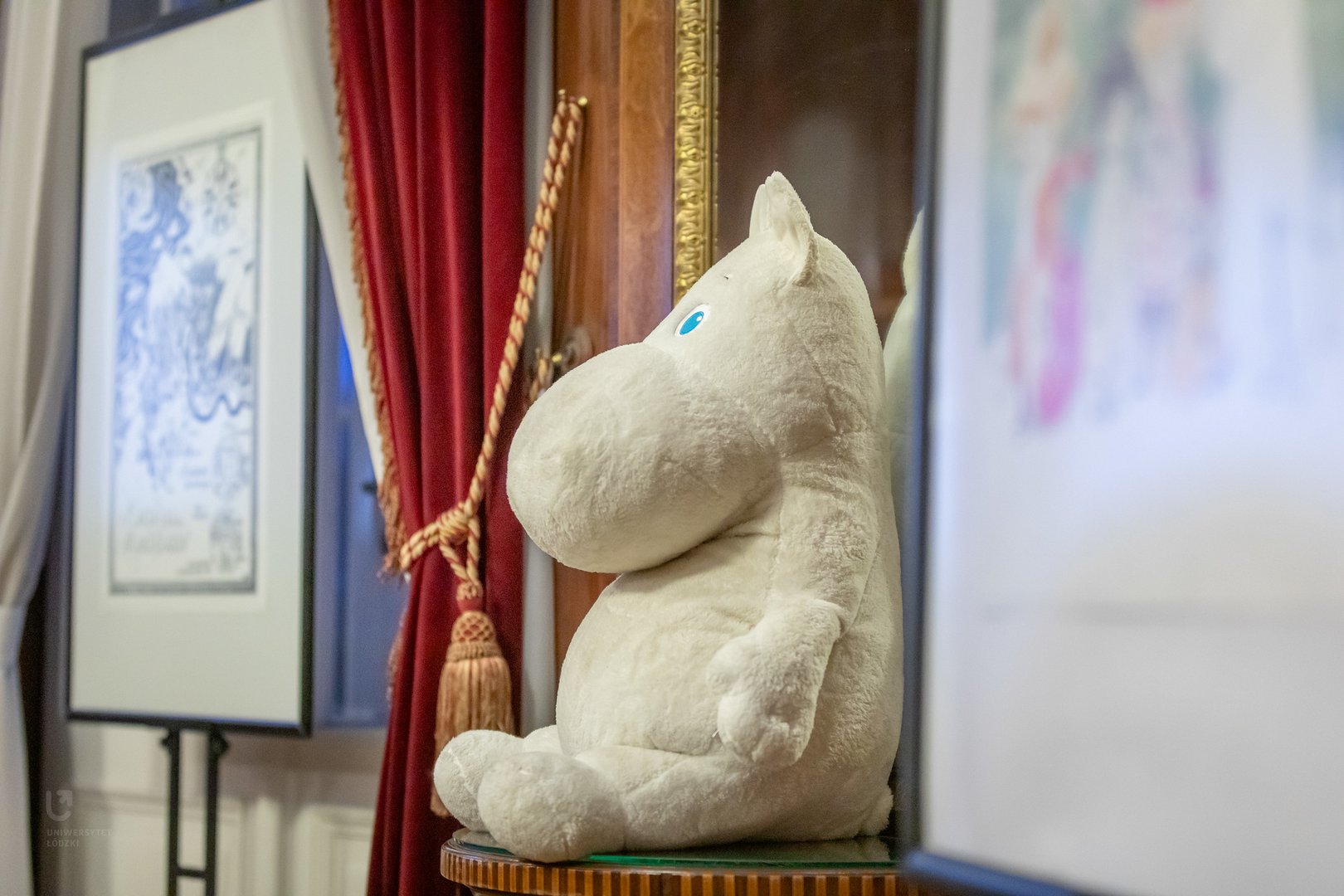
The photos were taken during a group reading of "The Moomins" at the University of Lodz, which took place on 30 January 2026. They were taken by Maciej Andrzejewski (Centre for Brand Communications, University of Lodz).