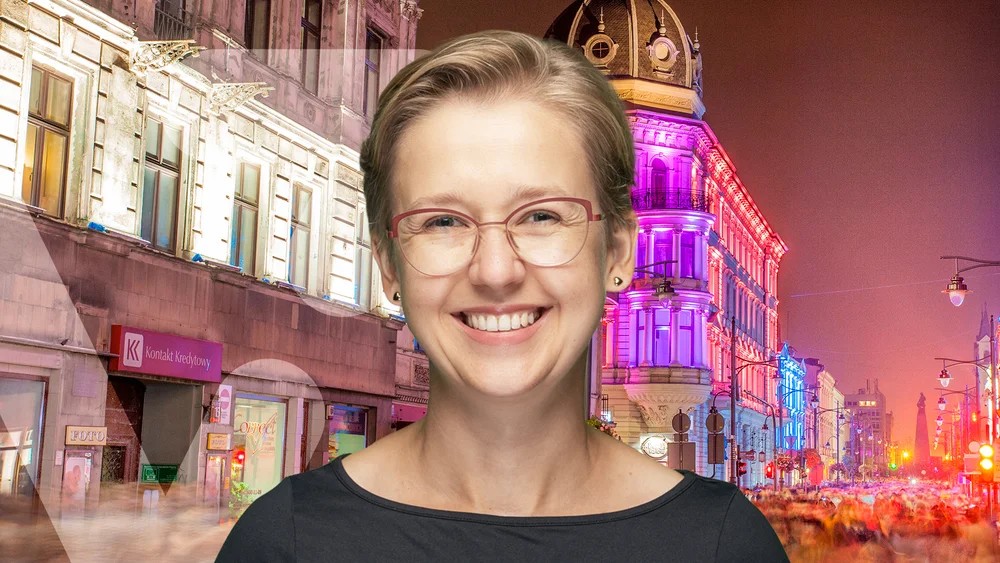
Is Łódź an Attractive Tourist Destination? What Are Its Greatest Strengths and Weaknesses in the Eyes of Visitors?
For many years, Łódź struggled with various negative stereotypes: an industrial city, grey in appearance and lacking typical tourist attractions. However, our research conducted during the celebrations marking the 600th anniversary of the granting of city rights to Łódź showed that visitors now perceive it as an attractive tourist destination, and its image is clearly changing. The city’s post-industrial heritage, diverse architecture, cultural venues and unique atmosphere received particularly positive evaluations. Numerous cultural events and festivals also play an important role, attracting both residents and visitors from outside Łódź.
At the same time, respondents identified areas requiring improvement. The most frequently mentioned issues concerned insufficient tourism infrastructure, transport accessibility challenges, an inadequate number of car parks and public toilets, and the need for further revitalisation of certain parts of the city. It can therefore be said that Łódź possesses a tourism potential that is increasingly appreciated, but which still requires further strengthening through investment in infrastructure and improvements to the visitor experience.
Is Łódź a City That Encourages Creative Activity and, If So, What Kinds?
Definitely. Łódź has been developing for many years, and its unique history, diversity of spaces and atmosphere of continual transformation all encourage creative activity. In my research on creative recreation, I demonstrated that residents and event organisers are eager to use the city’s open spaces for artistic, educational, community-engagement and integration activities. Social and cultural events are particularly important, as they use urban space not merely as a backdrop but as a central theme of the event itself. These initiatives take the form of workshops and often draw on street art, photography, performance art and handicrafts. Łódź inspires precisely because of its ambiguity. It is a city of contrasts, where modern spaces exist alongside places that still bear the traces of an industrial past. This diversity becomes a source of inspiration for artists, cultural animators, event organisers, photographers and city guides.
Does the City’s Post-Industrial Landscape Encourage Such Activities Among City Guides?
Research conducted among Łódź city guides shows that post-industrial spaces are one of the most important sources of inspiration for their work. Paradoxically, places once regarded as “difficult”, neglected or unattractive now form the basis for original walking tours designed for both tourists and local residents. City guides use former factories, workers’ housing estates, courtyards and post-industrial sites to tell the story of Łódź in an authentic and unconventional way.
The guides who participated in the research emphasised that the greatest value of these places lies in their unexpected character. This makes it possible to create unique tourism products that distinguish Łódź from other Polish cities. Moreover, guides do more than simply present urban spaces; they also help shape a new image of the city, enabling residents and visitors alike to discover and better understand its local identity.
What Are the Recommendations and Prospects for Tourism in Łódź?
First, we should continue to develop tourism offerings based on post-industrial heritage, as this is consistently identified as Łódź’s most distinctive feature by both visitors and tourism professionals, including city guides. Second, the city should continue to strengthen its programme of high-quality cultural, creative and outdoor events, which enhance its appeal both for residents and for visitors seeking experiences beyond conventional entertainment.
Third, further investment in tourism infrastructure is needed, including improved transport accessibility, expansion of accommodation facilities, a greater number of car parks and public toilets, as well as continued attention to cleanliness and urban maintenance. It also seems important to support cooperation between city guides, cultural institutions and organisations responsible for promoting the city.
Looking ahead, Łódź has every opportunity to continue growing in popularity as a tourist destination, and this trend is already becoming visible. The city’s greatest strength in competing for the attention of contemporary travellers may well be its unique character: authenticity and creativity, rather than attempts to imitate other urban centres or rely solely on large-scale events.
Commentary by: Dr Aleksandra Mroczek-Żulicka, Institute of Urban Geography, Tourism Studies and Geoinformation, University of Lodz. Her research interests include education and tourism, urban recreational space, and creativity in tourism and recreation. She is the author of the doctoral dissertation "Rola organizacji miejskiej przestrzeni rekreacyjnej w rozwoju plenerowej rekreacji twórczej. Przykład Łodzi” [The Role of Urban Recreational Space Organisation in the Development of Outdoor Creative Recreation. The Case of Łódź]. In her dissertation, she advocates expanding the definition of recreation to include creative recreation, drawing on both the principles of humanistic geography and psychopedagogical theories explaining the phenomenon of creativity.
Edit: Honorata Pytloch-Ogieniewska, Centre for External Relations and Social Responsibility of the University
Sources:
Lessman, J., Mroczek-Żulicka, A., & Stańczak, M. (2024). "Atrakcyjność turystyczna Łodzi w opinii uczestników obchodów jubileuszu 600-lecia nadania miastu praw miejskich” [The Tourist Attractiveness of Łódź in the Opinion of Participants in the Celebrations of the 600th Anniversary of the Granting of City Rights]. Studia Periegetica. doi.org/10.58683/sp.1940
Mokras-Grabowska, J., & Mroczek-Żulicka, A. (2024). Creative use of post-industrial space in Lodz: tour guides’ perspectives. Journal of Tourism and Cultural Change, 22(4), 438–455. doi.org/10.1080/14766825.2024.2402853
Mokras-Grabowska, J., & Mroczek-Żulicka, A. (2024). "Znaczenie przestrzeni postindustrialnej w kreatywnej działalności przewodników miejskich. Przykład Łodzi” [The Importance of Post-Industrial Space in the Creative Activities of City Guides. The Case of Łódź]. Prace Geograficzne, (176), 77–94.
Mroczek-Żulicka, A. (2024). "Plenerowa rekreacja twórcza: przykład Łodzi” [Outdoor Creative Recreation: The Example of Łódź]. Lodz University Press.