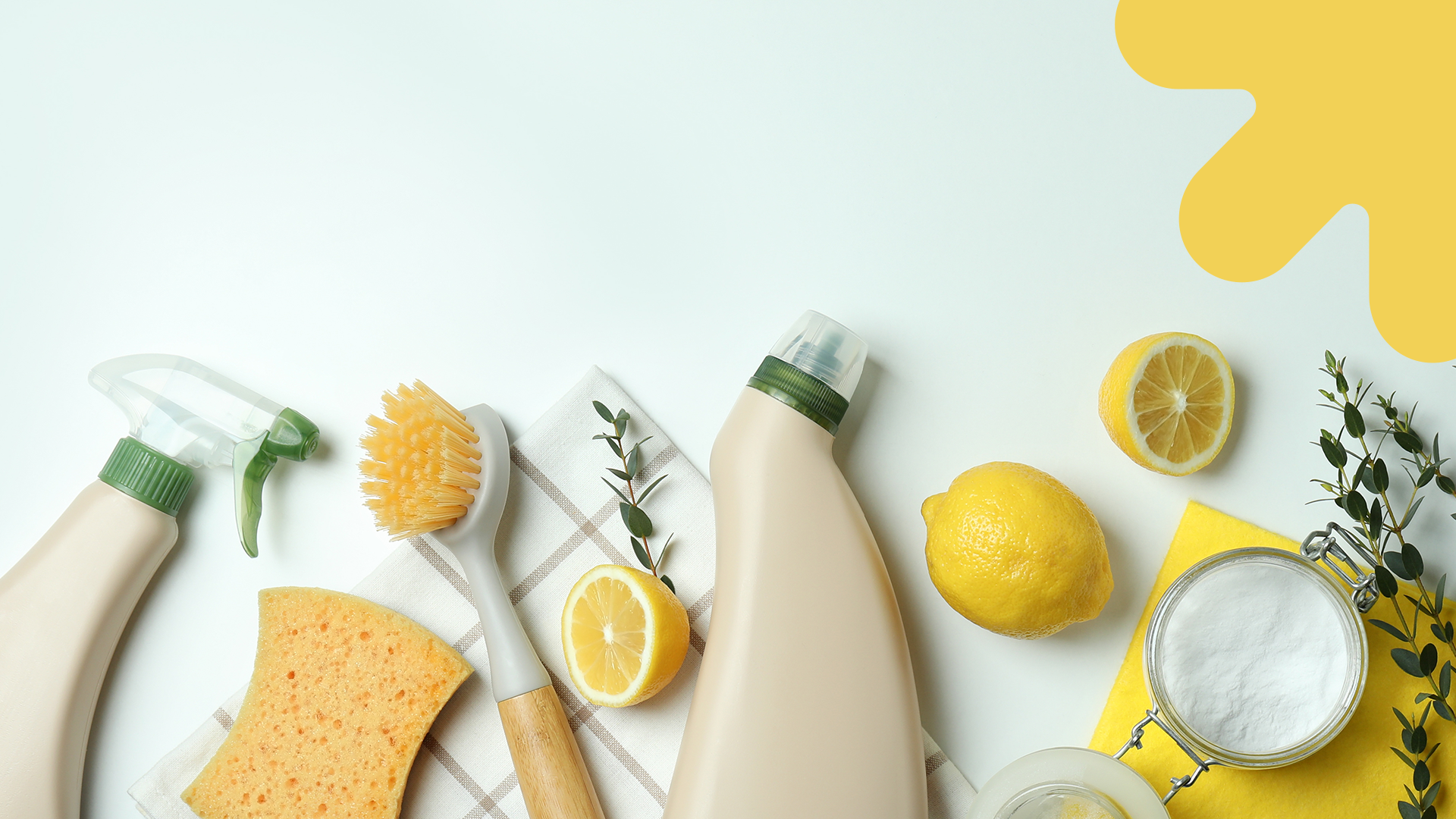
Very often, we don't know what surrounds us in everyday life, explains the researcher, adding: "When young people start learning chemistry, they suddenly widen their eyes in surprise when they discover that the substances from the textbook are standing right next to them in the kitchen and bathroom."
The Three Musketeers of home cleaning
If we had to choose a cleaning trio that's most effective at removing dirt, it would be: water + vinegar + baking soda, with (taking pride of place) soap. Why these ingredients? Vinegar helps dissolve deposits (e.g., limescale), has a bactericidal effect and regulates the solution's pH. As Prof. Rudnicki says, vinegar will help lower the pH slightly and is also great for descaling kettles and fixtures, or for cleaning windows. Baking soda, on the other hand, binds the ions responsible for water hardness – the ones that create that horror-movie scale. Soap is a source of surfactants (surface-active substances) that lift dirt and grease from surfaces. The researcher, with a smile, calls them "intelligent surfactants".
And if someone prefers their cleaning to smell less like a cafeteria and more like a spa? Essential oils come into play, with Prof. Rudnicki advising to choose natural oils for dishes and to be mindful of allergies. When washing up, essential oils can act as a kind of inhaler for our sinuses. The scientist himself recommends eucalyptus or peppermint.
Homemade dishwashing liquid recipe
Prof. Rudnicki provides approximate proportions, which can be used as a base recipe (and then adjusted to suit your needs).
For approximately 400 ml of liquid:
- 400 ml of warm water (preferably distilled or demineralised),
- 2 tablespoons of grated dish soap (or approximately 20-30 g of soap flakes),
- 1 teaspoon of baking soda (approx. 5 g),
- vinegar: up to approximately 30 ml (if the smell bothers you, you can use less),
- a few drops of natural essential oil (optional).
The result? A foaming liquid is thicker and more effective because each substance has its own purpose and together they form a single whole.
And how about lemon?
There's a recipe circulating online: boil lemons, add baking soda and a miracle will happen. Here, Prof. Rudnicki says firmly: stop!: Lemon is not only acidic, but also contains sugars and pectin, which can leave a sticky residue. In short: it's better to eat a lemon than to put it in dishwashing liquid.
Vinegar for clean windows... until a pigeon notices
In the section on cleaning surfaces, Prof. Rudnicki moves on to the classics. Vinegar and citric acid are used as descaling agents and as an excellent addition to cleaning windows and floors, so effective that birds don't even notice the sparkling clean windows and fly right into them.
What NOT to mix or chemistry without heroic experiments
Home remedies are simple, but there's an important warning. Not everything that cleans strongly is a good idea. The researcher draws attention to practices like adding strong products (e.g., Domestos, etc.) to water for washing floors, especially when there are children or pets in the house. And alcohol? Yes, it can be useful for disinfection, but it's still a toxic substance in large doses.
And here the researcher adds a golden rule, as old as chemistry itself: Nothing is poison and everything is poison... The dose makes the poison. Therefore, common sense is the most important ingredient in every bottle.
Cleaning is the training of a conscious consumer
Homemade concoctions aren't meant to replace the entire store. Rather, they demonstrate that we have choices, and we should understand and know them. Prof. Rudnicki encourages us to read labels and remember that caring for the environment is one thing, and caring for ourselves is another. Because sometimes, as he says, we unknowingly stuff ourselves with unnecessary substances.
So, if you ever run out of dish soap during the holidays, while away, or in the middle of a blizzard, don't worry. Water, soap, a bit of baking soda and vinegar can work wonders. And they don't need a super label on the packaging.
Source: dr hab. Konrad Rudnicki
Edit: Kacper Szczepaniak, Centre for Brand Communications, University of Lodz