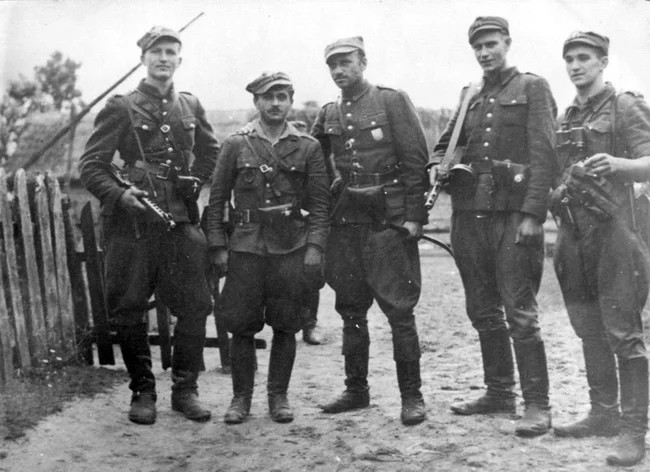
The Cursed Soldiers, also known as the Steadfast, refused to lay down their arms despite the end of World War II and the introduction of post-Yalta regulations in Central and Eastern Europe. They were punished by death for their resistance and the authorities of the time did everything possible to ensure their memory was erased.
The issue of the Cursed Soldiers, the so-called second underground, became widely known only in the early 1990s thanks to the exhibition "Żołnierze Wyklęci – antykomunistyczne podziemie zbrojne po 1944 r." [Cursed Soldiers – the anti-communist armed underground after 1944] organised at the University of Warsaw in 1993. The legislative initiative to introduce a holiday – the National Day of the Cursed Soldiers – was taken by President Lech Kaczyński, upheld by President Komorowski, and implemented by the act of 3 February 2011.
The date of the holiday was not chosen by accident – on 1 March 1951, after a show trial, the leaders of the Fourth Main Board of the independence organisation "Freedom and Independence" were shot in Warsaw's Mokotów prison. The communists also killed WiN chairman Lieutenant Colonel Łukasz Ciepliński and his associates: Adam Lazarowicz, Mieczysław Kawalec, Józef Rzepka, Franciszek Błażej, Józef Batory, and Karol Chmiel. Their bodies were buried in an undisclosed location.
The fate of the Cursed Soldiers at the University of Lodz, was researched by, among others, the late Prof. Przemysław Waingertner from the Faculty of Philosophy and History, who passed away in 2024. Today, we recall the Professor's lecture on the soldiers of the second underground resistance.
Source: Press Office, University of Lodz