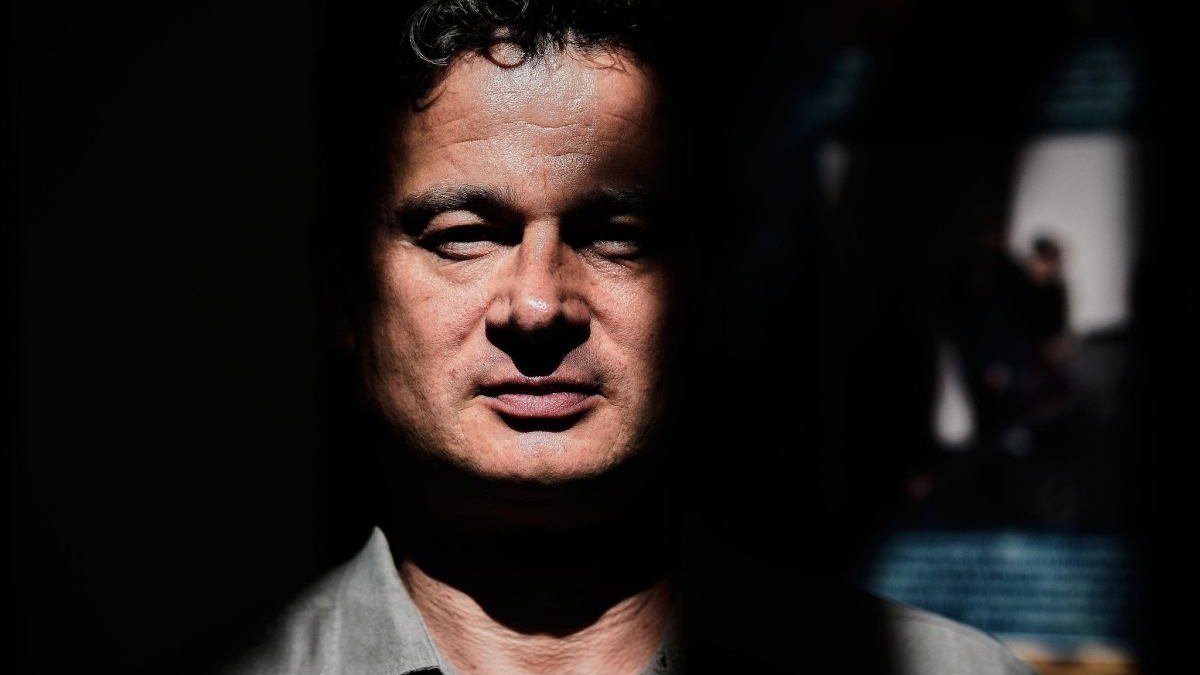
Dr. Olgierd Ławrynowicz, Vice Head of the Institute of Archaeology at the University of Lodz, has been conducting interdisciplinary research in the field of contemporary archaeology, including the material traces of the crimes of 20th-century totalitarianism. His work combines archaeology with ethnography and cultural anthropology, creating a unique research model that not only documents the past but also engages local communities in its discovery.
I came across one of the most important research in the field of contemporary archaeology, which – in terms of the interdisciplinary methods used – was one of the first of its kind in the world. Archaeologists with experience in researching medieval and modern battlefields and physical anthropologists who had previously cooperated with archaeologists played a leading role in this work.
– he recalls his participation in the work in the Katyn Forest in 1995. The search, discovery and identification of the remains of execution victims from World War II and the postwar years, including those at the former military training ground in Brus, in the Lućmierz Forest, and in the Okręglik Forest constitute an important part of his research. Thanks to artifacts such as wedding rings engraved with wedding dates, train tickets and signet rings with the owners' monograms, it was possible to reconstruct the biographies of specific individuals.
A small object can evoke a fascinating, albeit tragic, story from the past
– says the archaeologist, underlining the importance of material traces of history.
Currently, Dr Ławrynowicz is directing work on the "Leksykon Archeologii Katyńskiej (1990–2015)" [Lexicon of Katyn Archaeology (1990–2015)] implemented as part of the National Programme for the Development of the Humanities. This project documents not only archaeological data, but also eyewitness accounts, family memories and artifacts from the Katyń Museum. It is emphasised that the documentation being created is not only of scientific importance, but also of moral significance – it is a form of commemoration for the victims.
Reflection on the role of archaeology in building a common identity on various levels is an important aspect of his work.
We should look for common elements in European identity – culture and language, especially here in Central Europe. Elements of shared heritage are important, but so is locality
– he says, emphasising the importance of field research and cooperation with local communities.
As part of the research in the Kraków-Częstochowa Upland, conducted using contemporary ethnoarchaeology methods, Dr Ławrynowicz's team has discovered, among other things, fragments of tombstones thrown into the Warta River after World War II – not by the occupying forces, but by members of the local community. This is an example of how complex and ambiguous collective memory can be.
Research conducted since 2021 by the Institute of Archaeology, University of Lodz, in cooperation with the Institute of National Remembrance's Office of Search and Identification as the lead partner, enriches our knowledge of traces of totalitarian crimes each research season.
It's important to raise awareness of the fact that war is always evil and what hatred can lead to, especially among young people
– underlines Dr Ławrynowicz, calling for a responsible approach to history, free from current political interests.
Contemporary archaeology, as the example of Lodz demonstrates, is not limited to the past – it can also support criminal investigations, as in the case of cases from the X-Files.
The full interview with Dr Olgierd Ławrynowicz is not only a story about the work of an archaeologist, but also a profound reflection on memory, identity and the role of science in multidimensional understanding of the past. We encourage you to read Małgorzata Szlachetka's conversation with Dr Olgierd Ławrynowicz (in Polish).
Science Inspires – from research to popularisation of knowledge
More conversations with researchers from the University of Lodz can be found on our "Nauka Inspiruje" [Science Inspires] YouTube channel. There are podcasts, lectures and conversations with researchers representing various fields – from history and literature, through sociology and biotechnology, to artificial intelligence. It's a space where science meets curiosity, and specialised knowledge is presented in a new, accessible way.
Source: Małgorzata Szlachetka, Gazeta Wyborcza
Edit: Agata Dawidowicz, Centre for External Relations and Social Responsibility of the University, University of Lodz
Photo: Tomasz Stańczak, Agencja Wyborcza.pl