Camera Action – a festival with roots in UniLodz
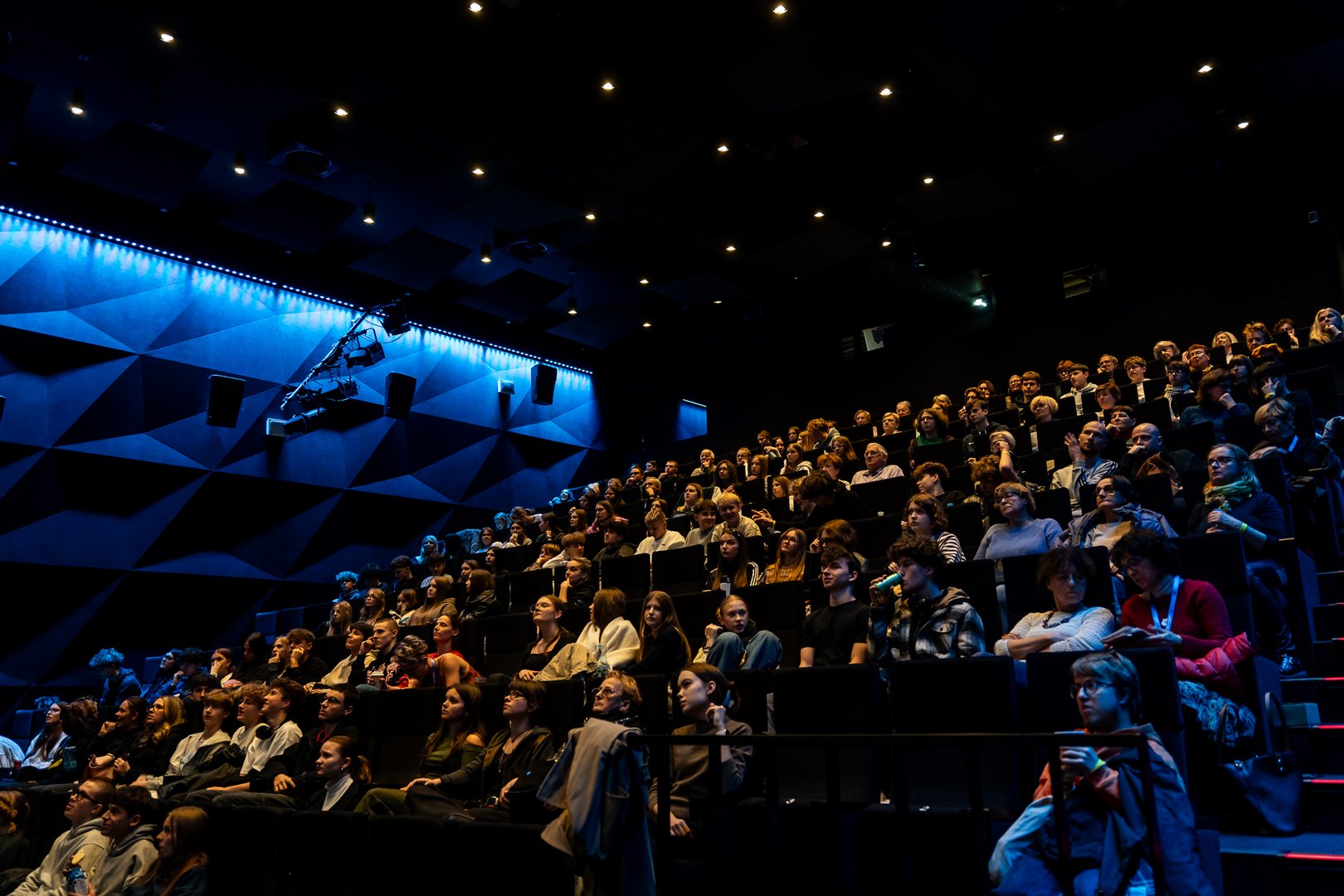
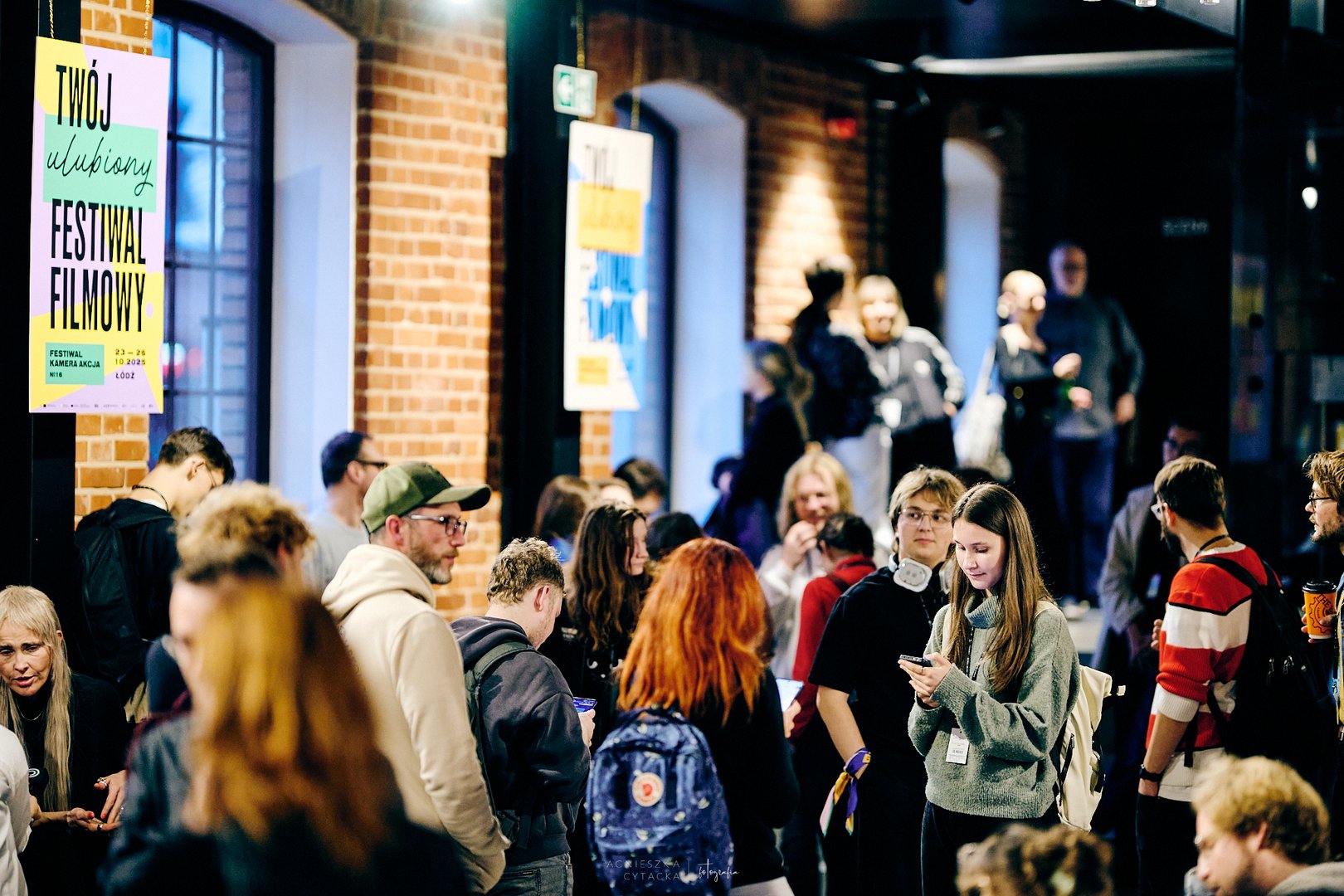
The Camera Action Festival is a special event organised by alumni of the University of Lodz Film Studies. Critical conversation about cinema that combines passion with reflection is at the heart of the festival. Our scholars and students served as jurors, selectors and moderators, contributing to an atmosphere of openness, critical reflection and exchanging thoughts.
Film criticism and young talents
The Krytyk Pisze (Critic Writes) Competition – an initiative that discovers new talents in the field of film writing, has been consistently one of the highlights of the Camera Action Festival. The Critics' Jury (composed of Jakub Popielecki, Marta Stańczyk, and Joanna Wróżyńska) awarded the Grand Prize to Daria Sienkiewicz for her text, “Film balkonowy – recenzja filmu Balkoniary” [Balcony Film – A Review of the Film Balkoniary]. The author of the best critical text received, among other awards, the University of Lodz #FreeMyMind Award.
Authors Spotlight – world cinema under the microscope
The festival also featured the International Authors Spotlight Competition, showcasing the most interesting short films from around the world. This year, the Authors Spotlight competition selection was supported by members of the University of Lodz Student Science Club for Film Studies: Karolina Majka and Ada Raczkowska. The Jury of the University of Lodz Student Science Club for Film Studies, composed of Julia Jeziorczak, Julia Kaźmierczak and Adrian Michalski, presented their award. The jury recognised the film "Taty nie ma" [Daddy's Not Here] directed by Jan Saczek.
The Lodz University Press supported all festival competitions with prizes
Film Expert Campaign – discussions about the future of cinema
The Film Expert Campaign took place as part of the festival. The meeting of student science clubs from all over Poland was led by Jakub Dulny, a student of Film Studies and Audio-Visual Media at the University of Lodz and a member of the University of Lodz Student Science Club for Film Studies.
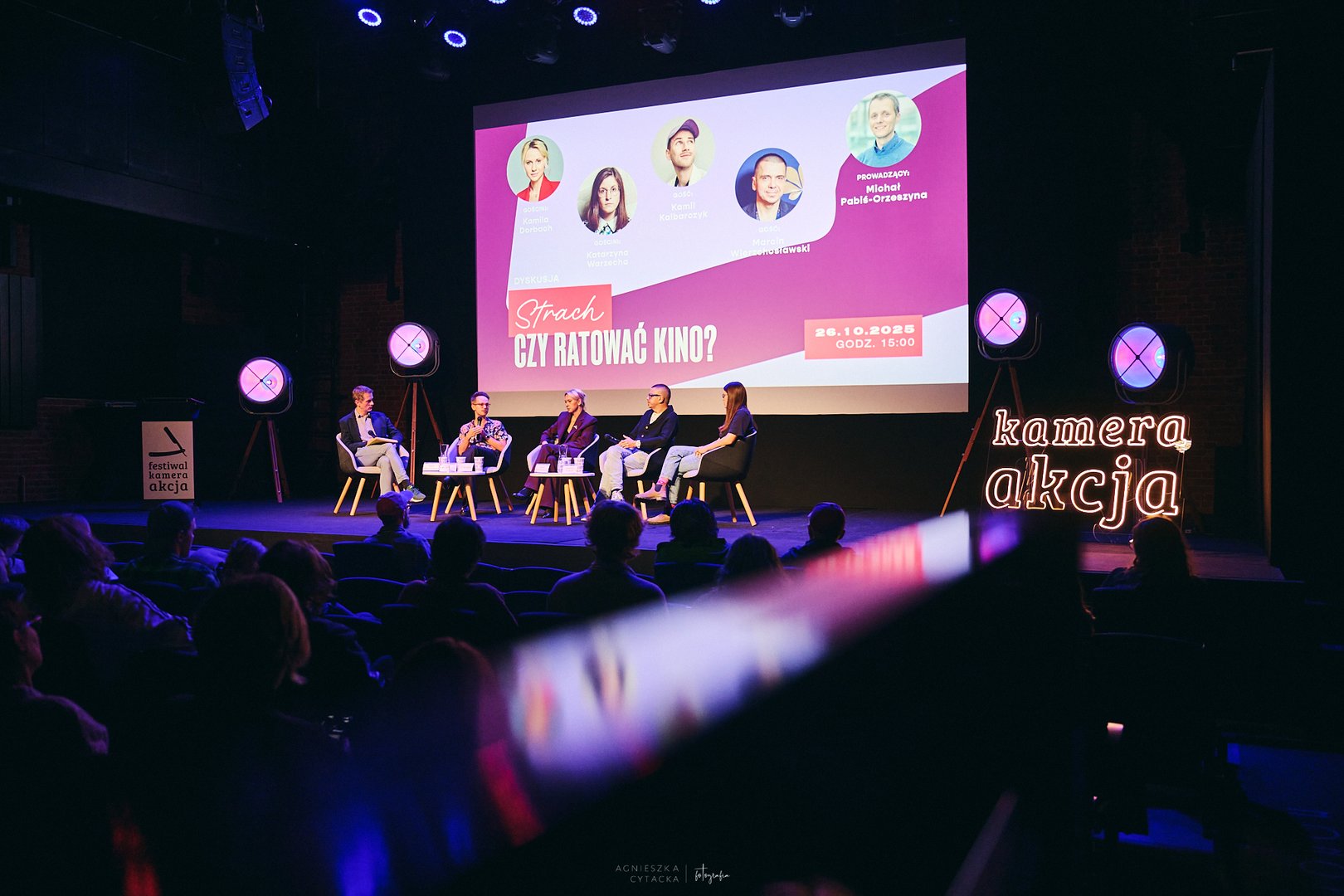
Dr Michał Pabiś-Orzeszyna (Department of Film and Audio-Visual Media, University of Lodz) led the discussion "FEAR. Should Cinema Be Saved?", which touched on topics such as the algorithmisation of film consumption, the impact of arthouse cinemas and film festivals on audience development, Polish film production in an international context, AI in the film industry and the challenges of the TikTok-isation of media.
Science Inspires – when science meets cinema
Together with science popularisers from the Centre for External Relations and Social Responsibility of the University, we prepared the festival section "Science Inspires" – a series of films demonstrating how science and cinema intertwine. From the history of Lodz's trams, through the gold economy, to underwater discoveries – the materials were available online and on-site, complementing the film screenings.
What do "Reksio", “Miś Uszatek” and "Bolek i Lolek" have in common with action movie legend Bruce Lee? Oliwia Nadarzycka (The University of Lodz Doctoral School of Humanities) analysed the phenomenon of Polish animations from 1964–1986, which became an export hit during the Polish People's Republic. Festival audiences learned about how the development of trams affected the lives of residents thanks to a podcast presentation featuring dr hab. Kamil Śmiechowski, Associate Professor at the University of Lodzhttps://www.uni.lodz.pl/en/employee/kamil-smiechowski (Head of the University of Lodz Interdisciplinary Centre for Urban Studies). Those interested in economics learned about the role of gold, the US dollar and treasury bonds thanks to a presentation by Dr Ewa Feder-Sempach (Department of International Economics, Faculty of Economics and Sociology at the University of Lodz). Viewers of the Camera Action also learned that scientists from the University of Lodz (led by dr hab. Krzysztof Pabis, Associate Professor at the University of Lodz and the UniLodz Vice-Rector for Popularisation of Science and Education), in cooperation with the Bergen Maritime Institute, discovered over 300 previously unknown species and explored the seabed to a depth of 1,000 metres. In addition to expert commentary, the video footage featured extraordinary underwater organisms.
During the on-site edition, two films from the "Science Inspires" series were presented before the screenings of selected films. The screening of "Sprawa osobista" [A Personal Matter] was preceded by the podcast "Łódzkie zamki przemysłu – co pozostało z dawnych imperiów?" [Industrial Castles from Lodz – What Remained of the Former Empires?] The film "The Moromete Family: Father and Son" was preceded by the video "The Promised Land – Prof. Kamil Śmiechowski Compares a Literary Work with a Film Adaptation."
The University of Lodz as a partner of the 16th edition of the Camera Action Festival. The event is implemented as part of the "Lodz Region for the Young" programme, co-financed by the Lodz Voivodeship Government.
The "Man in Danger" Media Festival – with empathy about difficult issues
Also in October, the University of Lodz was a partner of the 35th anniversary edition of the "Man in Danger" Media Festival – an event that puts people at the centre.
A documentary as a voice of change
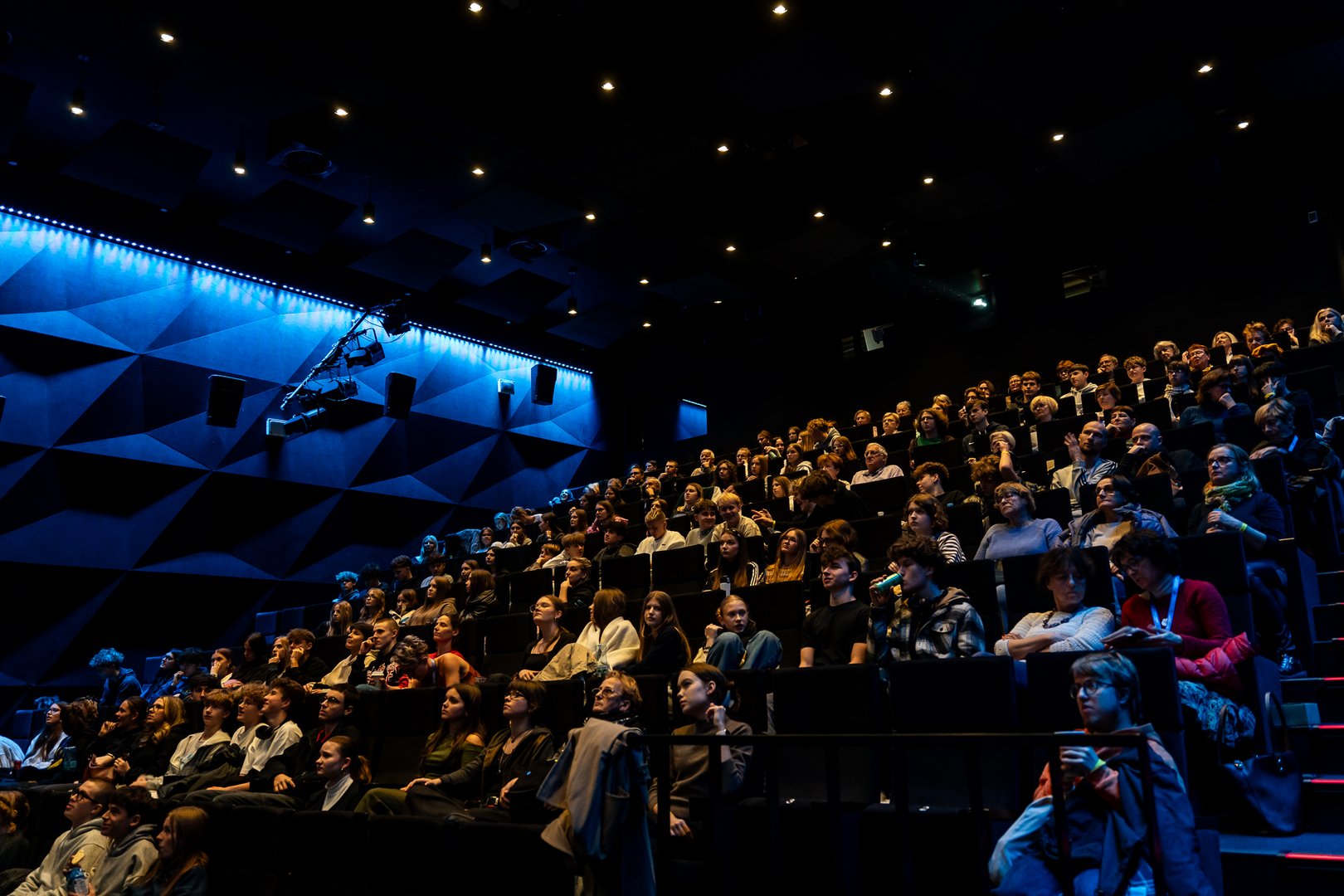
The "Man in Danger" Media Festival showcased Polish and international documentaries, as well as television and radio reports, which, through their content and form, provoke discussion and reflection. These presentations challenge stereotypes, avoid simplistic judgments and encourage openness towards others. Meetings with documentary filmmakers, reporters and journalists constitute a key part of the festival’s programme. Representatives of our university actively co-created the Festival programme, moderating the meetings and serving on the selection committees. The participating researchers included: Dr Emil Sowiński (Department of Film and Audio-Visual Media, University of Lodz), Dr Joanna Bachura-Wojtasik (Department of Journalism and Social Communication, University of Lodz), Dr Krzysztof Grzegorzewski (Department of Journalism and Social Communication, University of Lodz), Anna Michalska (the University of Lodz Doctoral School of Humanities), dr hab. Kamila Żyto, Associate Professor at the University of Lodz (Head of the Department of Film and Audio-Visual Media, University of Lodz).
The University of Lodz also funded the Aleksander Kamiński Award, which went to Alexis Bloom for her film "The Bibi Files". The jury, composed of Jacek Bławut (Chairman), Łukasz Muszyński, Dorota Wardęszkiewicz, Edyta Wróblewska, and dr hab. Kamil Żyto, Associate Professor at the University of Lodz, recognised the South African director for her "bold, inquisitive and multidimensional account of power, which exposes the mechanisms of corruption and impunity, while reminding us that documentary can be a catalyst for social change.
Courageously and together with UniLodz
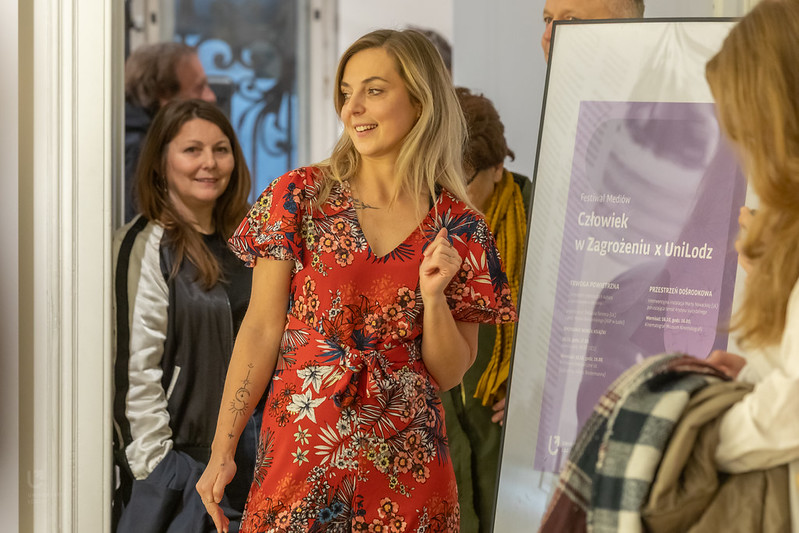
The festival events were also accompanied by artistic and scholarly activities, which opened a space for conversation about difficult yet crucial issues. The Film Museum in Lodz presented the exhibition "Centripetal Space" by Marta Nowacka (University of Lodz), addressing the topic of suicidal crisis. A meeting was held at the Urania Cinema at the National Centre for Film Culture to discuss the book "Airborne Fear" – a project by Prof. Tomasz Ferenc (University of Lodz) and Professor Marek Domański (The Strzemiński Academy of Fine Arts), combining a publication with a documentary photography exhibition. Participants in the discussion included Prof. Tomasz Ferenc, Prof. Marek Domański, Anna Gruver, and dr hab. Katarzyna Waniek, Associate Professor at the University of Lodz (Department of the Sociology of Culture, University of Lodz). The Photosophical Archive, located at the Biedermann’s Palace, showcased Prof. Marek Domański's photographs – moving accounts of his travels to Lviv, Kyiv and Odessa.
Accompanying events – a photo report
UniLodz – a university that co-creates culture
The University of Lodz's commitment to two key film festivals – "Camera Action" and "Man in Danger" Festivals – has demonstrated that culture and science can coexist creatively, empathetically and courageously. The participation of our academic community in debates, competitions, exhibitions and film projects is an expression of our commitment and the co-creation of a space where important social, artistic and scientific topics meet in dialogue. The participation of students as volunteers, who support the organisation of events, gain valuable experience and contribute to the festival atmosphere of openness, exchange and dialogue is a key aspect of the UniLodz's involvement. This confirms that together we are creating a university that listens, inspires and builds relationships – with the city, with culture and with other people.
Source: Camera Action Festival, "Man in Danger" Media Festival
Edit: mgr Agata Dawidowicz, Centre for External Relations and Social Responsibility of the University, University of Lodz
Photos: Maciej Andrzejewski (Centre for Brand Communications, University of Lodz), festival materials: Camera Action Festival, "Man in Danger" Media Festival