What is drug biotransformation?
Before a drug can act and be excreted, it must be appropriately transformed in the body through a process called biotransformation. This three-stage process allows hydrophobic (i.e., water-insoluble) substances to become hydrophilic and be eliminated from the body. In the first stage, a reactive group attaches to the drug, which allows for its conjugation with an endogenous compound in the second stage. Then the so-called conjugates are formed – forms that are safer and easier to excrete. The third stage involves their removal by active transport. A key role in the first stage of biotransformation is played by enzymes from the monooxygenase family, working in conjunction with cytochromes P450, which are responsible for the metabolism of over 70% of drugs. Another important enzyme is MAO, a monoamine oxidase, which breaks down, among other things, serotonin, dopamine, adrenaline and tyramine – a compound found in many foods.
Grapefruit Juice + Medication = A Risky Combination
Is it true that you shouldn't take your medication with grapefruit juice? Absolutely yes – says Prof. Bukowska. This juice contains furanocoumarin compounds, primarily bergamottin, which block the aforementioned cytochromes responsible for drug metabolism. This can result in excessive drug concentration in the blood and the risk of serious complications. Currently, at least 85 drugs are known to interact dangerously with grapefruit – including popular medications for hypertension, cancer and opioid painkillers. An example is methadone, whose concentration can dramatically increase after consuming grapefruit or grapefruit juice.
Blue cheese, barbecue and... dangerous consequences
However, juices are not everything. Grilled meat can also affect the effectiveness of medications. High temperatures cause the formation of polycyclic aromatic hydrocarbons, which stimulate cytochromes and accelerate drug metabolism, thereby weakening their effectiveness.
Products containing tyramine, such as blue cheeses, long-aged meats and pickled foods, are also dangerous. Tyramine can cause a rapid rise in blood pressure and pose a life-threatening risk to people taking MAO inhibitors – drugs used, among other things, for depression treatment.
Herbs and Supplements – Are They Safe?
Not only food but also herbs and supplements can interfere with the effectiveness of medications. An example is Hypericum (also known as St. John's wort), often used as a natural remedy for low mood. Its components stimulate cytochromes and accelerate drug metabolism, which can cause drug levels to drop below therapeutic levels. This was the case with a 29-year-old kidney transplant patient. She was taking an immunosuppressant while also taking St. John's wort. The result? transplant rejection and the need to return to dialysis.
Cigarette smoke also plays a role!
Smoking also interferes with the metabolism of some medications, especially those broken down by the CYP1A2 enzyme. In a patient diagnosed with schizophrenia, an antipsychotic medication failed to work, despite the correct dosage. Only after smoking cessation did a therapeutic effect occur.
Green tea and... marmalade
Seemingly innocuous products can impact treatment. For example, green tea, a source of vitamin K, weakens the effects of the anticoagulant drug warfarin. A case report describes a 44-year-old man who developed clotting disorders due to drinking large amounts of this beverage.
The story of a doctor who, after a liver transplant, consumed grapefruit marmalade was even more surprising. In doing so, he unknowingly exposed himself to a serious interaction with the medication he was taking, resulting in nephrotoxicity and cardiovascular problems.
What's the recipe for taking medications safely?
Always take your medications with water and read the package inserts – underlines Prof. Bukowska. Avoid combining medications with milk (insoluble calcium salts can be formed) or strong tea (which contains tannins, which bind, for example, to iron). Even "healthy" products, such as herbs or green tea, can become dangerous when combined with certain medications. The best way to avoid problems is awareness and caution, and if in doubt, ask your doctor or pharmacist.
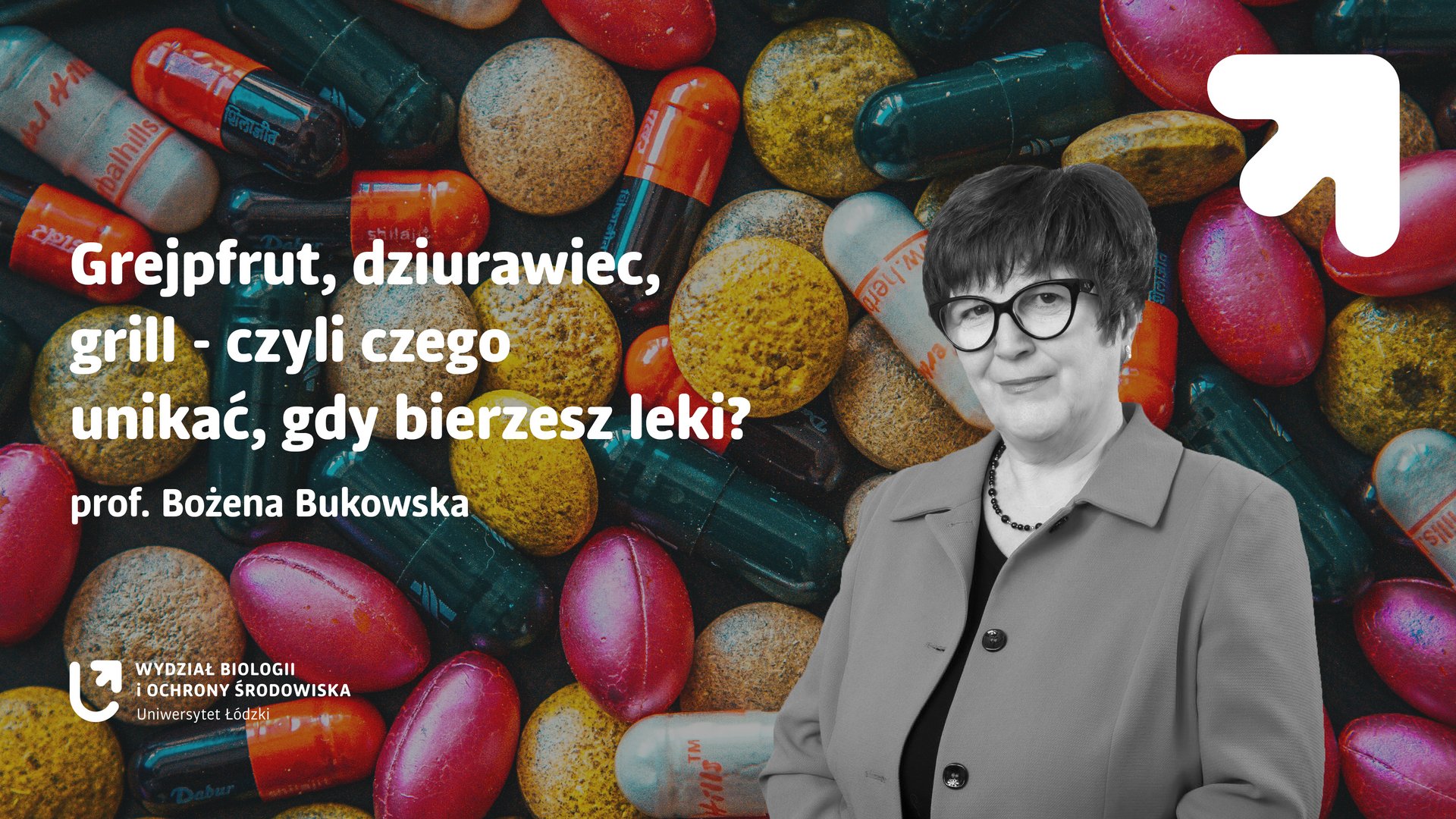
Prof. dr hab. Bożena Bukowska is the Head of the Department of Biophysics of Environmental Pollution at the Faculty of Biology and Environmental Protection, University of Lodz. She conducts research on the effects of various environmental xenobiotics (e.g., pesticides, bisphenols, phthalates, plastic nanoparticles) on human blood cells. She also analyses the biological properties of plant extracts. Prof. Bukowska cooperates with scientists from the Medical University assessing oxidative stress in patients with familial hypercholesterolemia and cardiovascular disease, as well as the role of various medications in reducing this process. She shares her extensive knowledge and experience with students through lectures on toxicology, ecotoxicology, the chemical basis of biomonitoring and a monograph entitled "Chemia i toksykologia żywności" [Chemistry and Toxicology of Food].
Source: Prof. dr hab. Bożena Bukowska (Department of Biophysics of Environmental Pollution at the Faculty of Biology and Environmental Protection, University of Lodz)
Graphic: mgr Mateusz Kowalski (Promotion Centre, Faculty of Biology and Environmental Protection, University of Lodz)
Edit: lic. Kacper Szczepaniak, mgr Kamila Knol-Michałowska, mgr Mateusz Kowalski (Promotion Centre, Faculty of Biology and Environmental Protection, University of Lodz)