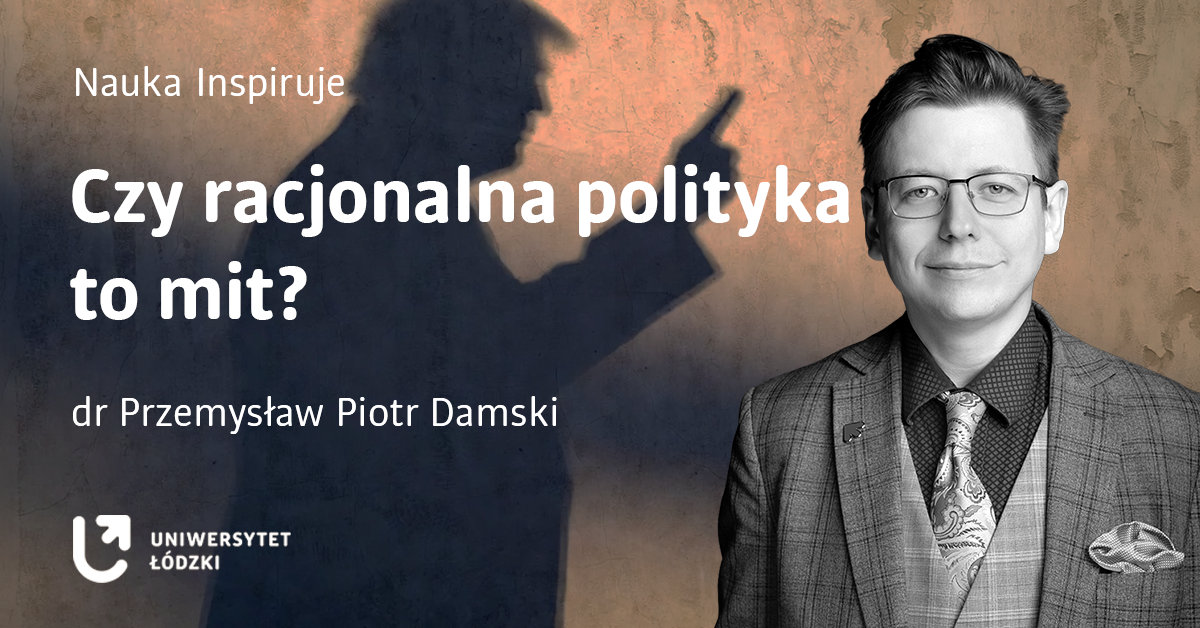
In political conversations, we often assume that programmes, numbers, strategies and cold calculations are paramount. However, is this really the case? Or perhaps emotions play a much greater role: fear, anger, a sense of threat, pride, the need for strength and the desire for community?
Does a politician who speaks directly inspire greater trust, even if they violate pre-existing norms of public language? Why do negative emotions so easily take root in public debate? And does the division into "rational" and "emotional" politics even make sense anymore?
Dr Przemysław Piotr Damski from the Department of Theory and History of International Relations at the University of Lodz, a historian and researcher of US foreign policy is the guest of the episode. In the conversation, he demonstrates that emotions are not incidental or incidental in politics. They can trigger collective perceptions, strengthen a sense of identity, influence leaders' decisions and shape international relations. And in the process, they raise an uncomfortable question: how much of politics is still about cool-headed analysis and how much is about mood, temperament and personal prejudice?
The conversation goes further – to classic questions of political theory. Is man, above all, a rational being, as ancient thinkers would have it? Or perhaps contemporary politics is merely demonstrating more clearly than before what has always been present: that emotions and reason operate not separately, but together? If you want to better understand today's leaders, election campaigns and social divisions, you should listen to this thread.
Listen to the episode and find out:
whether emotions in politics are a sign of weakness or perhaps one of the most effective tools of influence; whether Trump has broken with old policies or merely reactivated old mechanisms in a new form; and why without understanding emotions, it is increasingly difficult to understand the modern world.
Edit: Michał Gruda (Centre for External Relations)