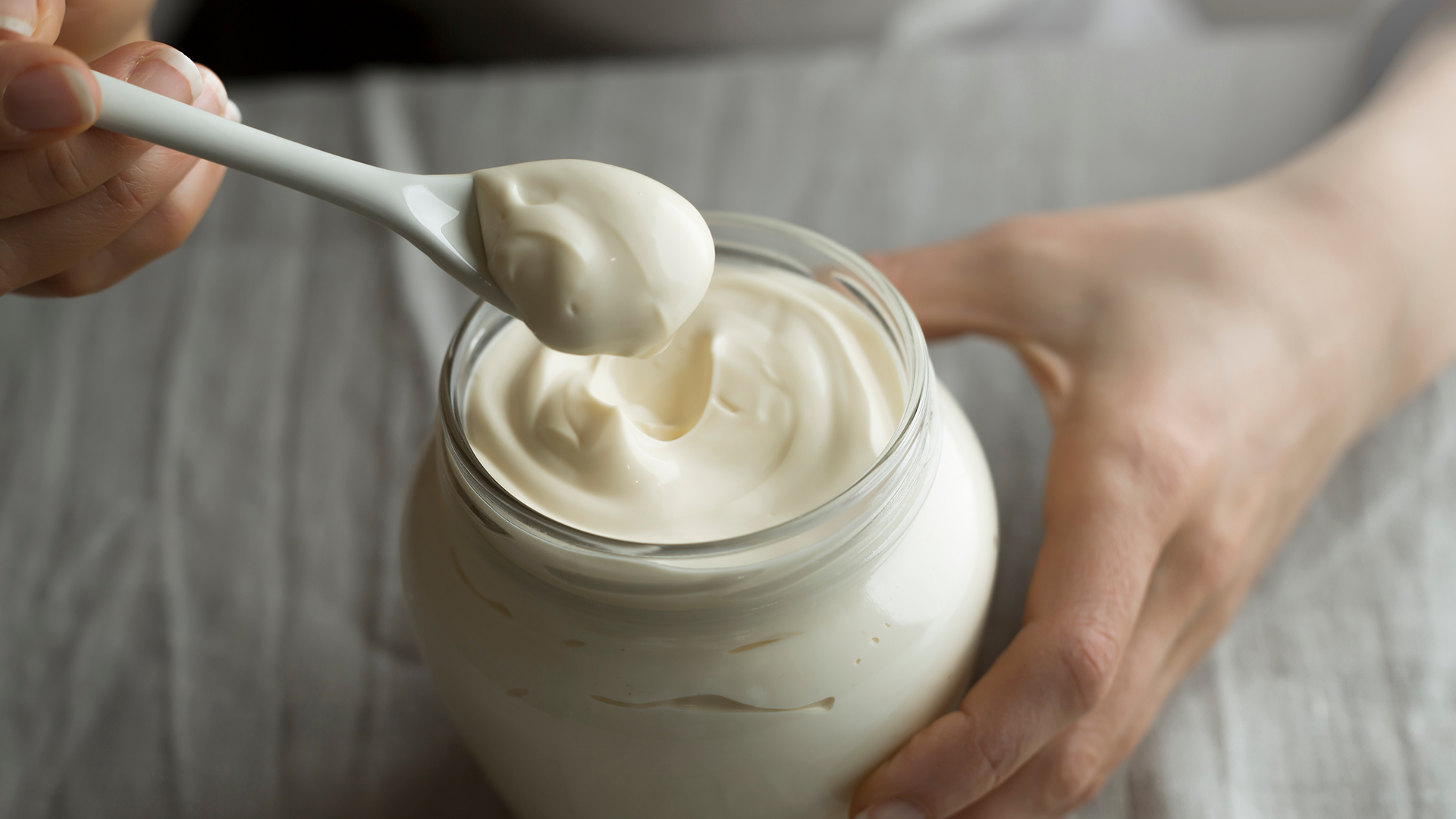
There's something about Easter that allows even the most intimate family disputes to take on a scientific dimension. Some people defend vegetable salad, others deviled eggs and at some point, it all boils down to one question: which mayonnaise? The answer seems obvious (everyone has their own opinion), but mayonnaise itself isn't so simple. It's not just an egg topping. It's a little demonstration of chemistry in action.
As Dr Paulina Bartos explains:
Mayonnaise is an oil-in-water emulsion, a system in which tiny droplets of oil are dispersed throughout the aqueous phase.
In other words, something that by nature refuses to combine, under the right conditions forms a surprisingly stable whole. Oil and water usually live separately, however, in mayonnaise, they form a festive truce.
The yolk is responsible for this truce. It contributes lecithin to the system, a substance without which mayonnaise would be a culinary disaster.
The key lies in the egg yolk, which contains lecithin
– says the researcher.
Lecithin has a unique property: one part binds well with water, the other with fat. This allows it to surround oil droplets and prevent them from recombining. This is why mayonnaise maintains a smooth, creamy texture instead of breaking into two aggravated layers. But the yolk isn't the only factor in this story… Acidity is equally crucial.
Mayonnaise is an acidic system – the typical pH is approximately 3.5–4.5 – emphasises dr inż. Bartos.
– underlines dr inż. Bartos.
It owes this characteristic to the addition of lemon juice or vinegar. The acid not only imparts flavour but also influences the behaviour of the proteins in the yolk. In a slightly acidic environment, they better stabilise the surface of the fat droplets and the entire emulsion becomes more stable. Furthermore, the low pH acts as a preservative, limiting the growth of many microorganisms. This is why preparing homemade mayonnaise requires a bit of attention. It's important to keep the correct proportions, temperature of the ingredients and avoid rushing the process.
Fortunately, there's a way to tame this holiday chemistry. Dr inż. Paulina Bartos recommends a simple blender mayonnaise.
All you need is:
- one whole egg,
- 150–200 ml oil,
- a teaspoon of mustard,
- a tablespoon of lemon juice or vinegar,
- a pinch of salt and pepper.
Everything is poured into a tall vessel and the blender sits at the very bottom and remains stationary for the first few seconds. Only then can you slowly move it upwards. This creates a stable emulsion at the bottom, which gradually absorbs subsequent portions of oil – and that's how liquid gold is created.
In Easter conversations about mayonnaise, the most important question quickly arose (almost mandatory in Poland). Kielecki or Winiary?
On the surface, it's a question of taste but the ingredients and technology are once again hidden behind the scenes.
They are almost the same but they have a different taste
– says Dr Bartos.
Kielecki is more distinctive, spicier and has more vinegar. Winiary has added sugar, making it sweeter.
It may seem like a small difference but it can really get things heated. When choosing mayonnaise, however, you should go beyond family tradition and focus on the label.
We should read the ingredients and choose the mayonnaise with the simplest ingredients
– the researcher emphasises
The fewer unnecessary additives, the better.
Modern cuisine, however, has more than one answer to the question of the perfect mayonnaise. There are, after all, plant-based versions as well. And here, too, we're not talking about any culinary imitation but rather a different way to achieve a similar effect.
Vegan mayonnaises simply rely on a different source of the substance that is contributed by eggs
– explains Dr Bartos.
Lecithin plays a key role in traditional mayonnaise, however, in vegan versions, other ingredients can take on the stabilising function, such as aquafaba – the liquid left over from cooking chickpeas – or brine from a can. Plant-based milks or tofu are sometimes also used. The chemistry remains the same; only the tools change.
We see only a creamy addition to eggs on the plate but beneath the surface, a whole world of interactions, tensions and balances is at work, and perhaps this is why we should love mayonnaise even more. Not only for its flavour but also for its reminder of how closely connected cuisine and science are.
Enjoy your mayonnaise!
Source: dr inż. Paulina Bartos, Faculty of Chemistry, University of Lodz
Edit: Kacper Szczepaniak, Centrum Komunikacji Marki
Graphic: Michał Strzelec, Centrum Komunikacji Marki