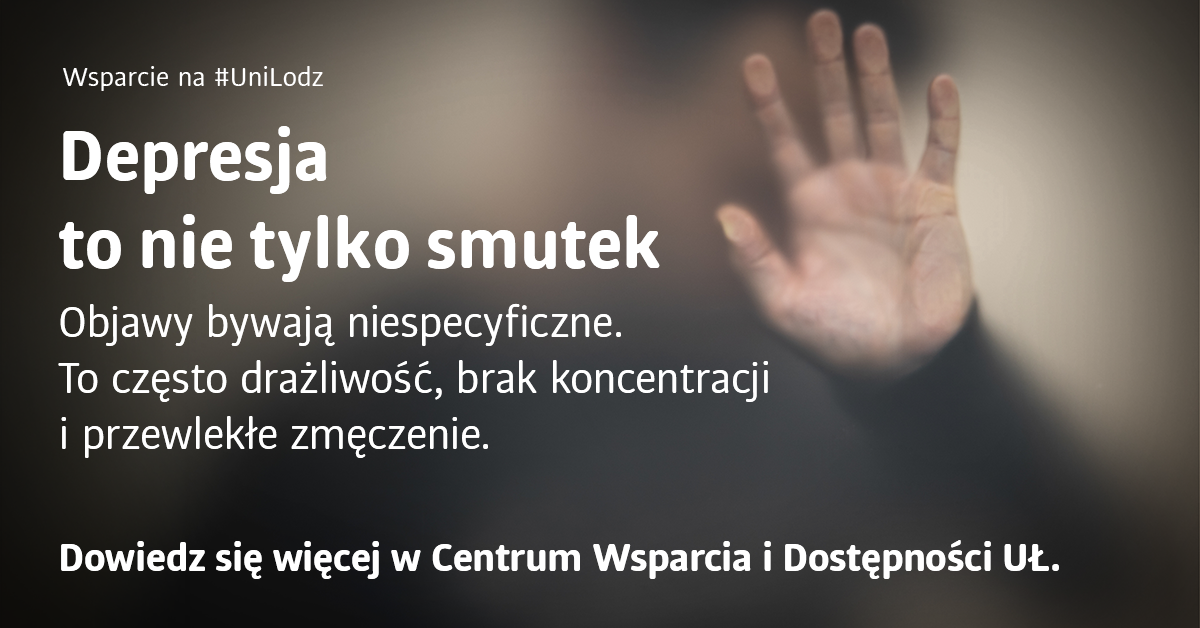
This loneliness, however, has a serious statistical dimension. According to the Ministry of Health, over 1.2 million Poles struggle with "such loneliness."
The cry for help is growing louder. Poland in the shadow of crisis: what do the numbers say?
Human stories lie behind all these bare numbers. The Ministry of Health and the National Health Fund are sounding the alarm: the number of diagnosed depressive episodes has increased by nearly 60 percent. This is a sign that more and more of us have the courage to admit, "I can't cope." The over 100 percent increase in antidepressant sales among children and adolescents is painful evidence of the enormous pressure placed on the shoulders of the new generation. Over 1.5 million people in Poland use pharmacology, seeking relief from suffering invisible to the naked eye.
Unfortunately, in the case of approximately 30 percent of these patients, standard therapies fail to deliver the expected improvement – their depression becomes treatment-resistant, requiring new, more tailored treatments. This demonstrates the importance of research into modern therapies and personalised psychiatric care.
Why is psychiatric care crucial?
Many of us fear visiting a psychiatrist, considering it a last resort. However, a psychiatrist is a crucial ally in the fight against illness: a psychiatrist can distinguish a temporary crisis from biologically based disorders, and modern medications help restore chemical balance in the brain, which is often necessary to even have the strength to engage in psychotherapy. In severe cases, when thoughts of giving up appear, professional medical care can save lives.
The heart of science beats for you: UniLodz researchers come to help
At the University of Lodz, science isn't just theory – it's hope for a better tomorrow. Our scientists devote years of work to understanding your pain and finding more effective ways to address it. You're not an exception, you're not weak – you're sick, so researchers are delving deeper into this topic to help you find your way back to the light – step by step, at a pace you can manage.
Decoding pain (biology and genetics)
Prof. Tomasz Śliwiński's team from the Faculty of Biology and Environmental Protection, University of Lodz, is delving deep into our DNA. Thanks to his research on personalised treatment, doctors will be able to select treatments tailored to the needs of individual patients more quickly and accurately. This is the end of trial and error – it's science tailored to your needs.
Depression is the most common mental illness in the world, with approximately 332 million people suffering from it in 2025, according to a WHO report. Recent research sheds new light on the molecular basis of this disorder:
The biochemical "fuel" of depression
It turns out that the key to understanding depression may lie in specific chemical processes that affect our brain:
- Oxidative and nitrative stress – when the body loses balance. Imagine that "little sparks" – free radicals – are constantly circulating in your body. Under normal circumstances, the body deals with them like a firefighter with a flame, neutralising them before they cause damage.
- However, when oxidative or nitrative stress occurs, these "sparks" become too numerous and the body cannot neutralise them. As a result, they can damage nerve cells and disrupt brain function, affecting mood, concentration and overall well-being. The TRYCATs pathway – when the “happiness” hormone takes a wrong turn. Imagine that tryptophan is the ingredient from which your body produces serotonin – the natural "happiness hormone" that helps you feel good. In an ideal world, all tryptophan would end up in this pathway and improve your mood.
Sometimes the path "branches out"– this is how the TRYCAT pathway works. Instead of producing serotonin, the body produces substances that act like roadblocks in the nervous system's path: they slow it down, disrupt signals and can worsen well-being. It's precisely through such disruptions in tryptophan metabolism that our bodies can "betray" our mood and contribute to depression. What did the researchers find?
The latest scientific work focuses on two areas:
- Genetics. Imagine that each of us carries within us the body's "instruction manual" – our genes. Our scientists have investigated whether subtle differences in this manual might make some of us more susceptible to depression due to poorer protection against oxidative stress.
- The impact of chronic stress. Scientists have also studied how long-term, yet seemingly mild, stress alters the functioning of our genes. Stress can act like a light switch – sometimes turning off or overloading enzymes that maintain chemical balance in the body. This shows that what happens in our environment can actually alter the way our genes, and therefore the entire body, operate.
Why is this important?
These findings clearly confirm that depression has a deep molecular biology foundation. Understanding how stress alters our genes and chemical processes (such as tryptophan processing) opens the door to more effective diagnostics and allows us to develop medications that truly address a person's needs.
Your path to help: how to take the first step?
If you feel like the "grey blanket" is becoming too heavy, take advantage of the proven support path at the University of Lodz:
- Step 1: Academic Consultation Point (University of Lodz Support and Accessibility Centre) – this is your first point of contact. Specialists will help you identify your problem and advise you on what to do next.
- Step 2: Free psychological support – schedule an individual consultation with a psychologist or psychotherapist at the University of Lodz Support and Accessibility Centre (CWiD). This is a safe, discreet space.
- Step 3: Psychiatric consultation – if the psychologist deems it appropriate, they will refer you to a psychiatrist to consider medical support.
- Step 4: Adjusting your course of study – if an illness is hindering your studies, the Centre will assist you with formalities, such as changing exam dates or their formats.
Support and Accessibility Centre, University of Lodz
Scientific knowledge is power, but in times of crisis, you need a second person. The Support and Accessibility Centre (CWiD, UŁ) offers professional, free and discreet support for the entire academic community.
Remember: Your well-being is important and talking is the first step to regaining balance.
Source: Tomasz Śliwiński, Department of Molecular Genetics, Faculty of Biology, Environmental Protection, University of Lodz
Written by: Maria Brzozowska, Centre for External Relations and Social Responsibility of the University, University of Lodz
Edit: University of Lodz Press Office
Graphics: Stefan Brajter, Centre for External Relations and Social Responsibility of the University, University of Lodz