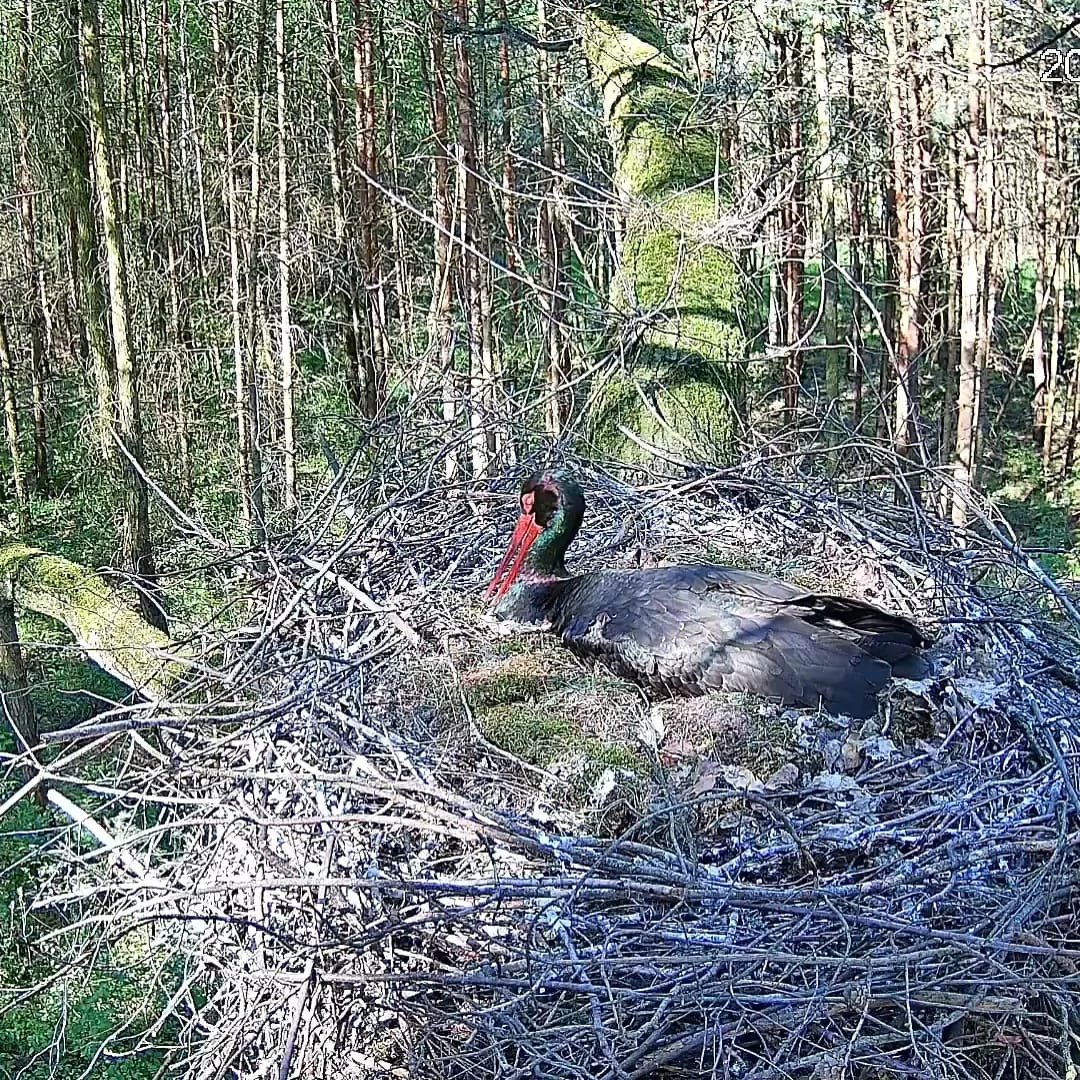
Fermina takes over
Although the male stork is usually the first to arrive, Fermina has outpaced her mate, Florentino, for the second consecutive season. Experts, however, assure us that this is a natural occurrence and is due to the birds' different migratory routes.
This indicates that she winters closer together, in Spain, Bulgaria, Greece, Turkey or Israel. Her return journey is therefore shorter. Florentino arrives later because he spends the winter in Africa and has a longer distance to cover – explains Prof. Piotr Zieliński from the Department of Ecology and Vertebrate Zoology (Faculty of Biology and Environmental Protection, University of Lodz).
Thanks to the "Black Storks Online" project, internet users can follow every stage of the life of this unique pair – from their return and mating season, to the fledglings leaving the nest.
Patiently waiting for Florentino
Last year, Florentino arrived at the nest on 28 March, so his current absence isn't cause for concern. Meanwhile, Fermina has been diligently preparing the house for his arrival, bringing in fresh moss and improving the nest structure.
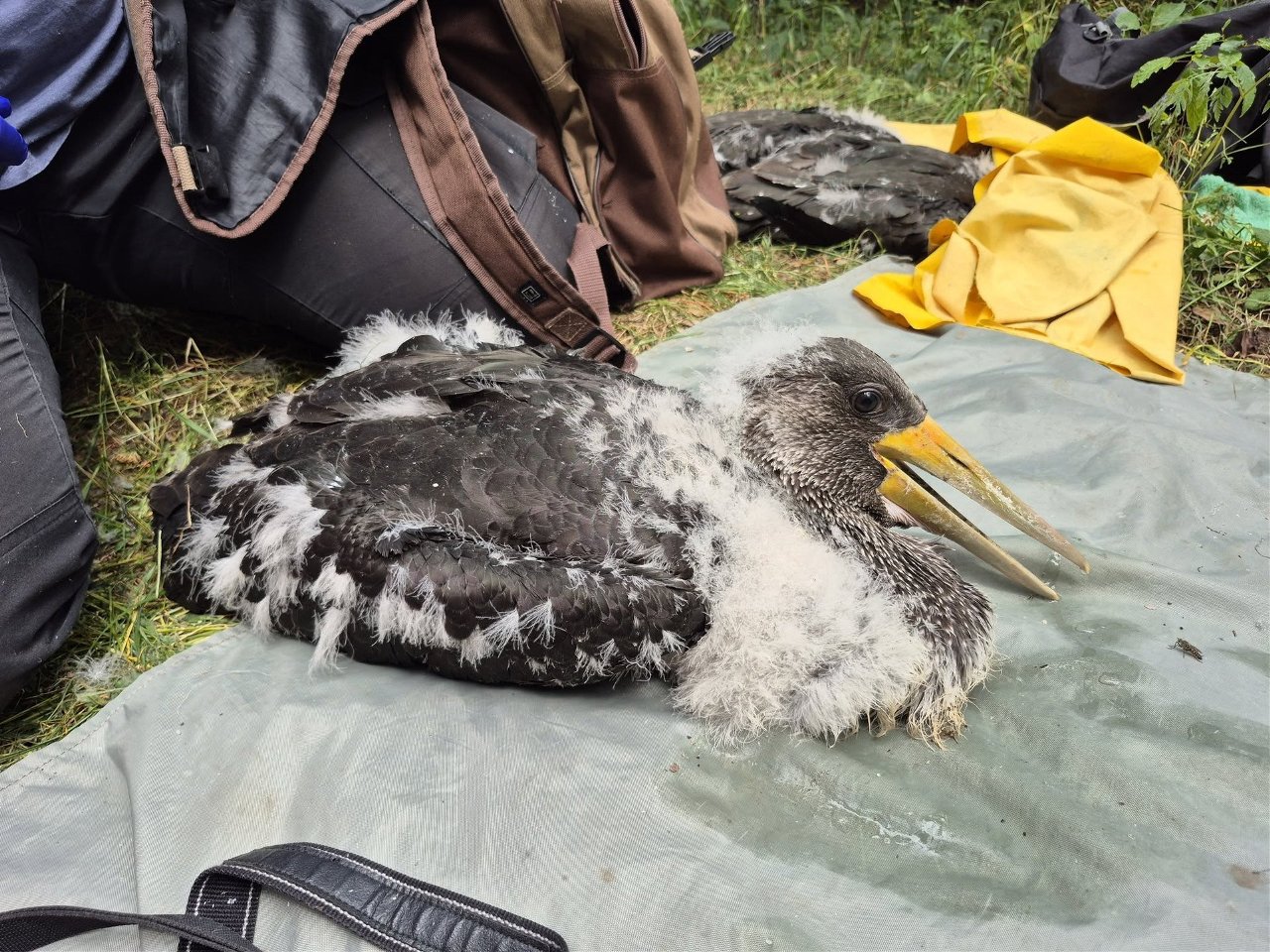
We should note that the current pair (Fermina and Florentino) achieved breeding success last season, raising three young. The chicks were named by the Internet users. Their names are Fado, Fleon, and Fuga.
What about last year's young ones?
The young storks have been equipped with GPS loggers that enable us to track their movements. The systems are currently silent, but that doesn't necessarily mean the worst.
Experience from the previous clutch shows that the young birds begin their migration in the second half of April. Furthermore, they may still be in a signal gap. If they survived the winter, set off and leave the area without cell phone coverage, information should be forthcoming – adds Prof. Piotr Zieliński.
"Black Storks Online" is an educational project of the Regional Directorate of State Forests in Łódź, implemented in cooperation with the Faculty of Biology and Environmental Protection of the University of Lodz. Prof. Piotr Zieliński is the project's scientific supervisor.
Current information can be found on the website of the Regional Directorate of State Forests in Łódź (in Polish).
MORE INFORMATION ABOUT THE PROJECT (in Polish)
Source: Express Ilustrowany (LINK 1)
Photos: Regional Directorate of State Forests in Łódź
Edit: Mateusz Kowalski (Promotion Centre, Faculty of Biology and Environmental Protection, University of Lodz)