What is Tandem?
Tandem is definitely something more than a standard exchange or language course. It is a research and cultural project based on close international cooperation between students at the University of Lodz and the University of Regensburg. The entire project is based on a simple yet extremely effective mechanism, in which participants pair up and jointly conduct research in the field of real-world studies on the country, city and region of their foreign partner. The project consists of two key stages. The first was a visit by the German students to Łódź, which took place in mid-March, while the final stage will be a return visit to Regensburg, scheduled between 28 June and 5 July of the current year. It should be noted that travel and accommodation costs are fully covered by the partner universities and students receive five ECTS credits for completing the project as part of university-wide or faculty-wide courses.
An interdisciplinary team and broad horizons
This year's edition is characterised by enormous diversity and the composition of both groups confirms that Tandem caters to almost every academic interest. This year, the Polish side is represented by eight people. The group includes four German studies students from the Faculty of Philology, as well as two representatives each from the Faculty of Economics and Sociology, each majoring in Sociology and Investment and Real Estate, and from the Faculty of International and Political Studies, each majoring in International Relations.
In turn, eight students representing the University of Regensburg and studying Pedagogy, Political Science/Public Law/Southern European Studies, as well as Archaeology and Early Childhood Education came to Łódź. The foreign group was complemented by students of Law, English Studies, Catholic Theology and East-West Studies.
A busy March in Łódź
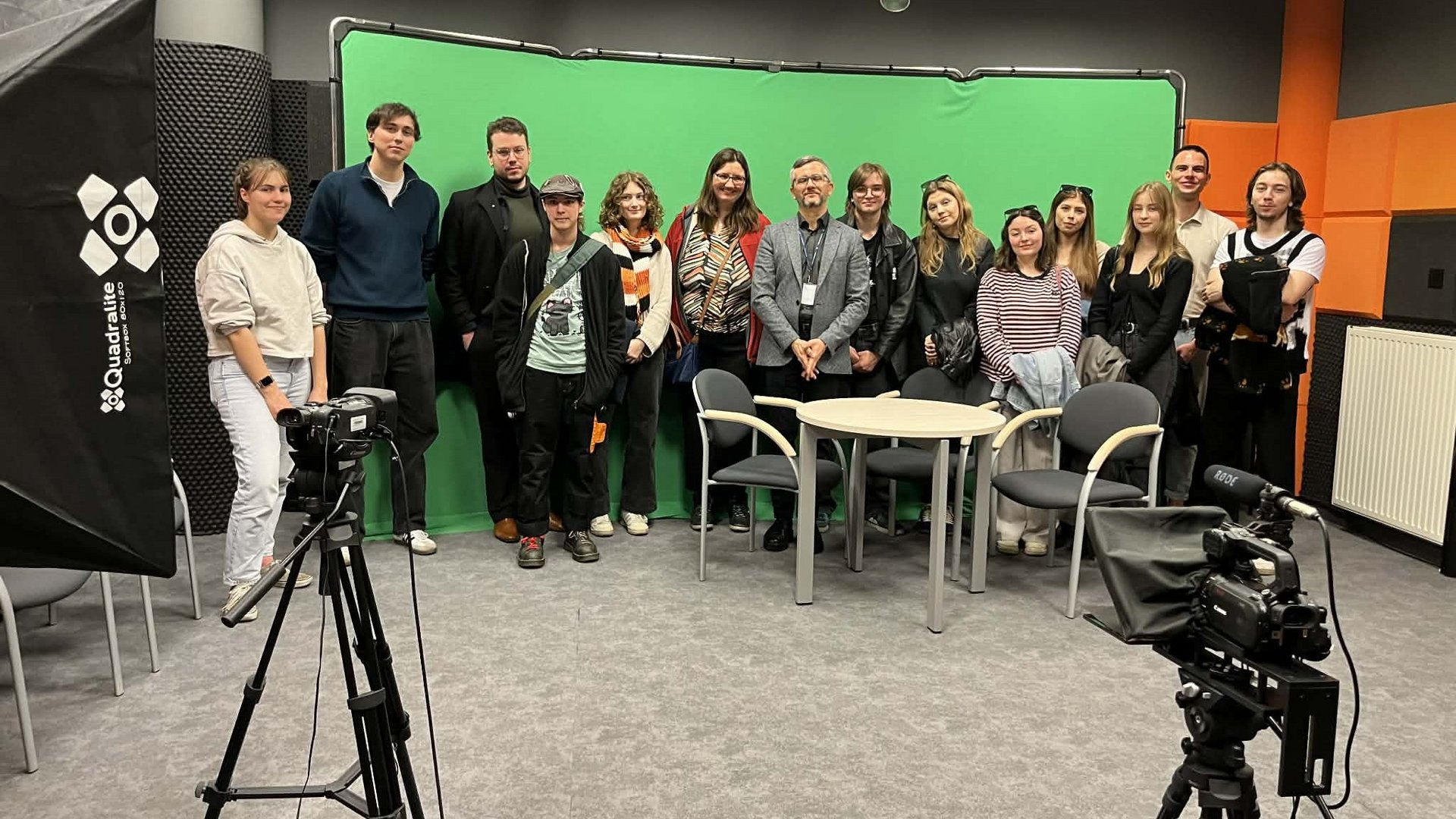
The Bavarian guests' visit was an excellent opportunity to showcase the university and the city itself from the best perspective. The group explored the facilities of the Faculty of Philology, visited the University of Lodz Library, and the modern building of the Faculty of Law and Administration.
The Faculty of Philology building is truly beautiful. It houses many fascinating rooms. I don't know if we have anything like this in Regensburg. In any case, I really enjoyed the opportunity to visit
– underlined Annika, one of the German participants of tandem and she added:
For me, the most important thing about this programme is that I can learn about a foreign culture, experience it and simply see what life is like in another country.
The stay in Poland wasn't limited to academics, giving guests the opportunity to delve into the history and pop culture of Łódź. The programme included a tour of the revitalised Księży Młyn area and the Herbst Palace, as well as a visit to the Centre for Comics and Interactive Narration at EC1. The remaining time was spent intensively working on joint projects, engaging in inspiring discussions, networking and travelling around the Łódź region.
From street art to climate diplomacy – project topics
The research conducted by the tandems is as diverse as the fields of study of their members. Their activities require them to leave the confines of their universities and go into the field to visit local institutions, schools and offices, and engage in discussions with residents and experts.
During their stay in Poland, the German students focused on examining written and unwritten rules of conduct in public spaces and delved into the history of the founding and perception of the Łódź Art Museum in the wake of the world wars. Other projects included examining opportunities for Łódź youth to participate in local politics, developing vegan offerings in the city's culinary scene and changing social attitudes towards Ukraine in Poland since the outbreak of the war. The programme participants also explored the role and operation of trade unions, used pop culture and street art as a gateway to language and cultural learning, as well as explored the challenging history of the Łódź Ghetto.
Representatives from the University of Lodz are facing equally ambitious tasks. At the turn of June and July, in the heart of Bavaria, Polish students will analyse stereotypes about their compatriots in Germany and examine the sense of security regarding American military bases in the light of current geopolitical threats. The research plans also include an analysis of the image of Regensburg in the eyes of locals and tourists, the perception of foreigners in the local community, and a comparative assessment of student housing market preferences in Poland and Germany. Other topics addressed by the Polish group include the public perception of the Danube River in the face of climate change, the theological foundations of the Holy See's climate and migration diplomacy, a legacy of Benedict XVI, as well as young adults' perceptions of international migration and its impact on social security.
Time for a return visit
The intense week in Łódź quickly came to an end. Now, the exchange participants are faced with a return visit to the heart of Bavaria. The success of the Polish part of the project proves that true understanding of another culture comes from direct contact. This is perfectly captured by the words of the programme coordinator at the Faculty of Philology, University of Lodz, Dr Marcin Michoń:
In the Tandem programme, exploration takes place through the prism of participants' interests [...], allowing for a very broad perspective on the neighbouring country and cities. Furthermore, participants serve as guides to each other's realities, enabling a much deeper understanding than would be possible with individual excursions.
Therefore, the exchange programme provides not only an excellent platform for academic research but also a great test before any longer trips abroad. As we look forward to the turn of June and July, we wish the Polish group fruitful research during their upcoming work in Regensburg.