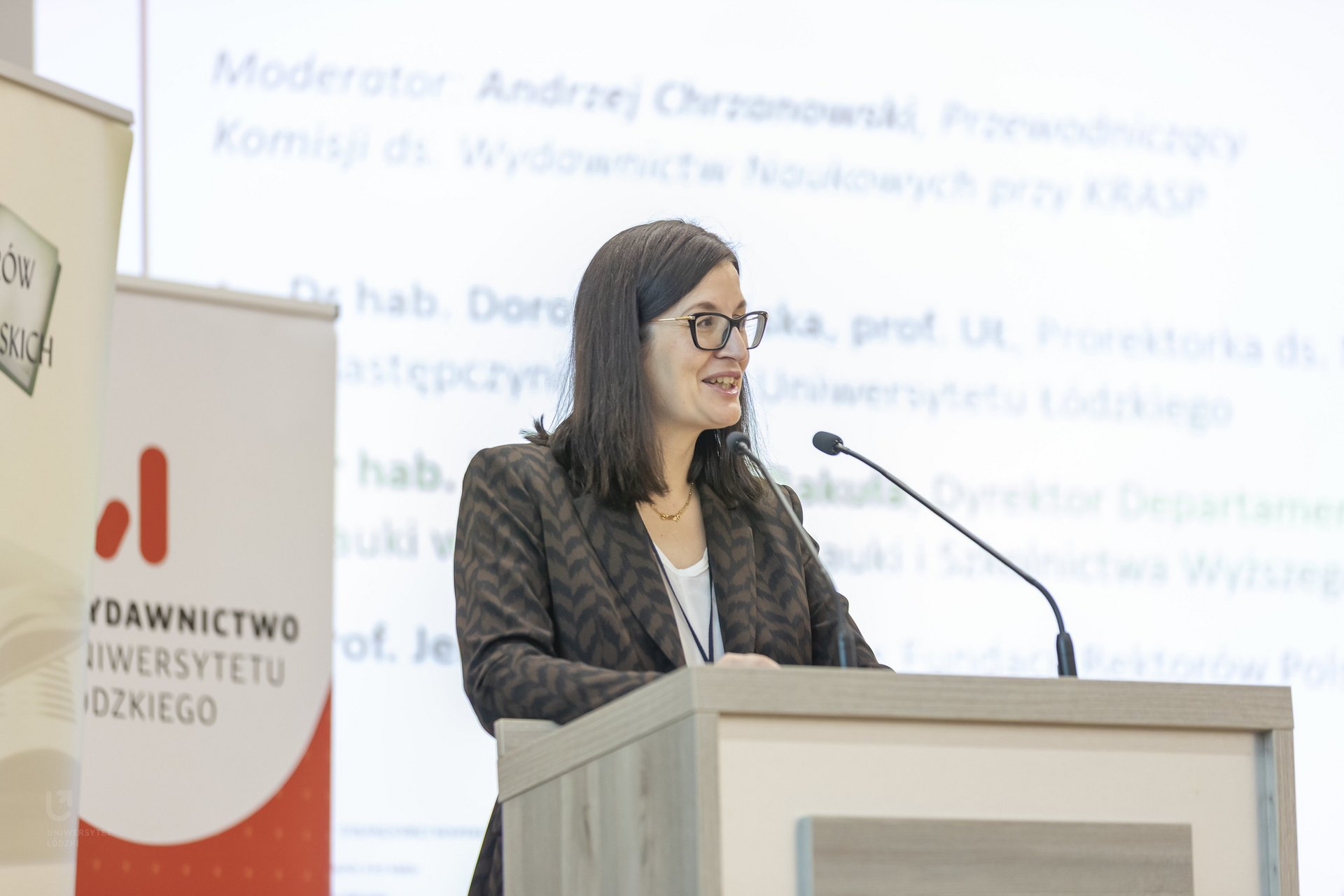
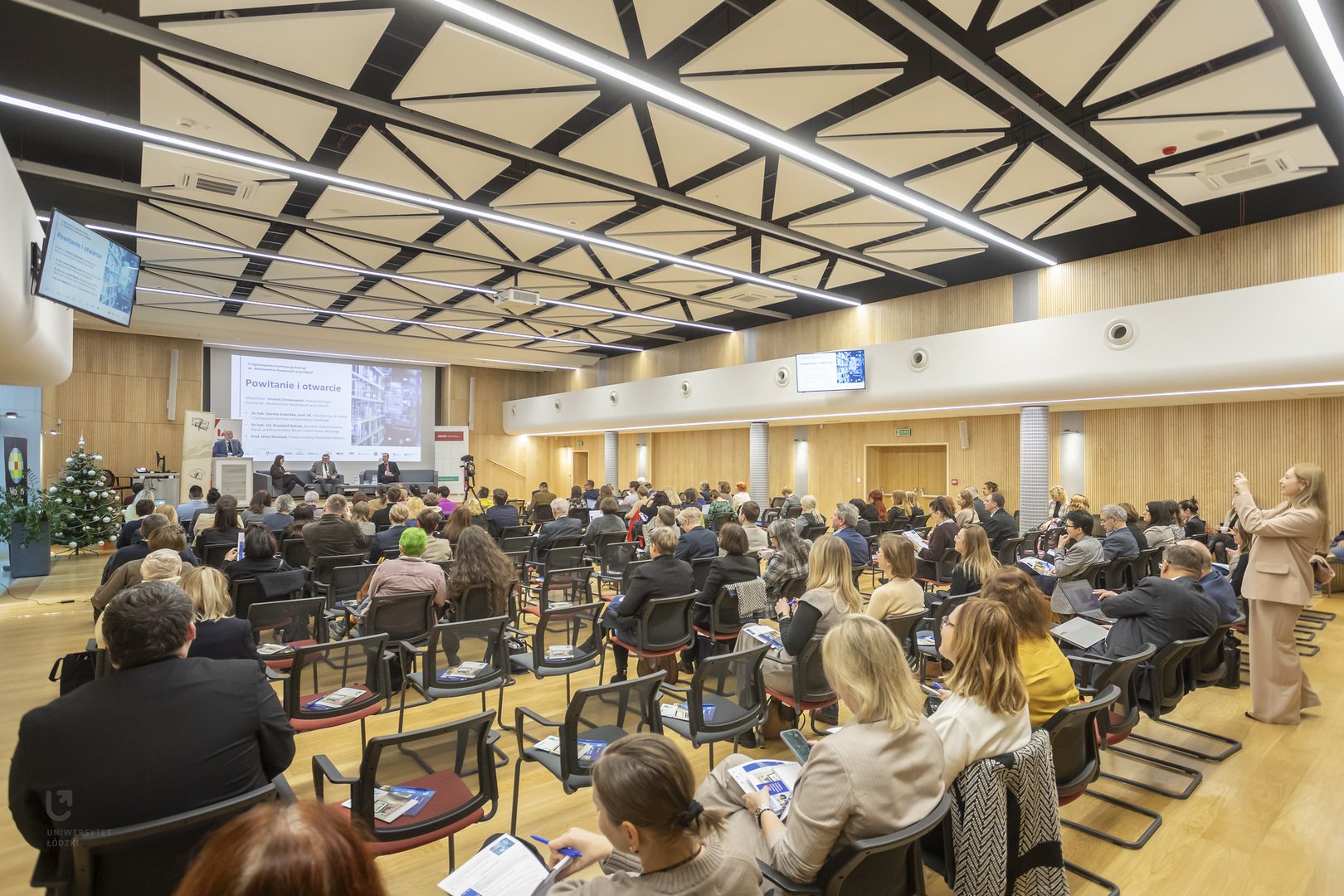
We are delighted to once again welcome the conference participants from across Poland. This is a great opportunity to discuss key issues in the community and, at the same time, consult with the Ministry of Science and Higher Education, whose representatives are also participating in the event
– says dr hab. Dorota Golańska, Associate Professor at the University of Lodz, the UniLodz Vice-Rector for Science.
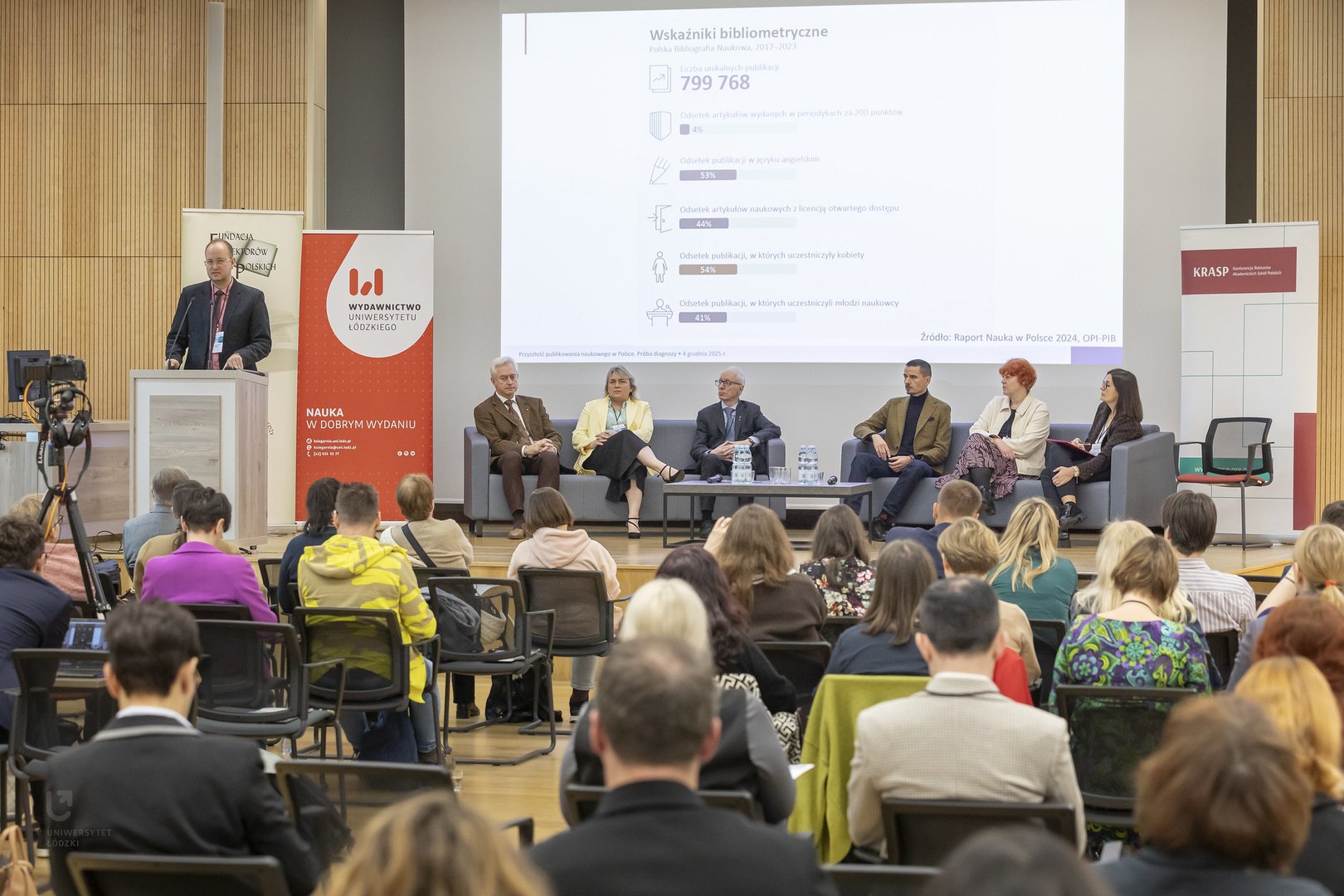
The panellists and participants of the conference – academic teachers, representatives of the Ministry of Science and Higher Education (including dr hab. inż. Krzysztof Bakuła, Director of the Department of Science at the Ministry of Science and Higher Education), university authorities and scientific publishers – during the debates scheduled for each conference session, are trying to formulate conclusions and postulates in order to create optimal conditions for the creation and dissemination of scientific and didactic publications, consistent with the needs of higher education and science.
The three conference sessions will address such topics as trends in future developments in scientific publishing, prospects and challenges, as well as legal, research and educational aspects related to the use of artificial intelligence in scientific publishing. Many of the panellists' statements and debates revolve around points for publications and how to obtain them, as well as whether a scientist's work is still about making discoveries or accumulating points for published and cited articles, which are essential for academic evaluation.
I think we've internalised the "running for points" so much that it's difficult for us to think about publishing trends in isolation from publication scores. But we're going to change that – comments Prof. Dorota Golańska, moderator of the session devoted to trends in scientific publishing. – The real challenge right now is the use of artificial intelligence. AI is a great tool that offers publishing scientists and publishers many opportunities and possibilities, but I would see the danger in the fact that it doesn't work perfectly yet and that we don't yet know how to use it with moderation.
Source and edit: Press Office, University of Lodz
Photos: Maciej Andrzejewski, Centre for Brand Communications, University of Lodz