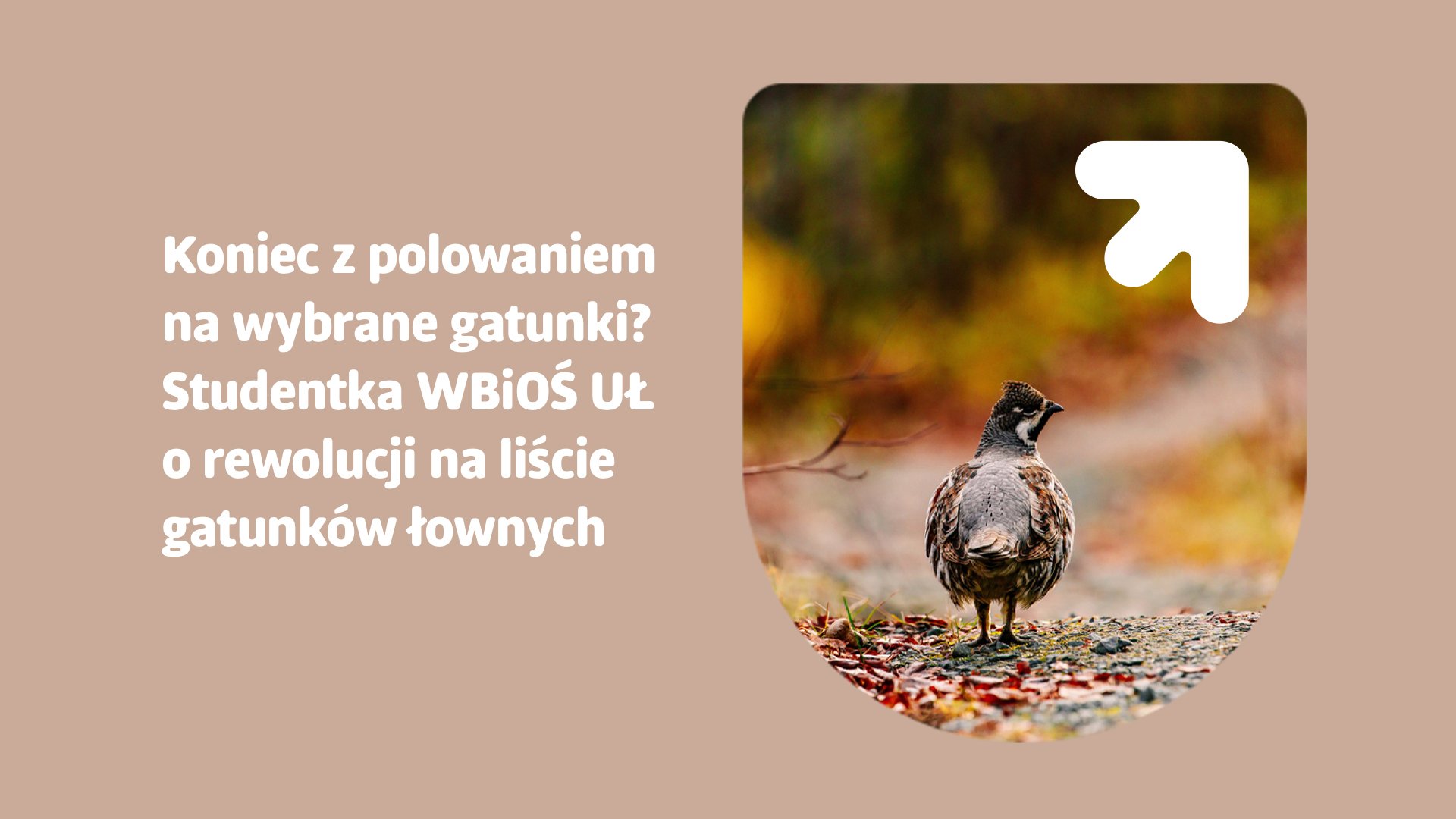
Over the past 11 years, the Polish Hunting Association has noted a steady decline in the harvest of all these species. For tufted duck, common pochard, and common coot, the number of individuals shot annually in recent years for none of these species exceeded 1,000. For Eurasian woodcock and hazel grouse, these figures were even lower, at approximately 160 and 75 individuals, respectively.
The decision to remove these birds from the list of game species was made to enhance the protection of species experiencing national or European population declines, as well as those for which sufficient data is lacking to assess population trends. It is important to emphasise that hunting impacts not only by eliminating individuals but also by disturbing birds, which can negatively impact their survival and breeding success.
There are two diving ducks among the species removed from the list, i.e. the tufted duck and the common pochard. They inhabit still and slow-flowing bodies of water, where they forage by diving to considerable depths. Comparative data indicate that since the 1990s, the number of breeding pairs of tufted ducks has declined by 60-70%, and that of common pochards by as much as 80%.
The common coot is also closely associated with the aquatic environment, found both in natural reservoirs and in urban parks. Despite its wide habitat tolerance, this species is showing a clear decline in Poland – its population has declined by approximately 70% over the last 30 years.
The remaining two species – the hazel grouse and the Eurasian woodcock – are associated with forest habitats. The hazel grouse prefers moist forest habitats and is primarily terrestrial, while the woodcock inhabits forests with clearings or ecotones. Due to the secretive lifestyle of both species and the paucity of historical data, a reliable assessment of their numbers and population trends is difficult. To preserve their populations in Poland, they have also been removed from the list of game species.
The primary legal act regulating bird protection in Poland is the Nature Conservation Act of 16 April 2004. Under its provisions, all bird species naturally occurring in the European Union are strictly protected, with the exception of game species and species under partial protection, of which there are currently nine in Poland.
Bibliography:
- BirdLife International. 2025. Aythya fuligula. The IUCN Red List of Threatened Species 2025: e.T22680391A154567456. dx.doi.org/10.2305/IUCN.UK.2025-2.RLTS.T22680391A154567456.en. Accessed on 08 January 2026.
- BirdLife International. 2021. Aythya ferina. The IUCN Red List of Threatened Species 2021: e.T22680358A205288455. dx.doi.org/10.2305/IUCN.UK.2021-3.RLTS.T22680358A205288455.en. Accessed on 08 January 2026.
- BirdLife International. 2021. Scolopax rusticola (Europe assessment). The IUCN Red List of Threatened Species 2021: e.T22693052A166241741. dx.doi.org/10.2305/IUCN.UK.2021-3.RLTS.T22693052A166241741.en. Accessed on 08 January 2026.
- Marchowski D, Stańczak P, Jasiński M, Guentzel S. A long-term monitoring dataset of non-breeding waterbirds at Lake Miedwie, Poland (2002–2025). Biodiversity Data Journal. 2025; 13: e160615.
- Panek, M., & Kolasiński, M. (2025). Sytuacja zwierząt łownych w Polsce- wyniki monitoringu, rok 2025 [The situation of game animals in Poland - monitoring results, 2025].
- Państwowa Rada Ochrony Przyrody. (2025). Opinia w sprawie projektu rozporządzenia Ministra Klimatu i Środowiska zmieniającego rozporządzenie w sprawie ustalenia listy gatunków zwierząt łownych [Opinion on the draft regulation of the Minister of Climate and Environment amending the regulation on establishing the list of game species].
- Svensson, L., Mullarney, K., & Zetterström, D. (2023). Ptaki. Przewodnik Collinsa [Birds. Collins Guide] Multico.
Text: Katarzyna Baryłko (Faculty of Biology and Environmental Protection, University of Lodz)
Edit and graphics: Mateusz Kowalski (Promotion Centre, Faculty of Biology and Environmental Protection, University of Lodz)