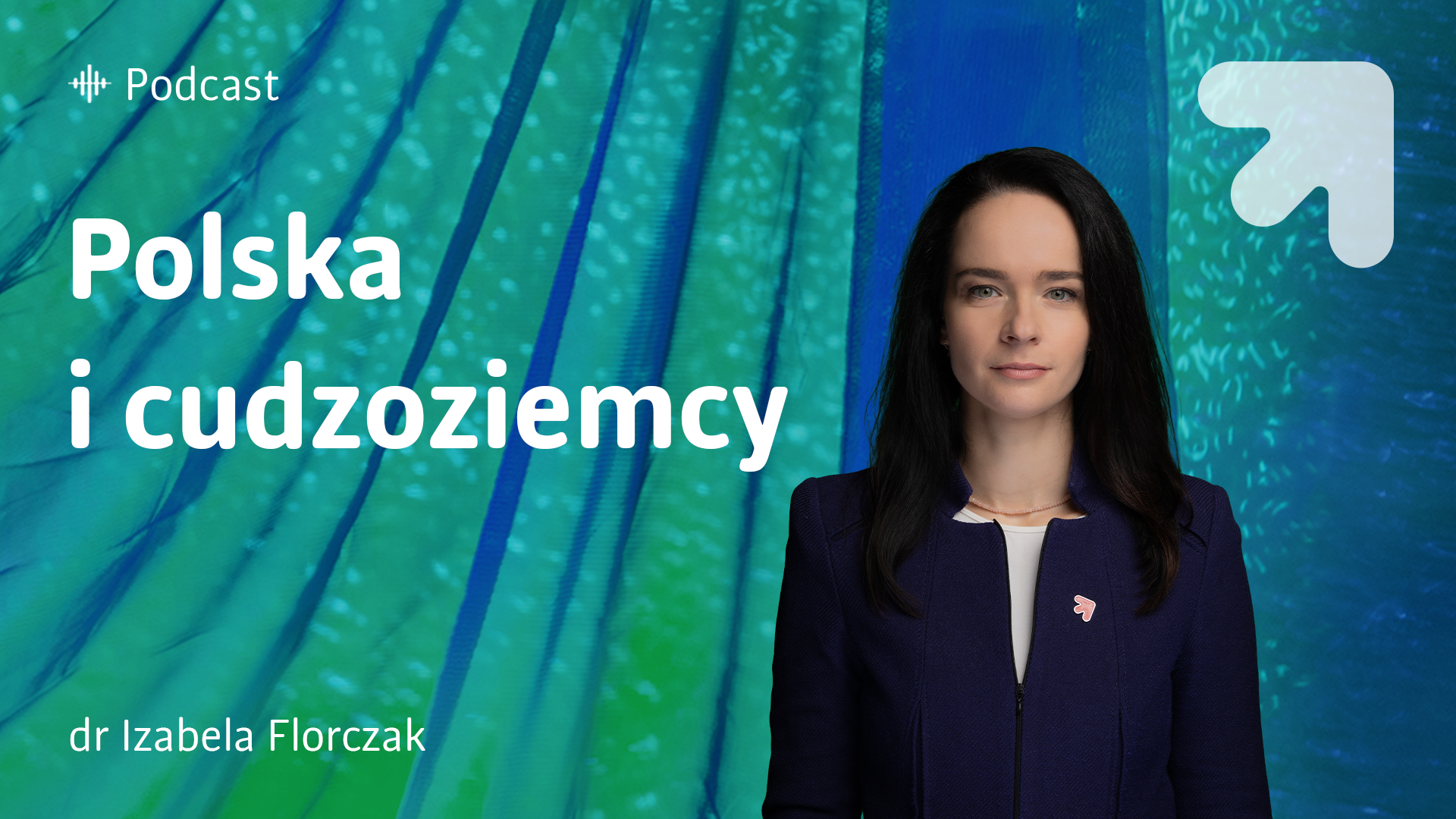
In a podcast recorded in cooperation with the University of Lodz, Ola Żaczek from Radio 357 talks to Dr Izabela Florczak.
The podcast series “Aleja Badaczek” (Female Researchers' Alley) presents female scientists who help to better understand the phenomena influencing social life – here, the labour law is the starting point, but the conversation quickly shows that the regulations always concern a specific person and their story.
Podcast: Polska i cudzoziemcy [Poland and foreign citizens]
The job market for foreigner citizens is marked by uncertainty
As Dr Florczak emphasises:
The only certainty is that nothing is certain.
A picture of enormous uncertainty is emerging. Uncertainty for foreign workers, as well as for the employers who employ them. To some extent, also the uncertainty within which our legislature operates. Of course, it is the legislature that creates the law, so one could say that the law depends on it. However, on the other hand, this law is entangled in many issues beyond the legislature's control – for example, COVID or the war in Ukraine, and labour law should keep pace with them.
Who comes to Poland and who actually works?
Determining the real scale of labour migration requires analysing several data sources simultaneously: information on employer demand, Border Guard data and statistics on people covered by social security.
Only a compilation of these data reveals the true picture – not everyone an employer wants to hire ultimately takes up employment in Poland, and not everyone who crosses the border enters the labour market.
Ukrainian citizens constitute the largest group – a trend visible even before the outbreak of the war. Workers from India, Colombia and Belarus are also increasingly present.
At the same time, many migrants work below their qualifications – a global phenomenon resulting from formal and procedural barriers. The new technology sector is an exception, where qualifications more easily translate into specific positions.
Law, procedures and real barriers
Theoretically, pay for the same job should be the same regardless of citizenship. In practice, abuses do occur, and foreign citizens are less likely to report them to public institutions, fearing the consequences associated with their stay in Poland or the loss of their employment.
However, over time – as they become more familiar with the legal system – trust in institutions increases. The length of administrative proceedings also remains a problem. Visa and residence permit procedures can drag on for months or even years, destabilising the situation for both employees and employers.
Education and combating disinformation – the responsibility of the academic community
Public debate around migration is often based on simplifications and emotions. However, the data is clear: foreigner citizens working in Poland not only benefit from ZUS (Social Insurance Institution) benefits, but above all, they contribute to the system – paying taxes and contributions, supporting the labour market and filling staffing gaps in many sectors of the economy.
We cannot let public opinion be shaped solely by slogans and political shortcuts. The data is available – we need to access it and discuss it.
The scientific community has a special responsibility in this area. Researchers, labour and migration law experts, as well as social organisations – including the Migration Consortium and other NGOs – regularly publish reports, conduct training, participate in public consultations and appear in the media.
I see combating disinformation as a mission for scientists. If we don't consistently present the facts, the public sphere will be filled with simplifications
– says the scientist.
At the same time, the researcher points out that the voice of experts can sometimes have less media appeal than a single, emotional political statement. This, she believes, is one of the greatest challenges facing the contemporary migration debate.
Reliable knowledge, based on data analysis and empirical research, should be the foundation for shaping public policies. Without it, it is difficult to speak of a responsible migration strategy or an honest public debate.
Migration is all about people
It is estimated that approximately two million foreigner citizens work legally in Poland. However, this number reflects individual stories, decisions and life choices. Migration is not an abstract issue – it is the real experience of thousands of people.
We can summarise that an effective migration policy requires not only efficient procedures but also responsible public communication. Only a combination of law, data and informed public debate will allow us to build a system that is stable and fair.
Podcast: Polska i cudzoziemcy [Poland and foreign citizens]
Dr Izabela Florczak is a lawyer specialising in labour law and labour migration. She serves as Vice-Dean for International Cooperation and Projects at the Faculty of Law and Administration of the University of Lodz and as Deputy Head of the University of Lodz Centre of Migration Studies.
She graduated in Law from the University of Lodz. She earned her doctoral degree in the legal status of individuals working in non-standard employment. She combines her academic work with legal counselling. She conducts research on the employment of foreigner citizens, migration policy and the operation of labour market institutions, and actively participates in public debate as an expert in labour law and migration.
You can find more great content about science on the “Science Inspires” channel.
Edit: Honorata Ogieniewska, Centre for External Relations and Social Responsibility of the University, University of Lodz