What are microarrays and why are they so important?
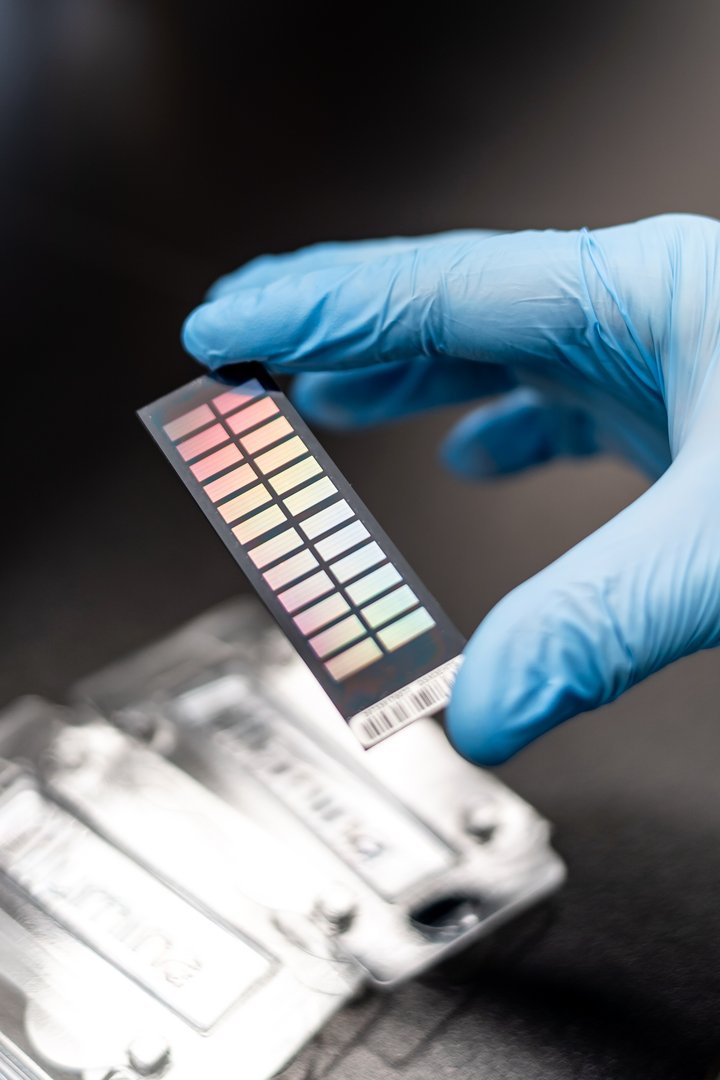
A microarray is a small glass slide that can hold up to 48 biological samples. In genotyping, it allows for information on hundreds of thousands of genomic variants for each individual sample. This large amount of data, combined with the relatively low cost of analysis, makes microarrays a key method in population research.
Their format allows for simultaneous testing of up to several hundred samples within a few days, making this technology extremely effective in projects involving large cohorts. The relatively low cost of testing, despite the rapid development of next-generation sequencing (NGS) technology, ensures that microarrays will remain an indispensable tool in population research for a long time to come.
Current standards in population-based research require pools of collected samples reaching even hundreds of thousands. A model example is the 210,000 genetically screened donors from the Estonian population, using microarray technology, representing as much as 20% of the local population. Thanks to these studies, it is now possible in Estonia to incorporate the results into routine medical practice for personalised therapy.
Therefore, population studies and the use of microarrays have a real impact on the quality of scientific research and its practical use
Current standards in population-based research require pools of collected samples reaching even hundreds of thousands. A model example is the 210,000 genetically screened donors from the Estonian population, using microarray technology, representing as much as 20% of the local population. Thanks to these studies, it is now possible in Estonia to incorporate the results into routine medical practice for personalised therapy.
Therefore, population studies and the use of microarrays have a real impact on the quality of scientific research and its practical use
– says Dr Marcin Słomka, the project coordinator, thanks to whom the equipment will be delivered to the University of Lodz.
New research opportunities for Biobank Łódź
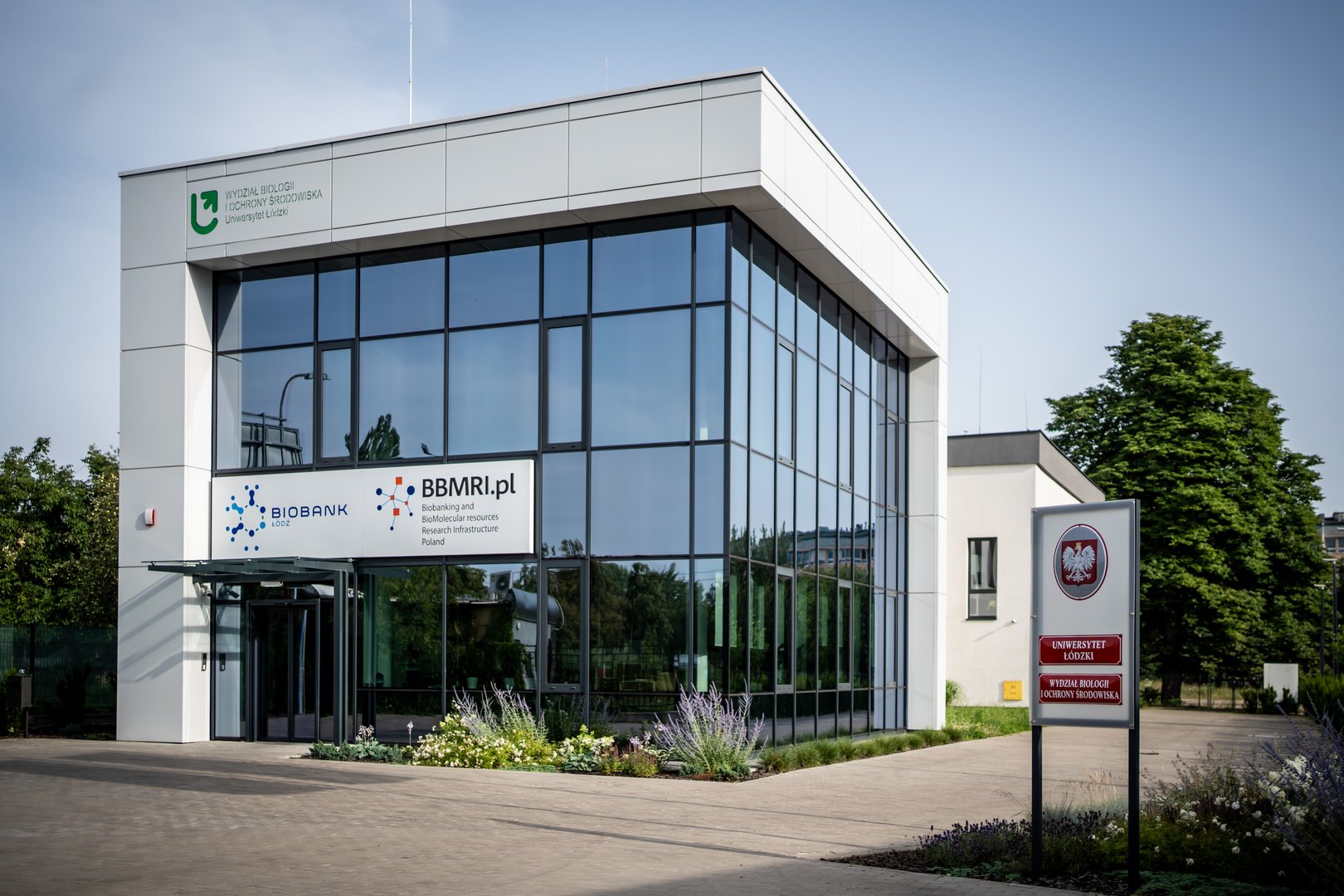
Biobank Łódź® is currently the national leader in the use of Illumina microarray technology and the facility that has performed the largest number of genetic tests using this technology in Poland.
The new investment will allow for:
- automatic isolation of nucleic acids from thousands of samples already deposited and collected in the future,
- full automation of the genetic assay protocol thanks to a state-of-the-art robotic line for preparing Illumina microarrays,
- conducting research on a scale previously unavailable in Poland.

Biobank Łódź® will be able to use the financed infrastructure to carry out research in projects already awarded, including the creation of Regional Digital Medicine Centres financed by the Medical Research Agency and the project "Generation A - jakość życia przez pokolenia, pilot badania populacyjnego w województwie łódzkim" [Generation A – quality of life across generations, a pilot population study in the Łódź Voivodeship] financed by the Science for Society programme.
This will also pave the way for the implementation of further projects of unique scientific value, including at the international level, and will significantly increase the pace and effectiveness of research conducted at the Faculty of Biology and Environmental Protection
- emphasises the project coordinator, Dr Marcin Słomka.
Investment Financing
The purchase of the equipment is made possible thanks to funds allocated by the Ministry of Science and Higher Education for the project entitled “Inwestycja w aparaturę naukowo‑badawczą do automatyzacji protokołu wysokoprzepustowych badań obejmujących izolację DNA oraz oznaczenia genetyczne z wykorzystaniem mikromacierzy Illumina” [Investment in research equipment for the automation of high-throughput research protocols involving DNA isolation and genetic assays using Illumina microarrays].
The project is being funded from the state budget, using a targeted subsidy allocated to financing investments related to scientific activities (decision no.: P/IA/SP/0335/2025/06).
Funding value: PLN 2,000,000.00, total project value: PLN 2,600,000.00
Date of signing the funding agreement: 12 December 2025
Project coordinator: Dr Marcin Słomka, Centre for Digital Biology and Biomedical Sciences – Biobank Łódź® (University of Lodz)
Edit: Kamila Knol-Michałowska (Promotion Centre, Faculty of Biology and Environmental Protection, University of Lodz)
Graphics: Mateusz Kowalski (Promotion Centre, Faculty of Biology and Environmental Protection, University of Lodz)
Photos: Centre for Digital Biology and Biomedical Sciences – Biobank Łódź® (University of Lodz)