What is smog and how is it formed?
Smog is a specific atmospheric phenomenon that results from the combination of air pollution – mainly from human activities, such as the combustion of fossil fuels, industrial emissions or transport – with favourable meteorological conditions (windless weather, temperature inversion, high humidity or intense sunlight).
There are two basic types of smog:
- London smog (acidic smog), which occurs primarily in winter, when humidity is high, temperatures are low and wind is absent. It is caused by burning coal and wood. It contains, among other things, PM10 and PM2.5 particulate matter, benzo[a]pyrene, sulphur dioxide and nitrogen oxides.
- Los Angeles-type smog (photochemical), which occurs in summer, with intense sunlight, high temperatures and heavy traffic. Its main components are tropospheric ozone, nitrogen oxides and volatile organic compounds.
In Poland, the biggest problem is acidic smog, which dominates during the heating season. The so-called low emissions, i.e., emissions from chimneys at heights below 40 metres are the main source of pollution. These primarily include domestic stoves, boilers and fireplaces, which often burn poor-quality solid fuels (such as hard coal, lignite, pellets, wood chips, eco-pea coal and wood), as well as vehicle traffic. The problem is exacerbated in densely built-up cities and valleys, where temperature inversions impede the dispersion of pollutants.
Can smog kill?
Yes, it can. The so-called Great Smog of London in December 1952 was one of the most tragic events in history. As a result of extreme pollution levels and disastrous atmospheric conditions, over 12,000 people died, mainly from respiratory and circulatory system diseases.
The toxicity of particulate matter depends on its size, shape, surface area and chemical composition. The smaller the particles, the deeper they penetrate the body. Larger particulate matter, such as PM10, settles in the upper respiratory tract, while smaller particles, PM2.5, can penetrate the lung alveoli and even the bloodstream.
Smog as a carcinogen
The International Agency for Research on Cancer (IARC) classified air pollution, particularly particulate matter, as a human carcinogen (Group 1) in 2013. There is sufficient evidence that exposure to these pollutants causes lung cancer and is linked to bladder cancer. Diesel engine exhaust fumes were previously classified as carcinogenic.
A meta-analysis of 18 epidemiological studies (Hamra et al., 2014) has found that long-term exposure to particulate matter increases the risk of lung cancer. The risk was 9% higher for PM2.5 and 8% higher for PM10. The risk was significantly higher for lung adenocarcinoma: 40% higher for PM2.5 and 29% higher for PM10.
Other health effects of long-term exposure
Air pollution exacerbates respiratory diseases such as asthma, COPD (chronic obstructive pulmonary disease) and respiratory infections. The smallest particles cause oxidative stress, which promotes atherosclerosis, and can affect clotting processes, leading to thrombosis. There is also evidence suggesting that smog may affect cognitive function, accelerate the aging of the nervous system and disrupt the hormonal system (reducing sperm quality in men, disrupting the menstrual cycle and ovarian reserve in women, and disrupting thyroid function), leading to fertility problems in both men and women, as well as metabolic disorders.
Moreover, fine particulate matter can act as a "carrier" for viruses, facilitating their spread (e.g., the SARS-CoV-2 coronavirus). A 2020 study published in Cardiovascular Research listed Poland second among countries where smog contributed to increased mortality among COVID-19 patients (an increase of as much as 28%). Countries with the greatest impact of air pollution on coronavirus mortality included the Czech Republic (29%); Poland (28%); Slovakia, China (27%).
Situation in Lodz – 2024/2025
In 2024, the annual PM2.5 particulate matter standard was exceeded in the Lodz agglomeration, confirming the continuing health risk to residents. Although the standards for SO₂, CO, benzene and heavy metals contained in PM10 were met, the average annual PM10 concentration nationwide increased by approximately 7% compared to 2023. It should be underlined; however, that in 2023, the average daily PM10 particulate matter limit was exceeded in two zones, and in 2022, these exceedances occurred in 14 zones. Meanwhile, the average annual benzo(a)pyrene concentration, calculated as an average from all measuring stations in Poland, in 2024 was 1.52 ng/m3, with the standard being 1 ng/m3 (in 2023 - 1.53 ng/m3). Despite anti-smog measures, such as subsidies for replacing furnaces, exceedances of standards – especially in winter – still occur.
In March 2025, the Chief Inspectorate of Environmental Protection (GIOŚ) issued reports about the projected risk of exceeding the information threshold for PM10 in Lodz, Łask, Pabianice and Piotrków Trybunalski. In the summer of 2025, PM2.5 concentrations in Lodz were recorded at around 8% of the permissible limit, while PM10 concentrations were around 12%. The so-called low-emissions (coal furnaces), road transport and atmospheric conditions are the main sources of pollution. Benzo[a]pyrene, present in PM10, is particularly dangerous – it is highly carcinogenic and often occurs in concentrations consistently exceeding the standards, including in the city of Lodz.
Although Poland has seen a decline in the number of zones exceeding benzo[a]pyrene standards in recent years (32 in 2022, compared to 39 in 2021 and 2020), 21 zones – including the Lodz zone – still have exceedances of the target value. Smog in Poland is both seasonal and chronic.
What to do to protect yourself against smog?
To protect yourself from smog, it's important to constantly monitor air quality (air pollution sensors, mobile apps, etc.) and avoid outdoor activities on days with high dust concentrations. Anti-smog masks (e.g., FFP2) and home air purifiers provide effective protection. It's also important to ventilate rooms at safe times and maintain your immune system through a healthy diet.
Daily choices are key to reducing smog. Quitting burning coal and garbage, replacing old furnaces with eco-friendly heating sources, and improving the energy efficiency of buildings are actions that can significantly reduce pollutant emissions. You should also try to reduce car use, especially diesel cars and opt for public transport or cycling.
Government initiatives also play a significant role – actions that are being taken, such as monitoring anti-smog resolutions and monitoring the development of clean energy and emission sources, should be mentioned. Although progress is visible, the smog problem still requires a concerted effort – both at the individual and systemic levels.
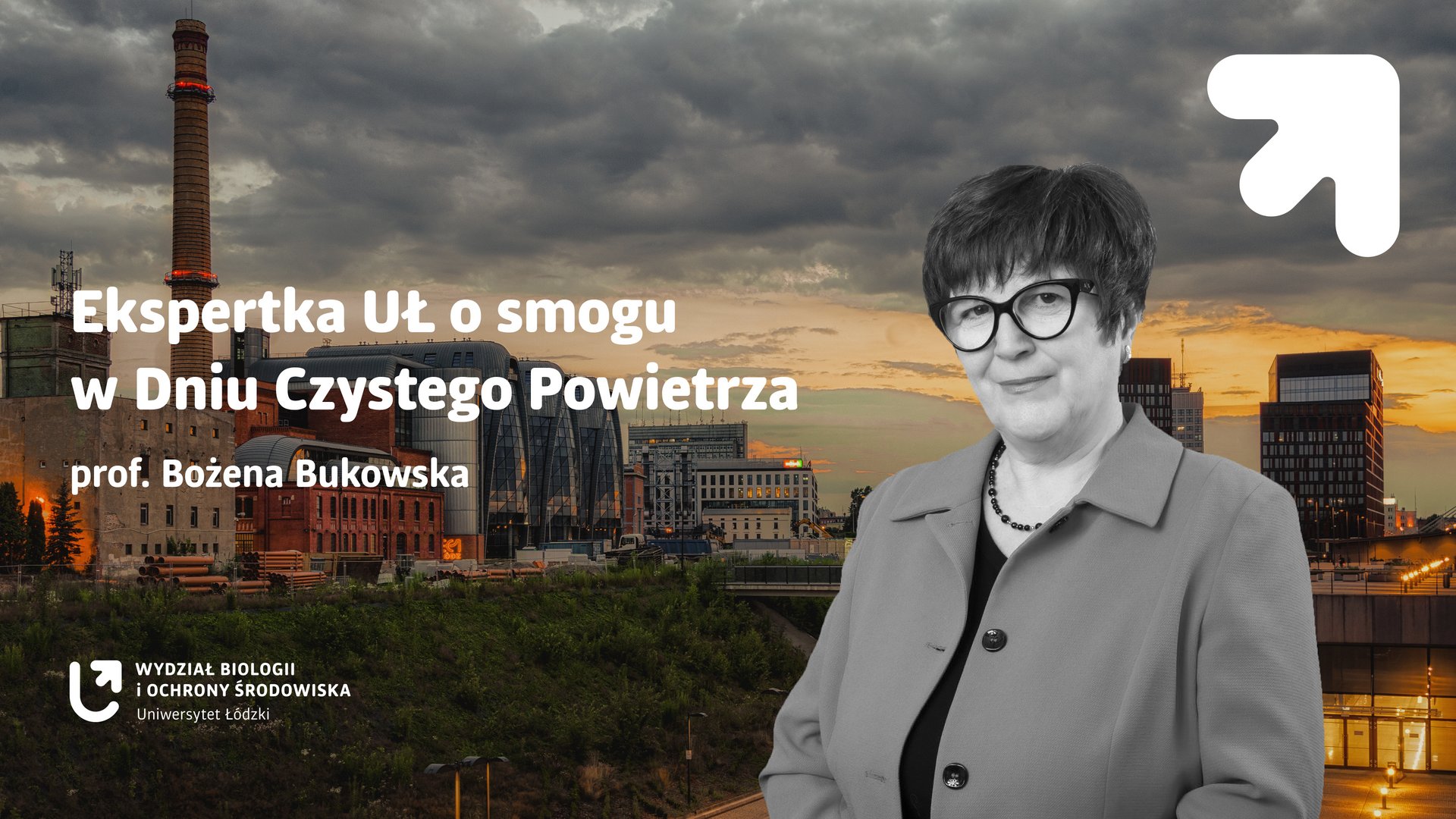
Prof. dr hab. Bożena Bukowska is the Head of the Department of Biophysics of Environmental Pollution at the Faculty of Biology and Environmental Protection, University of Lodz. Her research focuses on toxicological research, which assesses the impact of environmental pollutants – such as pesticides, bisphenols, phthalates, flame retardants and plastic nanoparticles – on human blood cells. In collaboration with the Department of Ecology and Vertebrate Zoology, University of Lodz, she conducts ecotoxicological research, analysing the effects of temperature and other stressors on oxidative stress parameters, DNA damage and epigenetic changes in fish.
Prof. dr hab. Bożena Bukowska is committed to sharing her knowledge, giving lectures on toxicology and ecotoxicology to students, as well as educational meetings for the residents of Lodz, supporting the popularisation of science and awareness of environmental threats.
Source: Prof. dr hab. Bożena Bukowska (Department of Biophysics of Environmental Pollution at the Faculty of Biology and Environmental Protection, University of Lodz)
Edit and graphics: Mateusz Kowalski (Promotion Centre, Faculty of Biology and Environmental Protection, University of Lodz)