Afternoon Tea as It Was One Hundred Years Ago
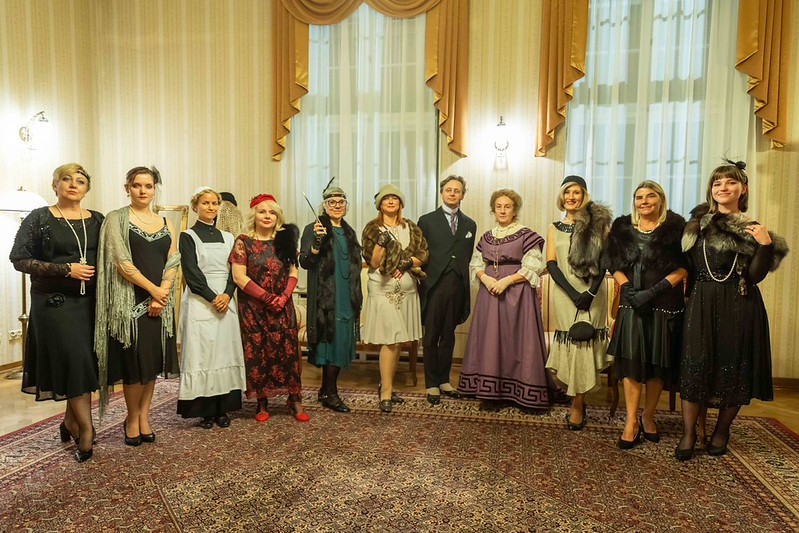
The central theme of the event was the tradition of afternoon tea and the ways in which Lodz industrialist families spent their leisure time at the turn of the nineteenth and twentieth centuries and during the interwar period. Participants had an opportunity to experience the atmosphere of historical social gatherings and learn about customs related to etiquette, fashion, salon conversations and the serving of tea and coffee.
The atmosphere of the event was created by the “Ziemia Obiecana” historical re-enactment group, a community of enthusiasts who took participants on a journey through time. Drawing on reliable and thoroughly researched sources, the re-enactors recreated scenes from the lives of Lodz residents a century ago. They also presented the diversity of experiences of two social groups: the working class and the industrialist class. It was a lesson in living history and the art of historical re-enactment.
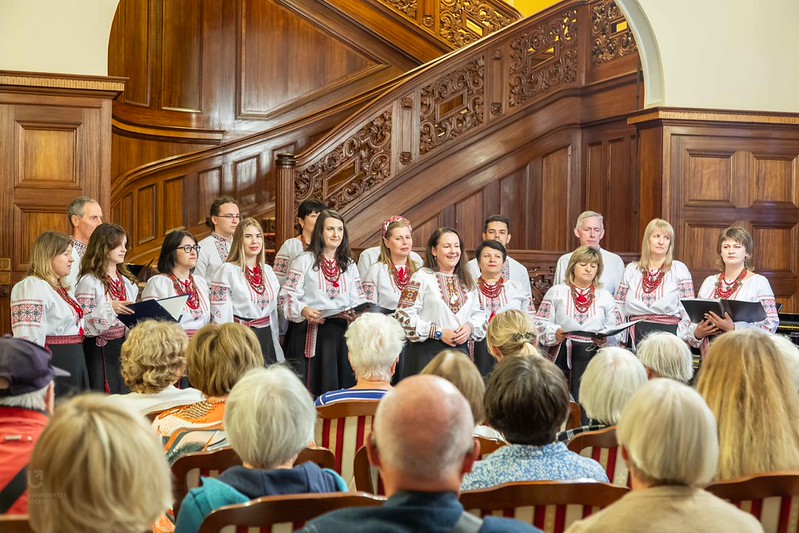
The afternoon tea gathering was enriched by a performance from one of the event’s partners, Namysto Choir, which has been active in Lodz for the past three years, bringing together local residents through a shared passion for singing and charitable activities. The choir is conducted by Tetiana Łopuga, while the initiator of the ensemble is Iryna Stepas, a folk craft artist and the creator of Namysto Fest, the first festival of its kind in Europe. The choir’s repertoire was not only a display of vocal talent but also an emotional journey.
Following the performance, visitors were able to explore three palace interiors featuring scenes depicting the everyday life of an industrialist family:
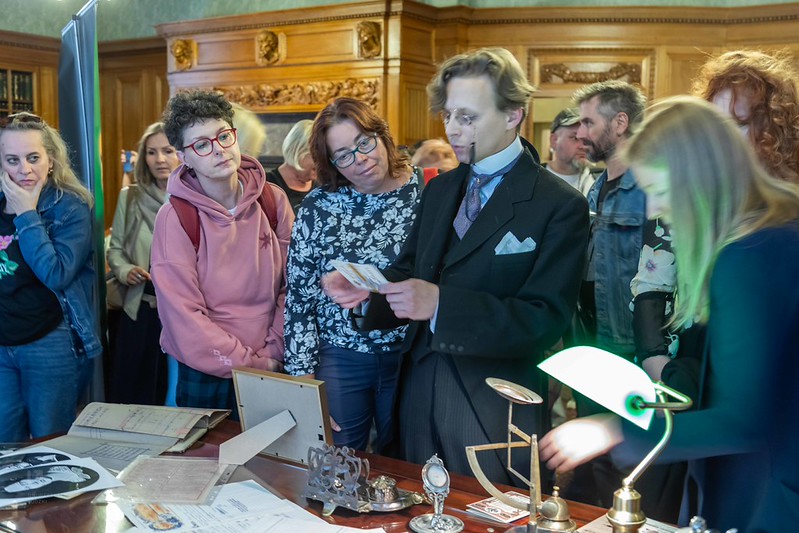
- The Industrialist’s Study told the story of the family business and the operation of the factory. Visitors could see original documents from the period, printed ephemera, and objects connected with the Biedermann factory.
- The Industrialist’s Dining Room presented early twentieth-century table-setting etiquette and the work of domestic staff in an industrialist palace. The display was arranged among original silver-plated tableware, porcelain, crystal glassware, and a historic samovar dating from 1899.
- The Lady of the House’s Boudoir introduced visitors to trends in women’s fashion from the beginning of the twentieth century, as well as the management of an industrialist household. Reconstructions of dresses from the first decade of the twentieth century completed the period setting.
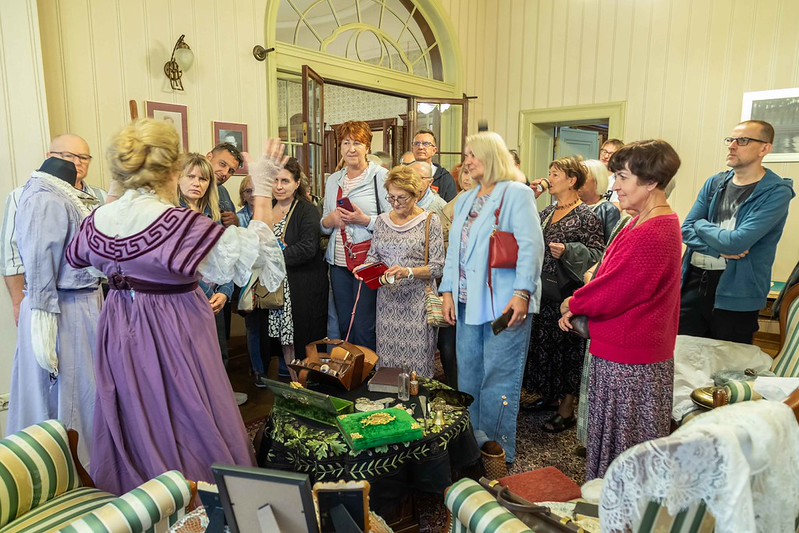
The re-enactments were complemented by a short lecture entitled “Moda łódzka w początkach niepodległości” [Lodz Fashion in the Early Years of Independence]. Katarzyna Zielińska spoke about how women in Lodz dressed during the 1920s, what was worn in the palaces of Lodz industrialists, and how the clothing of the city’s other female and male residents differed. She also discussed places where clothing and fabrics could be purchased, sources of fashion inspiration and the role of the Lodz press in shaping tastes and trends.
The lecture was accompanied by a presentation of costumes from the collection of the Lodz Film Centre, a collection that forms part of the heritage of film-making in Lodz. For many years, these costumes have appeared in Polish historical productions and can now also be seen during historical and heritage events organised by the City of Lodz and other institutions and organisations.
The programme concluded with a screening of short documentary films devoted to the history of Lodz industrialist families, the city’s industrial heritage, its architecture, and its residents. The following productions were shown:
- “Ballada o Łodzi” [Ballad of Lodz] (1957), directed by Stanisław Kokesz;
- “Pałace Ziemi Obiecanej” [Palaces of the Promised Land] (1967), directed by Leszek Skrzydło;
- “Łódź 550” [Lodz 550] (1973), directed by Tadeusz Stefanek.
The films were noteworthy not only for their subject matter but also for their local origins, as they were produced by the Educational Film Studio in Lodz. The studio boasts a tradition spanning more than 75 years and served as a creative training ground for renowned figures such as Juliusz Machulski, Krzysztof Komeda, and Andrzej Barański.
Partnership for Heritage and Revitalisation
The event took place as part of European Heritage Days 2026, a recurring cultural, social and educational initiative. The September weekend offered an opportunity to explore history and culture, both national and regional as well as local, through meetings, lectures, as well as workshops organised in numerous locations.
“Podwieczorek u Biedermanna” was also carried out within a partnership for revitalisation. The Wschodnia Street Festival created a space for meetings, cooperation, mutual understanding and the discovery of initiatives developed in workshops, galleries, museums, libraries, and commercial premises. Wschodnia Street became a place where residents could meet the people who contribute to its history and see how many valuable activities are carried out there every day.
A partner of the event was the Lodz Heritage Unit of the City of Lodz Office, which promotes the history of the city and organises events dedicated to important anniversaries, figures, and events connected with Lodz heritage. The unit brings the history of Lodz closer to audiences in an engaging way through historical re-enactments, staged performances, picnics, and community activities.
Photo: Maciej Ryszka
Content Partners
„BIBUŁA” – The Secret Printing House of Józef and Maria Piłsudski
Educational Film Studio in Łódź
Lodz Heritage Unit, Civic Activity Office, City of Lodz Office
Edit: Wiktoria Świątczak (Centre for Organising Cultural Events and Conferences)