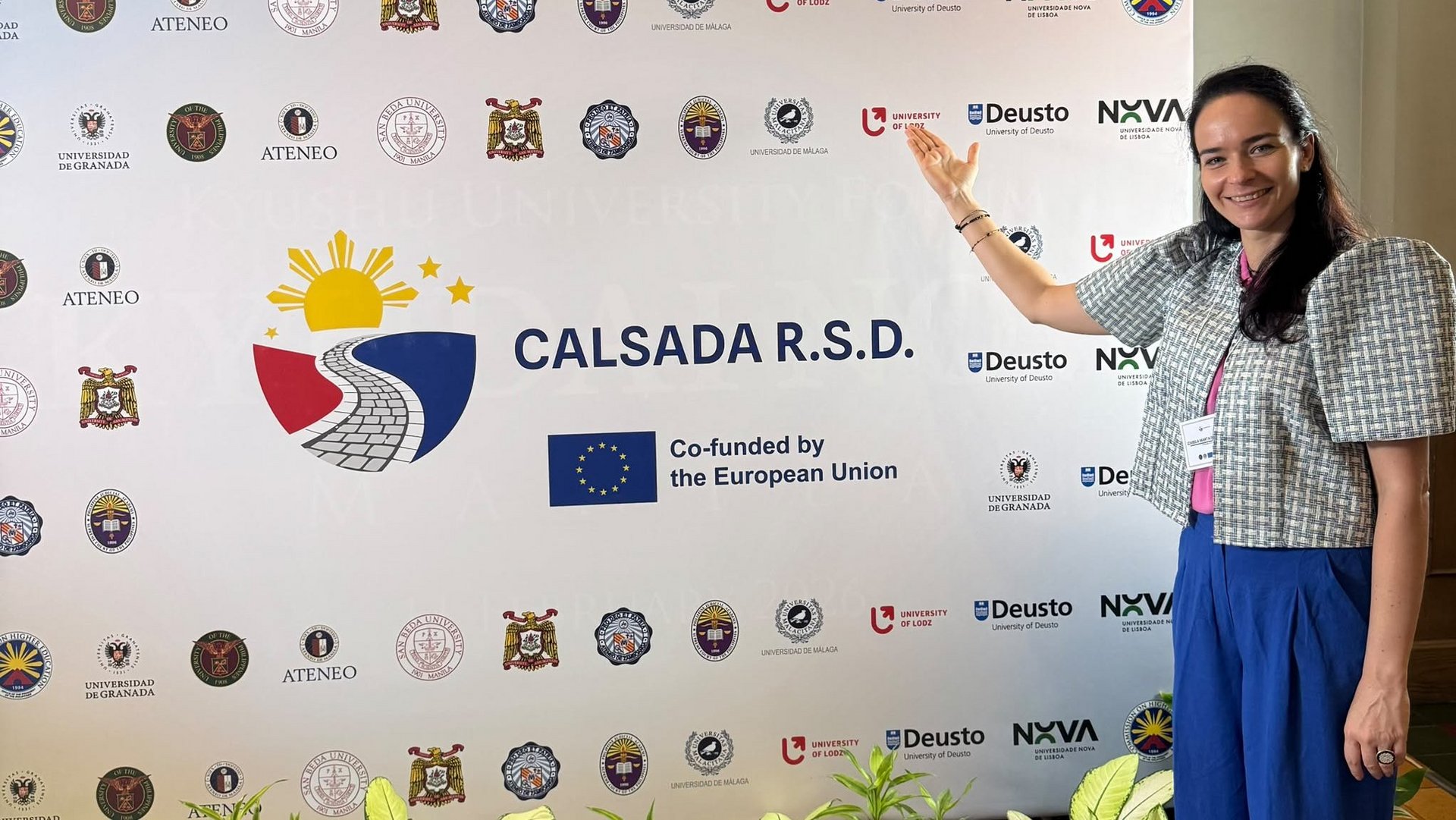
One such initiative is the CALSADA R.S.D. project, implemented by the University of Lodz and funded under the Erasmus+ Capacity Building in Higher Education programme. The project brings together universities and public institutions from the Philippines, Spain, Portugal and Poland, with the aim of supporting the development of legal education in the Philippines through quality enhancement, research development, digitalisation and the establishment of lasting international partnerships.
For the Faculty of Law and Administration, University of Lodz, the project holds particular significance. It is not only an opportunity to share the experience gained through European higher education in the field of legal studies, but, above all, a chance to build long-term cooperation with Philippine universities and institutions responsible for the development of legal education. The consortium includes, among others, the University of the Philippines, Ateneo de Manila University, University of San Agustin, San Beda University, Ateneo de Zamboanga University, the Philippine Judicial Academy of the Supreme Court of the Philippines, and the Commission on Higher Education of the Philippines. The European partners are the University of Granada (project coordinator), the University of Málaga, University of Deusto in Bilbao, NOVA University Lisbon and the University of Lodz.
At the University of Lodz, the project is being carried out by the Faculty of Law and Administration. The team is led by Dr Izabela Florczak, Vice-Dean for International Cooperation and Projects. Numerous members of the faculty will be involved in preparing analyses, reports, seminars and recommendations for the project partners.
The first expert studies will be prepared by:
- dr hab. Łukasz Grzejdziak, Associate Professor at the University of Lodz,
- dr hab. Michał Rupniewski, Associate Professor at the University of Lodz,
- dr hab. Marcin Górski, Associate Professor at the University of Lodz.
Their analyses will provide the starting point for a series of international seminars during which experts from Europe and the Philippines will work together to identify solutions supporting the development of a modern model of legal education based on research and new technologies.
Although the project focuses on the development of higher education in the Philippines, its significance extends far beyond the borders of a single country. It is an example of a partnership founded on mutual learning through the exchange of experience, good practices, and the joint search for answers to the challenges faced by universities around the world.
At a time when international cooperation is taking on new importance, initiatives such as this demonstrate that relations between Poland and the Philippines continue to develop through science, education, and the commitment of academic communities.