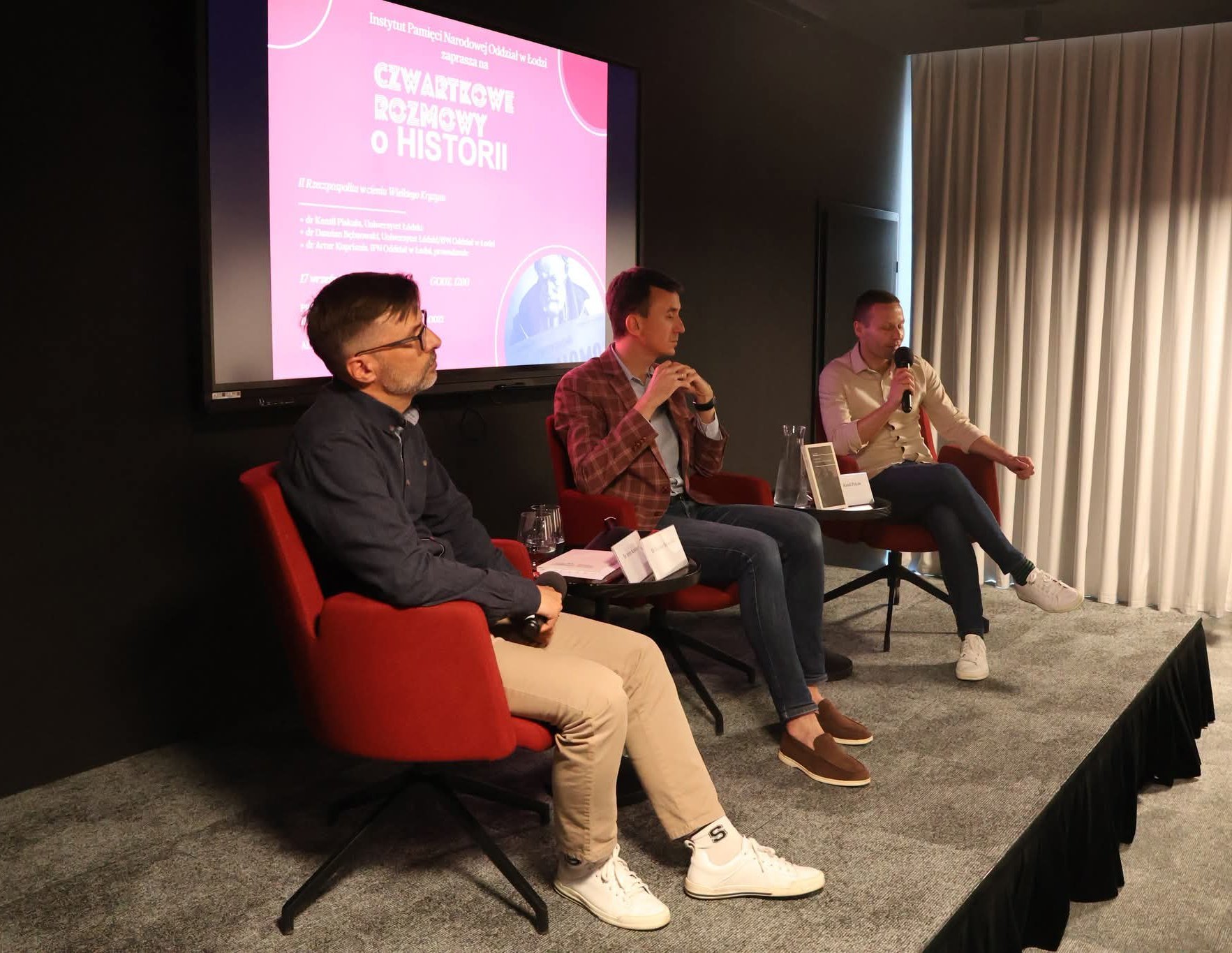
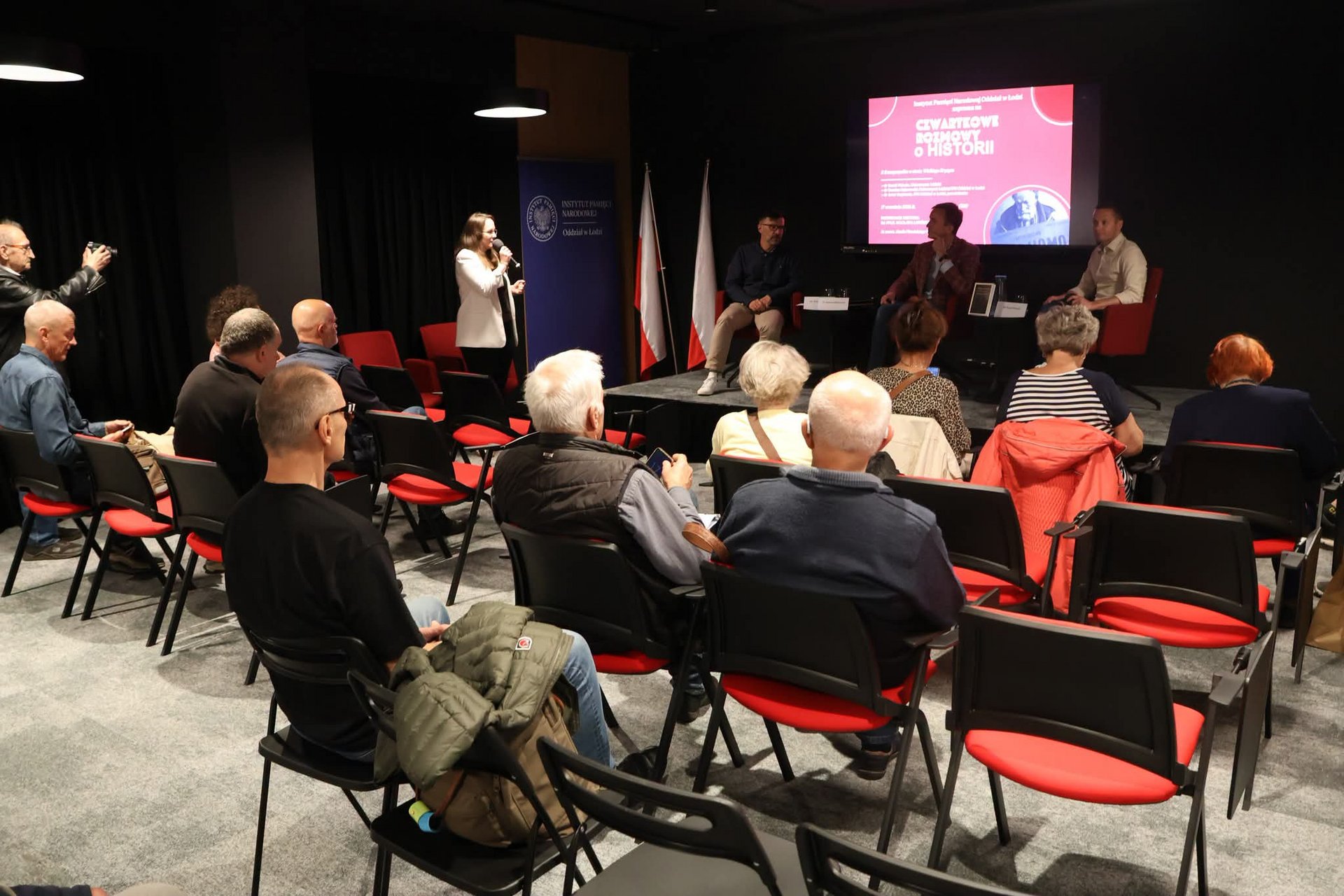
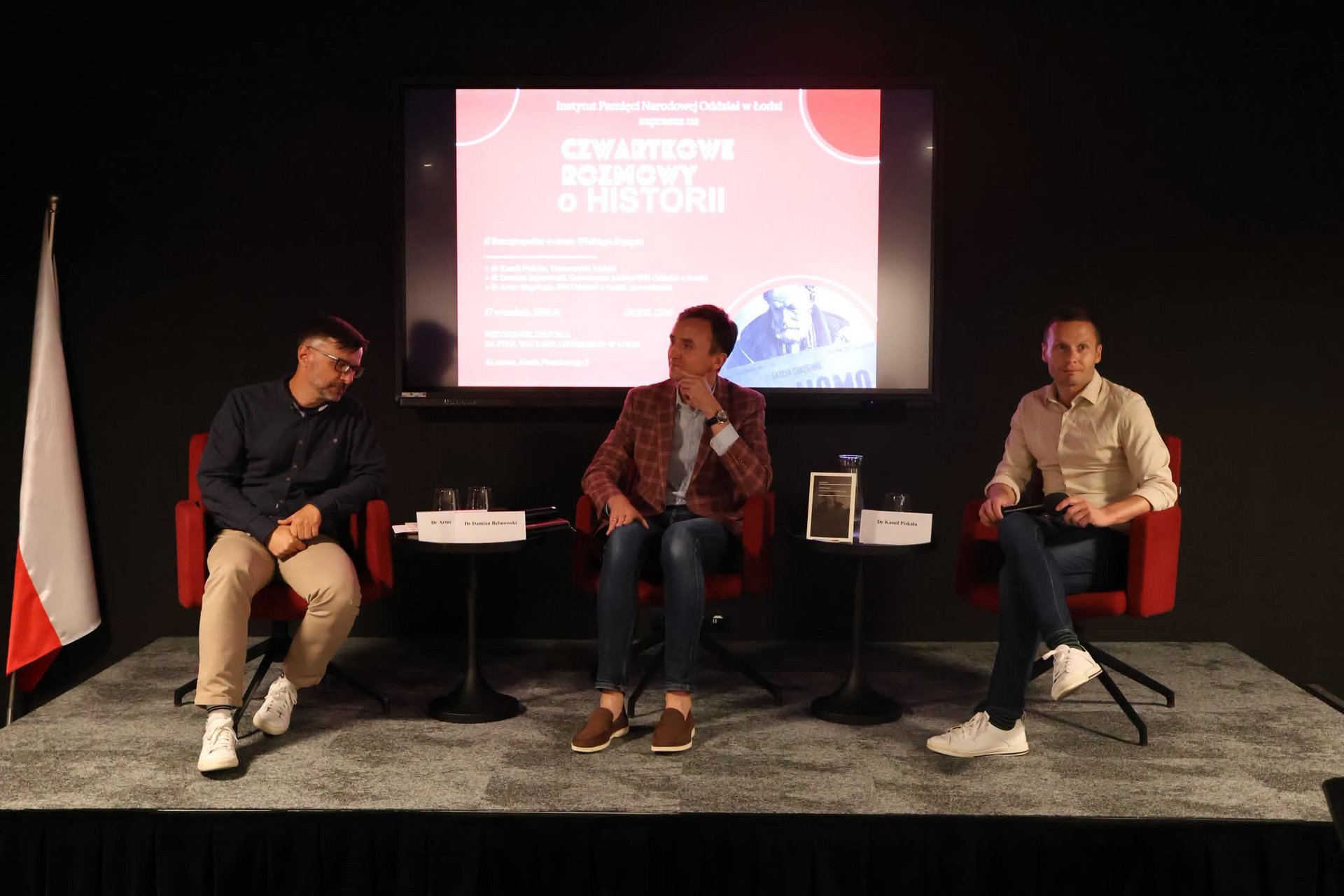
The topic of the debate was the Second Polish Republic in the shadow of the Great Depression. The discussion also featured Dr Kamil Piskała from the Faculty of Philosophy and History, University of Lodz, and the meeting was moderated by Dr Artur Kuprianis from the Institute of National Remembrance, Łódź Branch.
During the discussion, participants analysed the causes and effects of the global recession of the 1930s on the Second Polish Republic. The discussion focused on the impact of the economic collapse on the country’s situation, social changes, and the measures taken by the authorities at the time to mitigate the consequences of the crisis. Dr. Damian Bębnowski presented the perspective of an economic historian, highlighting the importance of economic processes for the functioning of the state during the interwar period. He discussed the mechanisms of the crisis in industry, agriculture, trade, and finance, highlighting the systemic problem of unemployment and the impoverishment of society, as well as the decisions of successive Polish ministers of the treasury within the context of the global economic paradigm of the time.
The meeting provided an opportunity to deepen understanding of one of the most difficult experiences in the history of the Second Polish Republic and to reflect on the consequences of the Great Depression for Poland’s further development. The debate confirmed the importance of public discussion about the past in fostering a better understanding of the present.