Negotiation in Practice
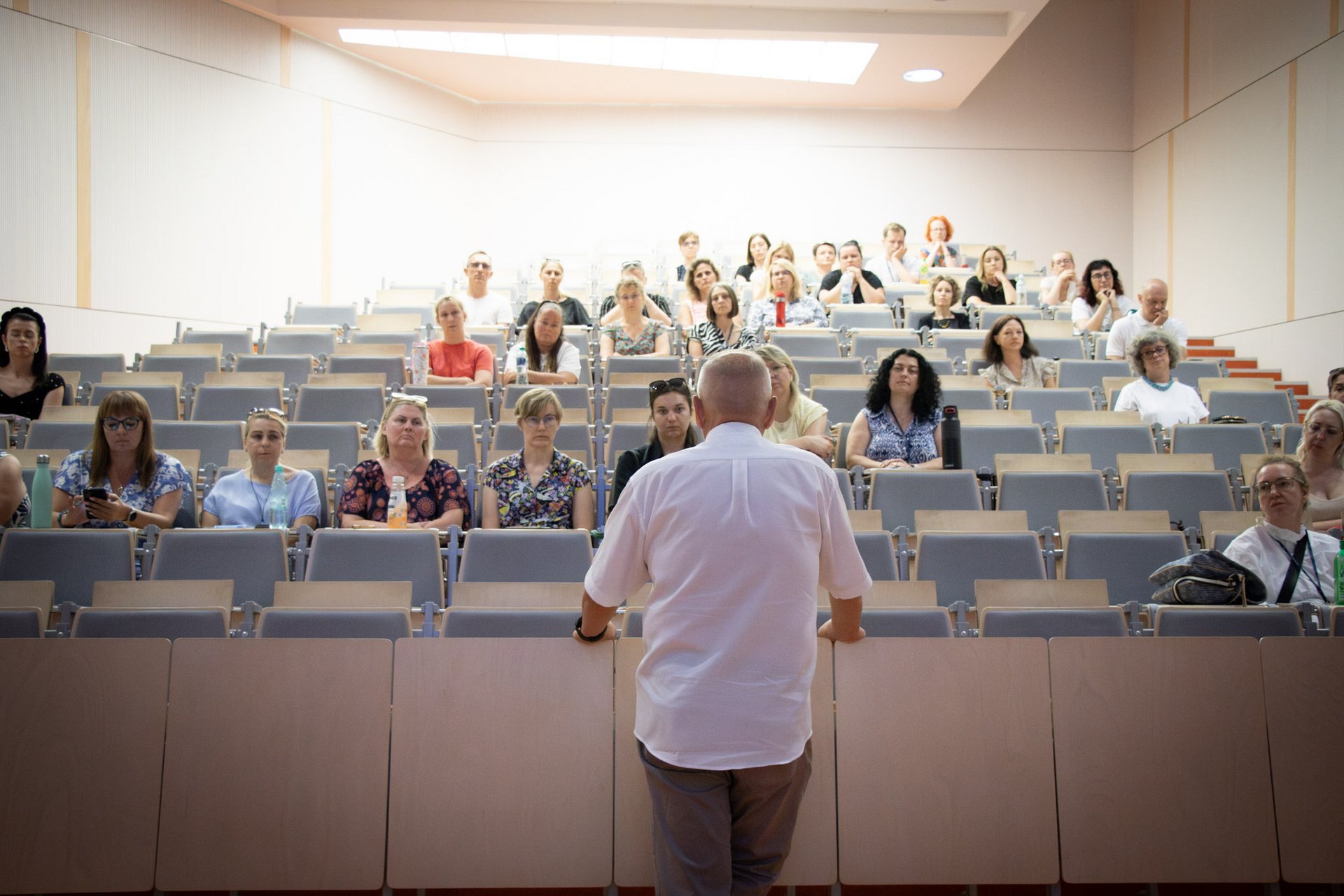
The second safety-focused training session gave the Faculty of Philology staff an opportunity to explore an aspect that often determines the outcome of crisis situations: communication. The ability to engage in conversation, manage one's emotions and consciously build rapport can play a crucial role both in everyday university life and during incidents requiring an immediate response.
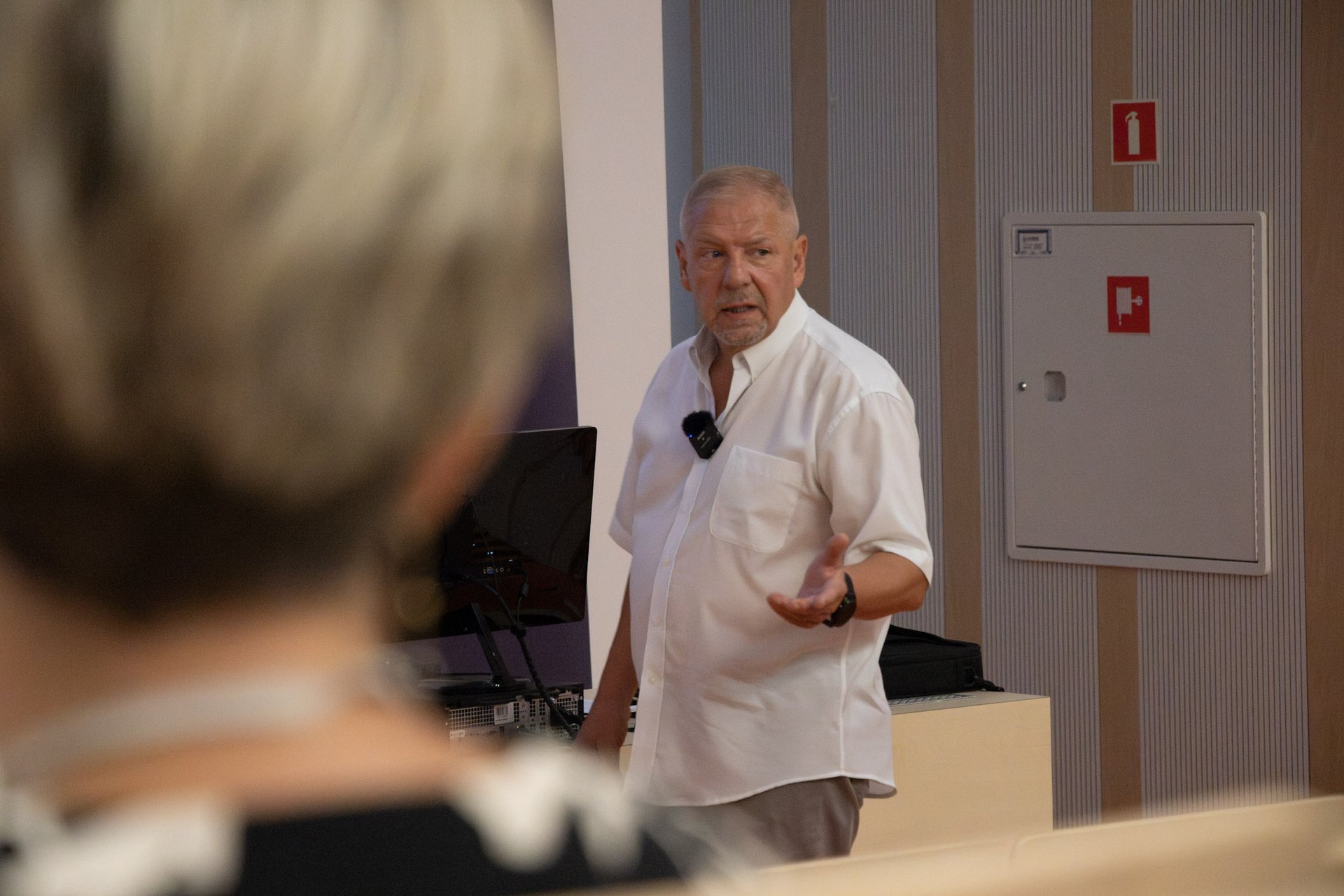
Drawing on his experience as a police negotiator at the Municipal Police Headquarters in Lodz, Junior Inspector Krzysztof Balcer pointed out that many conflicts arise not from ill intent but from misunderstandings and communication errors. The way we perceive others is shaped by our previous experiences, emotions and personal histories. For this reason, active listening, authenticity and the ability to understand another person's perspective are essential communication skills.
Start with Yourself
JOne of the key themes of the training was emotional self-regulation. Participants learned how stress develops, how the body responds to threats and why decision-making paralysis so often occurs in critical situations.
Providing effective support to another person begins with managing your own emotions. Only then can you calm the other person and take appropriate action
– explained Junior Inspector Krzysztof Balcer.
A significant part of the session was also devoted to communication with people experiencing mental health crises and recognising warning signs that may indicate a risk to life, including suicidal intentions. The speaker has emphasised that empathy does not always come naturally, especially when another person's appearance or behaviour evokes fear or discomfort. It is precisely in such moments that professional communication becomes one of the most important tools for providing assistance.
Where to Seek Help?
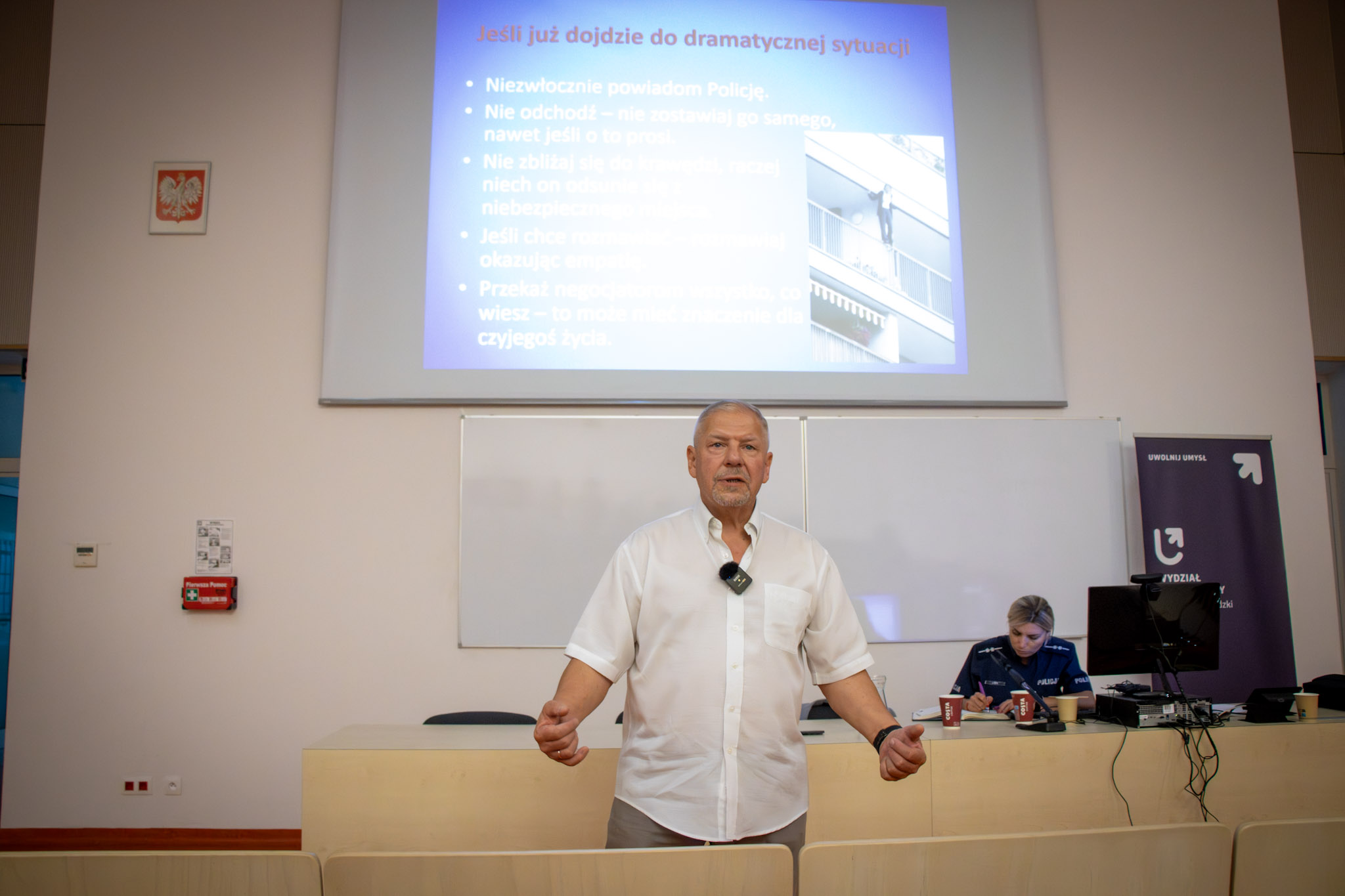
Safety is a shared responsibility of the entire academic community. During the training, participants discussed basic principles of responding to crisis situations, avoiding unnecessary escalation of conflicts and identifying the appropriate emergency services to contact depending on the nature of a threat.
The meeting also provided an opportunity to reflect on the role of non-verbal communication. The negotiator has highlighted that words are only one part of the message being conveyed; body language, tone of voice and behavioural consistency are equally important.
Authenticity builds trust and in situations involving danger, it may determine whether the other person is willing to cooperate. Safety is built every day through attentiveness, responsibility and conscious communication. A conversation conducted with understanding and respect can not only de-escalate conflict but, in extreme circumstances, save a human life
– explained the police officer.
TEAM UP
The training marked another stage of the cooperation between the Faculty of Philology, University of Lodz and the Municipal Police Headquarters in Łódź within the framework of the TEAM UP project.
The initiative is based on the mutual exchange of knowledge and experience. Police officers develop their language and communication skills, learning how to communicate effectively with people from diverse cultural backgrounds, while members of the academic community gain practical knowledge on safety procedures and responding to crisis situations.