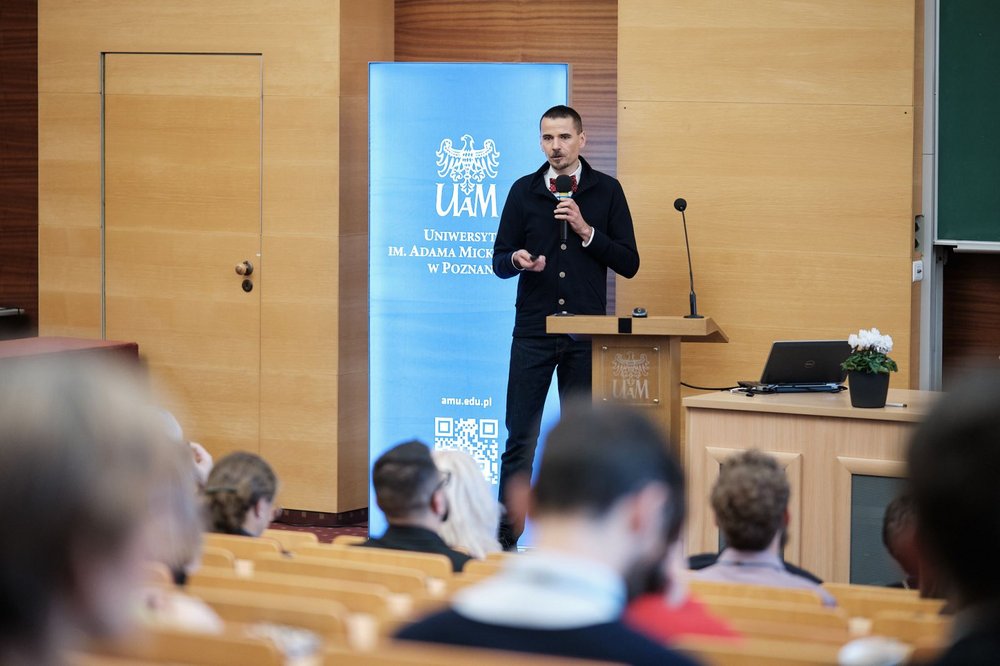
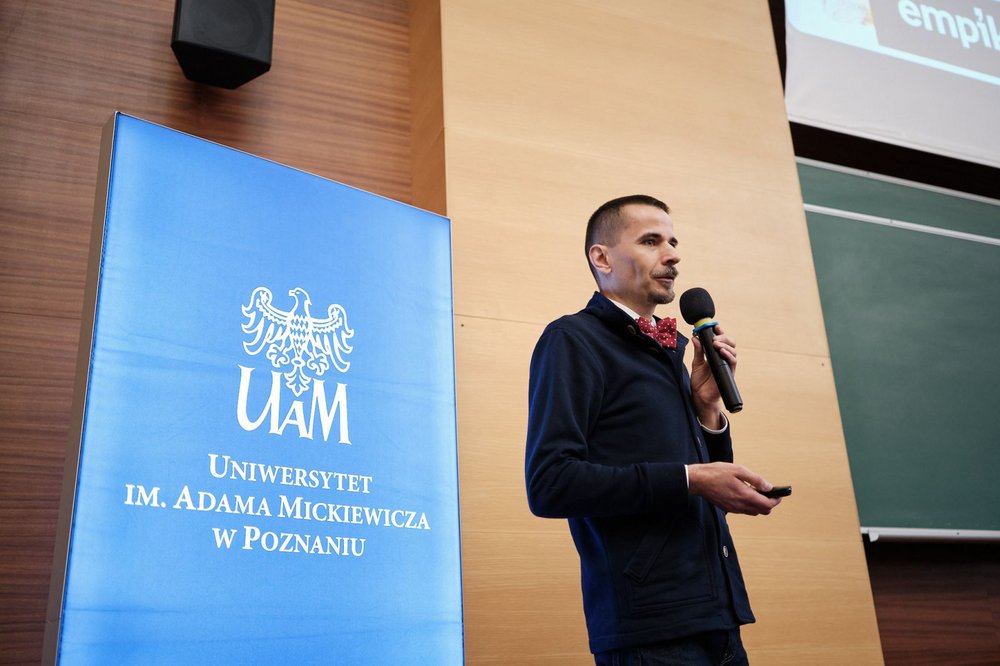
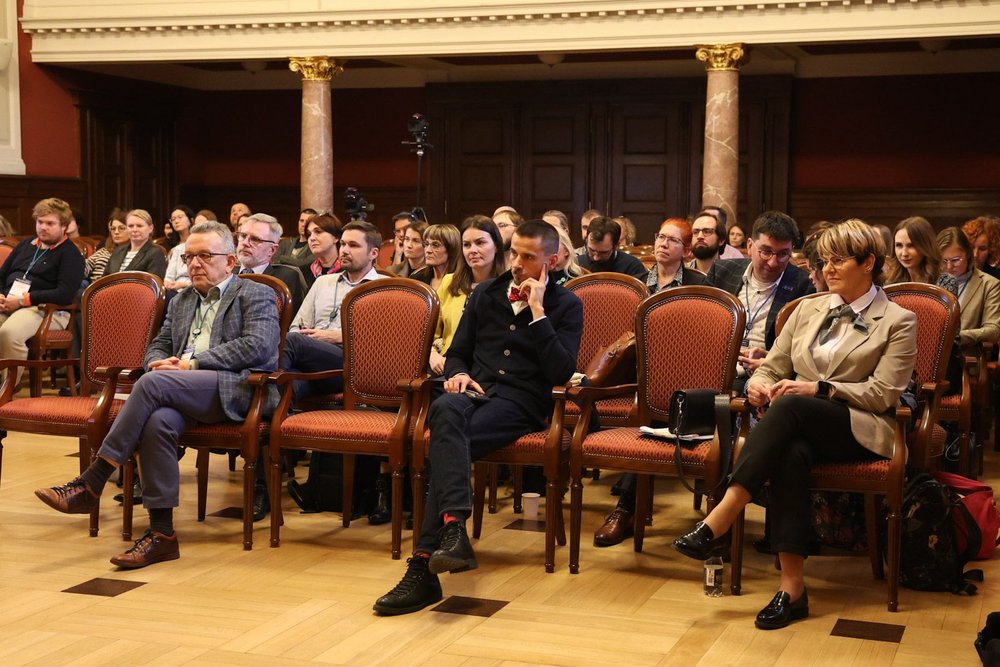
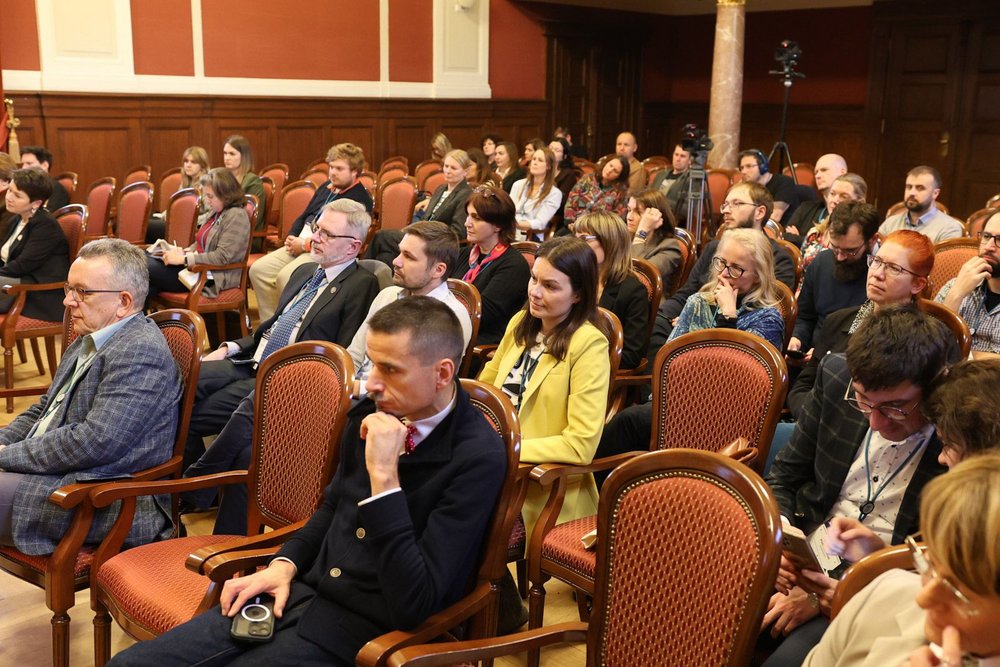
Prof. Krzysztof Pabis reminded the audience that public trust in science and scientists has been declining for several years. As many as 99 percent of climate change researchers say that humans are responsible for it, yet over half of Poles believe this is untrue. On the other hand, other polls show that up to 80 percent of citizens want scientists to share their knowledge. Communication is proving to be a problem because science is difficult and becoming increasingly difficult.
This has been talked about for a long time. In the 1990s, an article appeared in Nature that said the language of scientific publications was becoming increasingly inaccessible. Now it's even worse. I'm theoretically prepared to decipher scientific content, but I encounter titles of biology articles that are a mystery to me. And not only to me. Analyses show that the language barrier prevents the real transfer of knowledge from universities to society
– said Prof. Pabis
In his opinion, science created the modern world, and we benefit from its achievements every day. Therefore, it is crucial that society trusts proven knowledge and doesn't reject it. To achieve this, scientists must overcome myths and false beliefs, such as the belief that research cannot be discussed in an accessible way, and that a good populariser is not necessarily a distinguished scientist. Prof. Pabis cited examples such as Nobel Prize winners, physicists Richard Feynman and Carl Wieman as well as renowned researchers such as neurobiologist Robert Sapolsky.
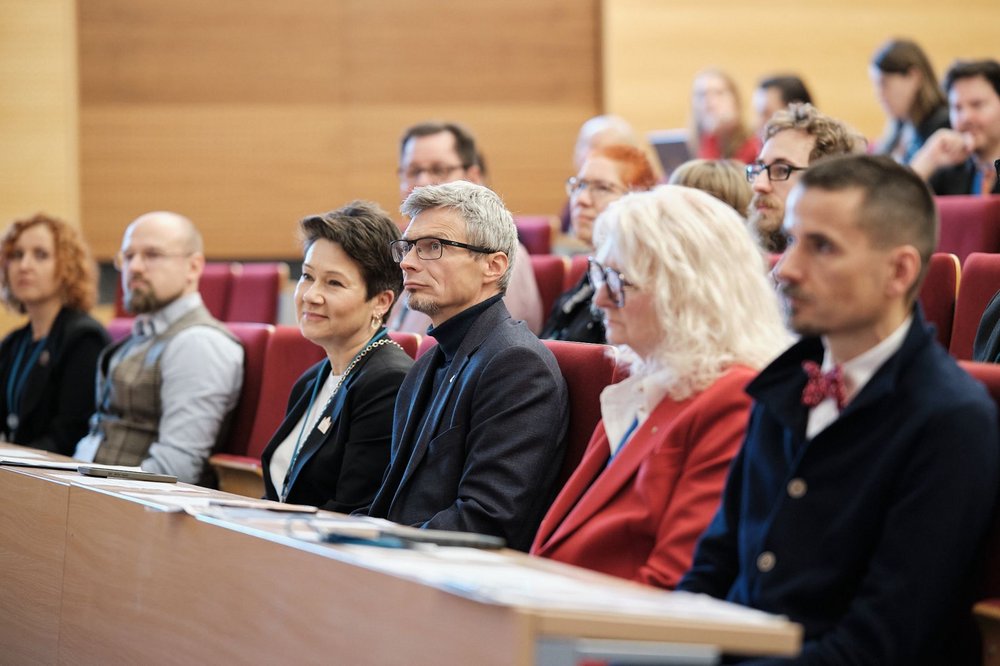
While opening the conference, the Adam Mickiewicz University in Poznań Vice-Rector for International Cooperation, Prof. Rafał Witkowski, underlined that this was the first conference of this type organised by Adam Mickiewicz University and that it was intended to be the beginning of further activities related to the popularisation of science.
You might ask, why are we here? Each of us has a multitude of other responsibilities. There are many reasons, but from my historical perspective, the most important one is as follows: there is no well-functioning democratic society without knowledge. We are not an island – we live in a society. And if we want citizens to make wise decisions, especially at the ballot box, we must impart this knowledge to them
– argued Prof. Witkowski.
At the University of Lodz, we understand that knowledge only truly matters when it's shared. That's why our researchers, students and popularisers engage in hundreds of activities: from producing podcasts and films, through organising and participating in open lectures and meetings in libraries and museums, to science festivals, exhibitions, competitions and projects for schools.
Popularisation at the University of Lodz is not just a form of education. It is an expression of courage in asking questions, curiosity in exploring the complexities of the world, commitment to diligent and responsible action, cooperation that connects scientists, students and the surrounding community, as well as respect for the diversity and openness that strengthen our community.
As one of the largest universities in Poland, the University of Lodz proudly positions itself as a leader in popularisation activities – a place where science is not confined within the walls of academia, but lives in dialogue with society.
Source: Adam Mickiewicz University in Poznań
Edit: Press Office, University of Lodz
Photos: Władysław Gardasz, Martyna Płaczek (Adam Mickiewicz University in Poznań)