3 886 m² total floor area
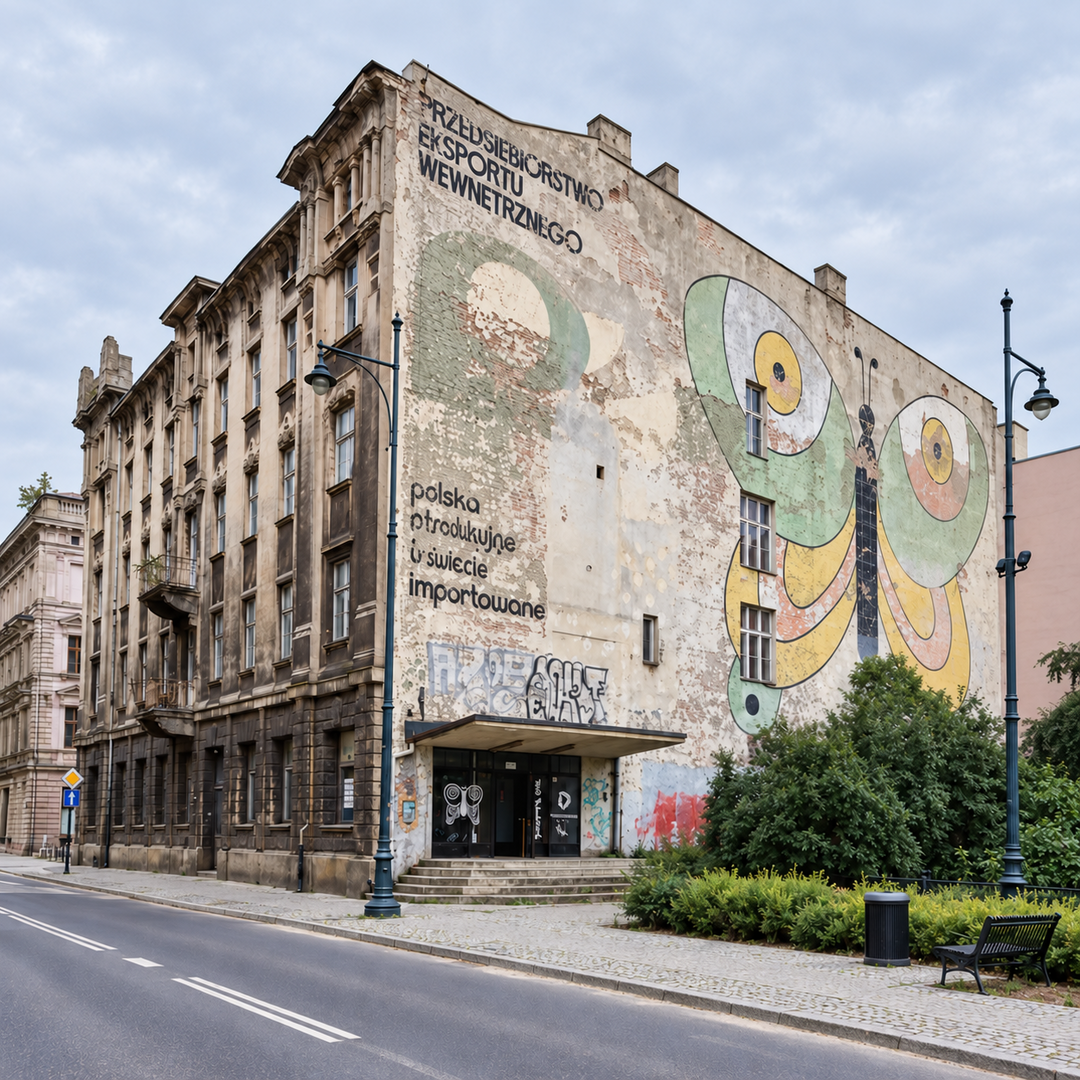
"Motyl". A Historic Building. A Place of Potential
Property for Sale | Sienkiewicza 21, Łódź
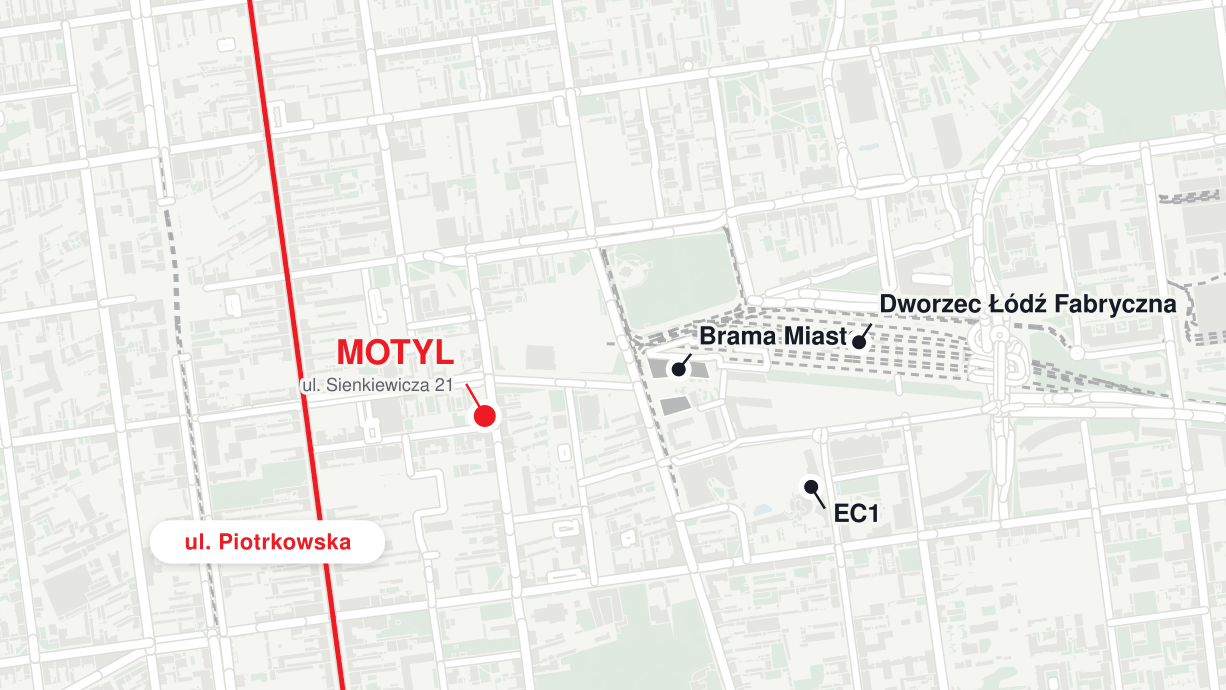
In the heart of Łódź, between Łódź Fabryczna Railway Station and Piotrkowska Street, stands a historic tenement building offering nearly 4,000 m² of floor space. Its internal courtyard, preserved architectural features and iconic Pewex mural painting define the unique character of this property.
"Motyl" in Numbers
The property comprises the front section of the tenement building together with rear wings arranged around an internal courtyard.
The building requires comprehensive refurbishment and modernisation. Detailed information is available below and in the sales documentation.
2 328 m² usable floor area
1 634 m² site area
726 m² building footprint
16 002 m³ building volume
4 above-ground storeys, 1 basement level and an attic
In the Centre of Łódź. At the Heart of Change
Łódź is located in the centre of Poland, close to the intersection of the A1 and A2 motorways. The city is home to approximately 640,000 residents, while more than 74,000 students attend its 20 higher education institutions. Its central location, developed infrastructure, and strong academic and business environment continue to enhance Łódź's attractiveness as a destination for new investment.
In recent years, central Łódź has undergone a significant transformation. Former factories and historic buildings have been given new purposes, while urban development continues to be shaped by respect for local architecture, history and identity. The New Centre of Łódź (Nowe Centrum Łodzi), centred around Łódź Fabryczna Railway Station, EC1 and the City Gate (Brama Miasta) development is one of the most important areas of this transformation. Located at the intersection of this rapidly developing district and the historic city centre, “Motyl” reflects the distinctive approach to regeneration that has become characteristic of Łódź.
The future significance of this part of the city is expected to increase further with the completion of the cross-city railway tunel, which is currently under construction. Once completed, Łódź Fabryczna will be connected to railway lines on the western side of the city and transformed into a through station serving metropolitan, regional and long-distance rail services.
The property's location on the route linking one of Łódź's key transport hubs with its historic centre is among its strongest advantages.
Discover Motyl Up Close
Explore the building's distinctive façade, internal courtyard and historic interiors at Sienkiewicza 21. The video showcases the scale of the property, its preserved architectural details and its potential for future redevelopment.
140 Years of History
The history of the building dates back to 1886. At that time, the property belonged to the Łódź industrialist Ludwik Meyer. According to historical sources referenced in the documentation, the building was probably designed by Hilary Majewski as the headquarters of the Main Post Office, with residential accommodation for postal employees.
In 1908, the property was acquired by Salomon Dancygier. Around 1910 it underwent substantial remodelling and received a new interior design. Art Nouveau features were introduced, followed in later years by elements of Classicising Modernism and Art Deco.
Over the following decades, the building served a variety of functions. Among its occupants were financial institutions and the Łódź Suburban Narrow-Gauge Electric Railway Company.
Between 1946 and 1956, the Regional Military Court in Łódź operated from the building. A commemorative plaque on Moniuszki Street recalls this difficult chapter of its history.
![Why “Motyl” [Butterfly]?](/fileadmin/_processed_/4/4/csm_Motyl_7_f0970bad02.png)
Why “Motyl” [Butterfly]?
In 1987, a large-scale mural painting depicting a butterfly, the symbol of the former Pewex (Przedsiębiorstwo Eksportu Wewnętrznego), was created on the building's northern wall. It is from this mural that the property derives its long-standing name: Motyl ("Butterfly").
The mural painting was designed by Jerzy Bystry and Paweł Porzycki, both associated with the Academy of Fine Arts in Łódź, and executed by Zenon Adamkiewicz. In addition to the iconic butterfly motif, the mural incorporated both the Pewex logo and the company's full name.
Pewex was one of the distinctive features of everyday life in communist-era Poland. Its shops offered imported goods in exchange for foreign currency or special vouchers, providing access to products rarely available through ordinary retail channels. Although the chain has long since disappeared, its monumental advertisement on Sienkiewicza Street remains and has become an integral part of the building's identity.
Since 1990, the property has belonged to the University of Lodz. Today, the mural remains one of the building's defining features and one of the most recognisable elements of its history.
Preserved Architectural Features and Interiors
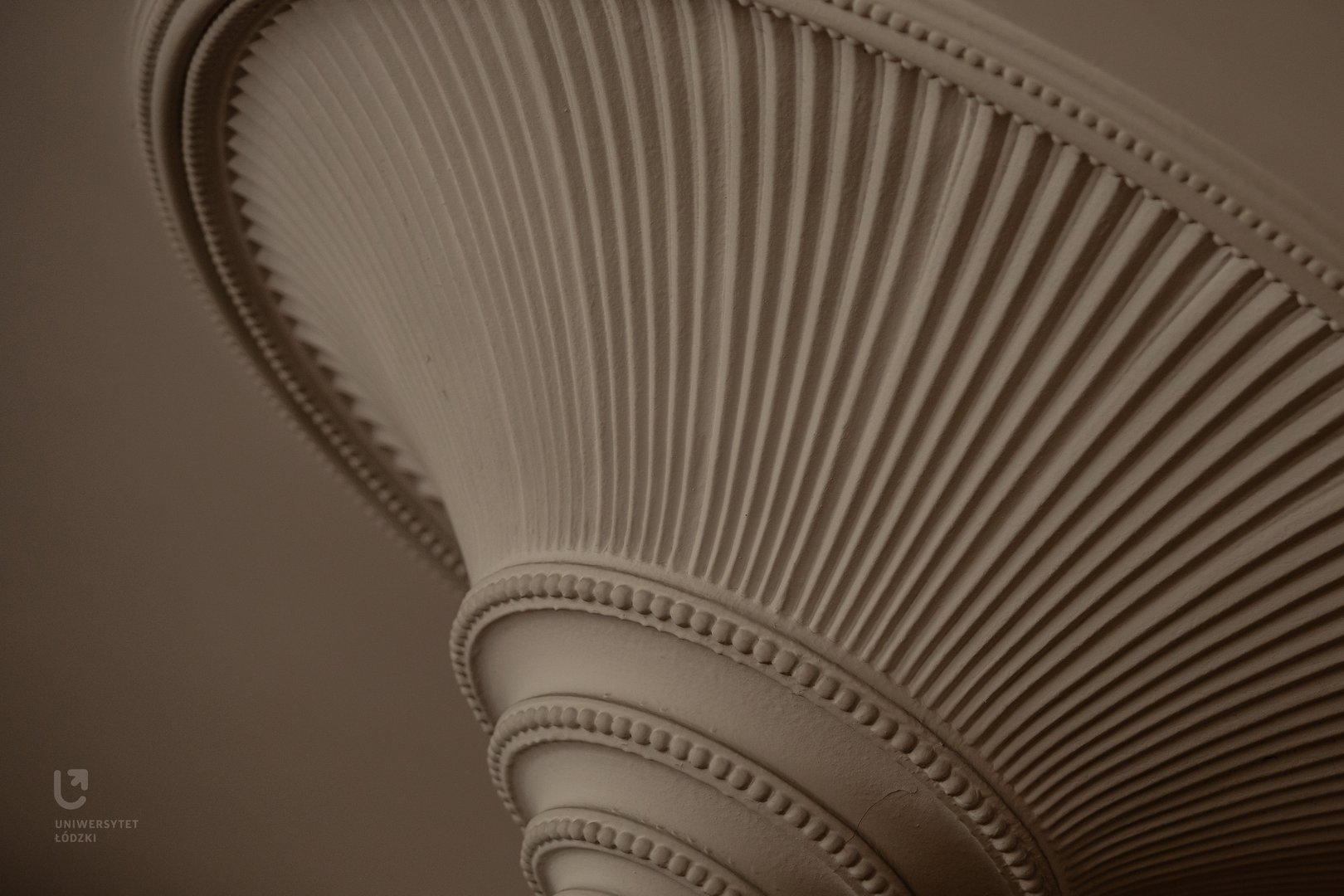
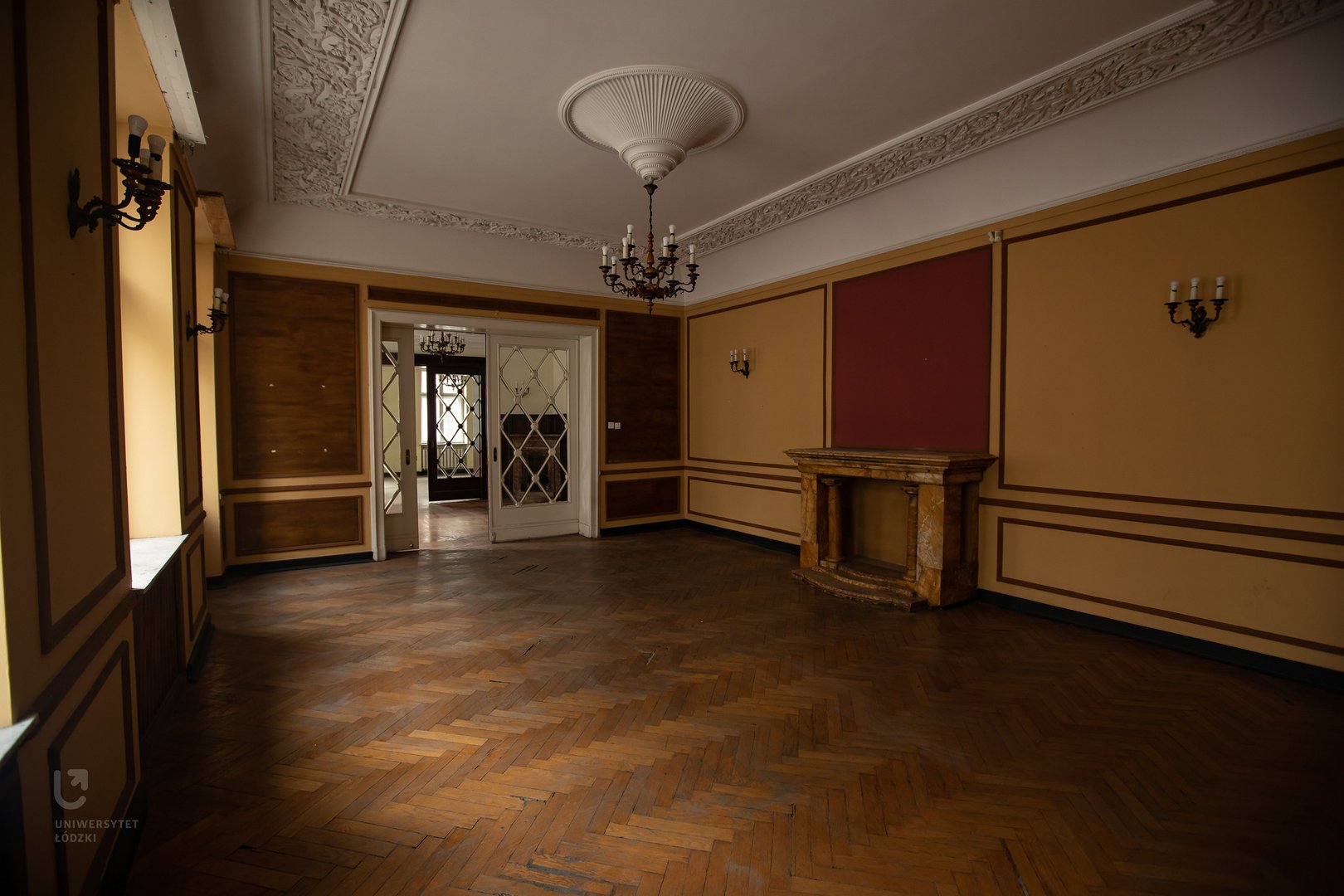
The building retains a number of historic decorative and architectural features, including moulding, wood panelling, original doors, a historic mirror, fireplace, radiator covers, chandeliers and wall sconces.
Its character is further defined by the main staircase, cast-iron columns on the ground floor, and the historic layout of the property, with its rear wings and internal courtyard.
Motyl in Culture and on Screen
Motyl's historic interiors have already served as a setting for cultural events. Exhibitions, artistic projects and film productions have demonstrated the building's potential in practice.
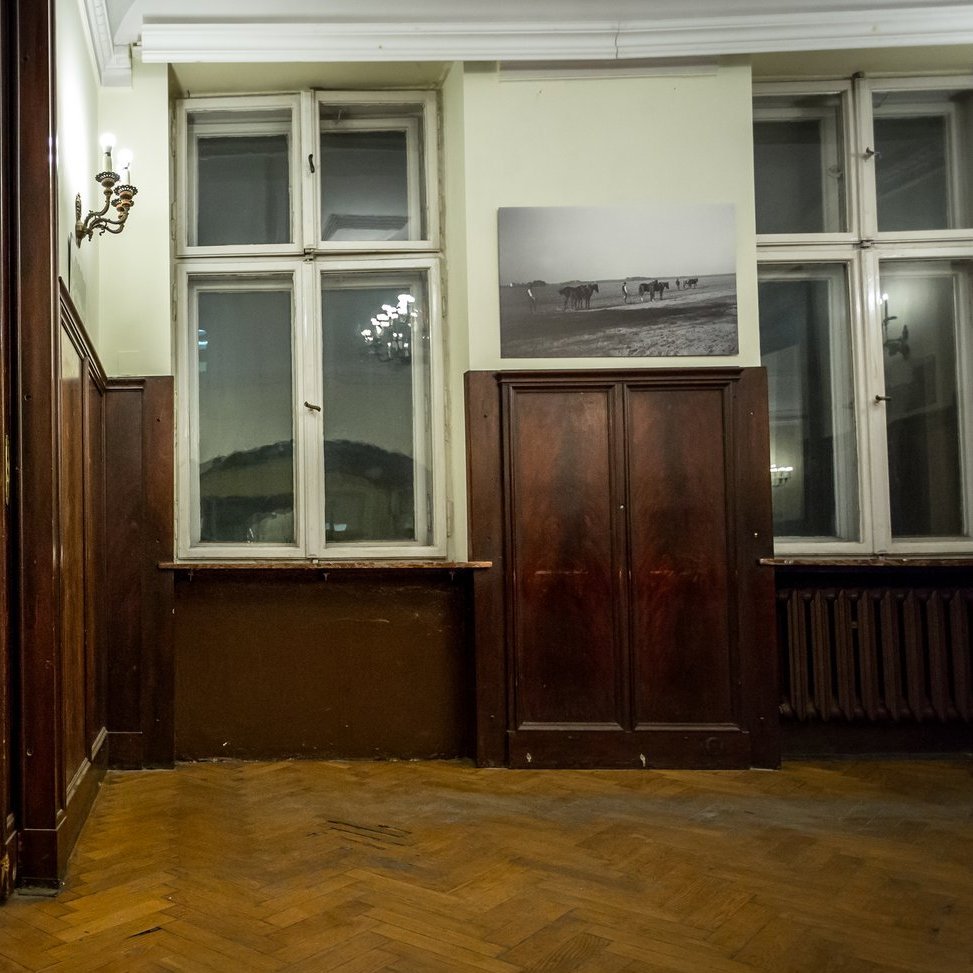
A Venue for Fotofestiwal
In 2019, we opened the usually inaccessible building to the public for the first time, hosting exhibitions, screenings and events as part of the Fotofestiwal International Festival of Photography in Łódź.
The following year, Motyl hosted the exhibition Ko#lekcje, showcasing artistic and scientific photography connected with the achievements of the University of Lodz, the Strzemiński Academy of Fine Arts Łódź, and the Lodz Film School.
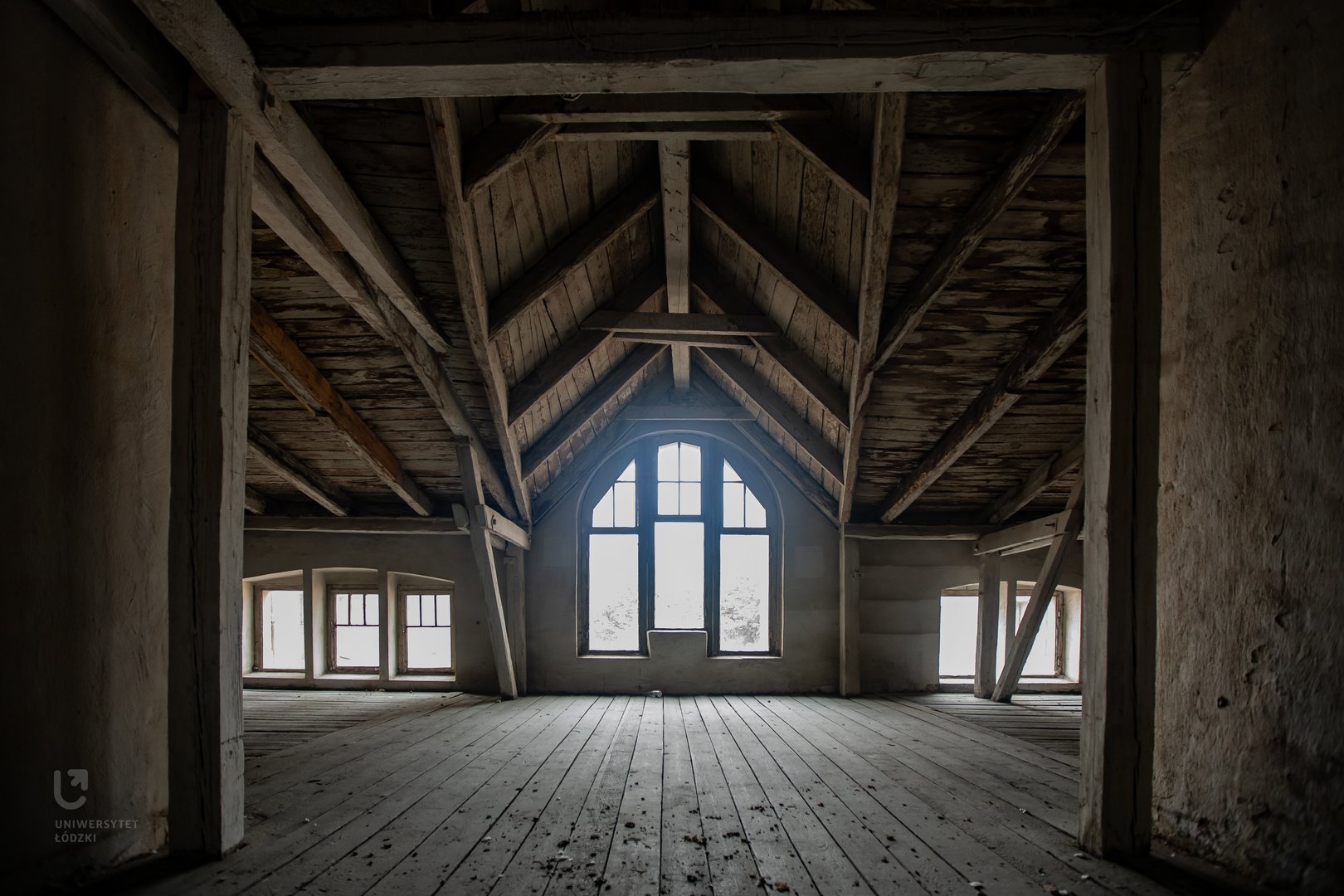
Motyl on Screen
The building also has a place in Łódź's cinematic heritage. Its interiors appeared in Cold War, the acclaimed film directed by Paweł Pawlikowski.
At Sienkiewicza 21, the film crew recreated, among other settings, Wiktor's Paris apartment, a Minister of Culture's office and a consulate of the Polish People's Republic in Paris. The production also made use of the building's distinctive timber attic spaces.
Space for New Possibilities
A previously developed concept explored various potential adaptation scenarios for Motyl, including exhibition and creative functions, conference facilities, offices and co-working spaces, hospitality uses, and food and beverage operations.
The concept illustrates the building's adaptability but does not determine its future purpose. Any future redevelopment will require a separate design process and the necessary approvals.
A Courtyard at the Heart of the Building
The internal courtyard located between the building's wings has the potential to become a key element of any future redevelopment concept. Earlier design studies explored transforming it into a glazed, year-round atrium linking the different parts of the property.
A Building Requiring Modernisation
Motyl requires comprehensive refurbishment and modernisation. The prepared documentation envisages, among other works, structural improvements, thermal upgrading, modernisation of building services, roof and joinery works, and adaptation of the property to contemporary accessibility standards.
The building is located within both the Piotrkowska Street Cultural Park and the protected historic monument area "Łódź – Multicultural Landscape of an Industrial City". Any future works will therefore need to comply with heritage conservation requirements and obtain the necessary approvals.
Documents
Please review the sale notice, tender regulations and the documents required from participants.
- Notice of Public Written Tender (in Polish)
- Tender Regulations (in Polish)
- Appendix 1 – Tender Participant's Declaration (in Polish)
- Appendix 2 – Tender Participant Information Form (in Polish)
- Appendix 3 – List of Required Documents (in Polish)
- Appendix 4 – Confirmation of Tender Submission (in Polish)
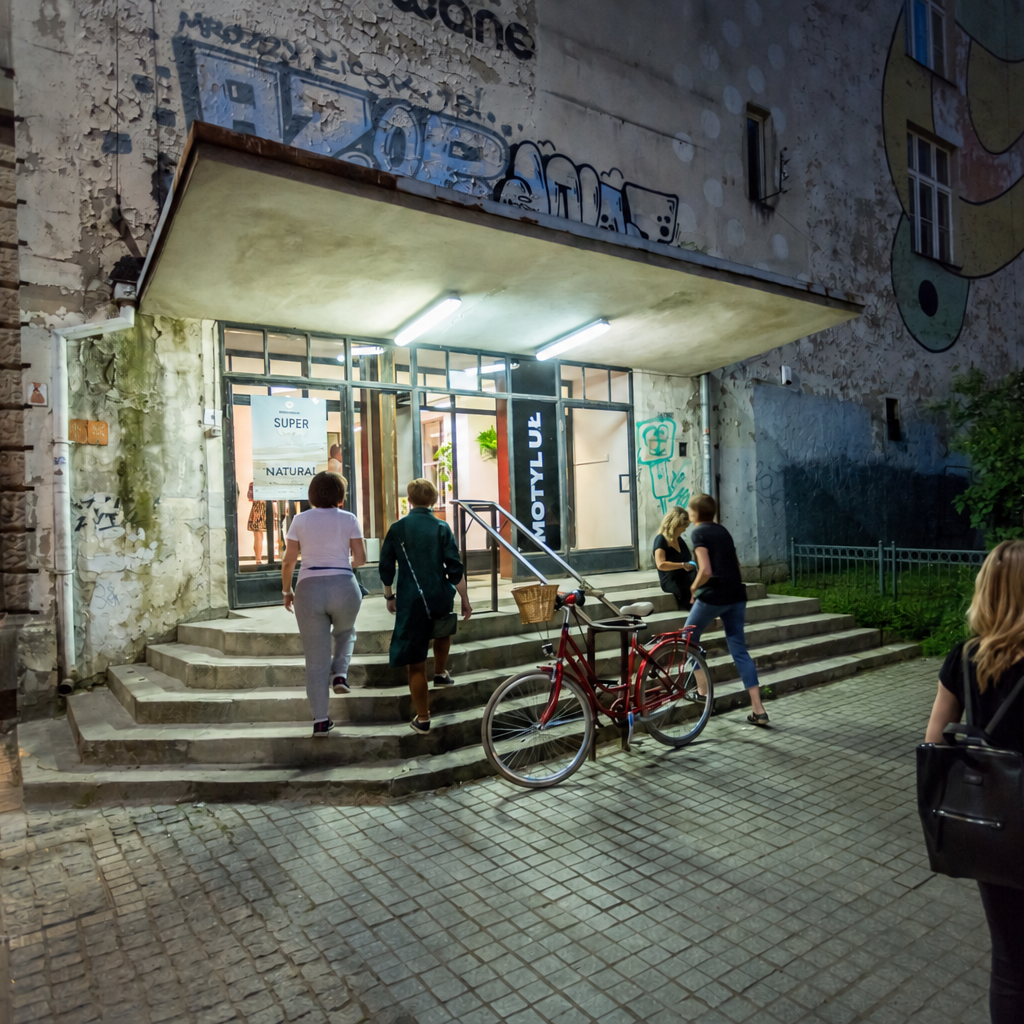
The Next Chapter of "Motyl"
Over the past 140 years, Motyl has evolved alongside Łódź, with its interiors serving many different purposes. The building has housed the post office and residential accommodation, financial institutions, a suburban railway company and a court. In time, it also became a venue for educational and cultural activities, while the iconic Pewex mural painting added a distinctive and unmistakably Łódź element to its identity.
Today, “Motyl” awaits its next chapter.
Contact details
Infrastructure Maintenance and Development Centre, University of Lodz
Lidia Kolbus
e-mail: lidia.kolbus@uni.lodz.pl
phone.: +48 602 137 476
UNIVERSITY OF LODZ
Narutowicza 68, 90-136 LODZ
fax: 00 48 42/665 57 71, 00 48 42/635 40 43
NIP: 724 000 32 43


Projekt Multiportalu UŁ współfinansowany z funduszy Unii Europejskiej w ramach konkursu NCBR