Utopian visions of prosperity abroad, a repulsive and grotesquely demonic enemy or perhaps a heroic surge of patriotic spirit and the strength of the Polish nation?
The many images of reality refracted through the lens of propaganda accompanied Poles both before and throughout the Second World War. In the form of posters, ephemeral prints that could be seen on the corner of almost every street, they became an exceptionally convenient and effective tool of social influence.
They were capable of shaping worldviews and steering public sentiment among people from all social backgrounds, regardless of education or wealth. Omnipresent in everyday life and public spaces, they functioned almost like subliminal messages. Repeated, fleeting glances at these graphics, often devoid of deeper reflection, gradually but effectively cultivated a particular view of the world: who should be regarded as an ally, who as an enemy, where the devastation of war awaited and where a life of prosperity could supposedly be found.
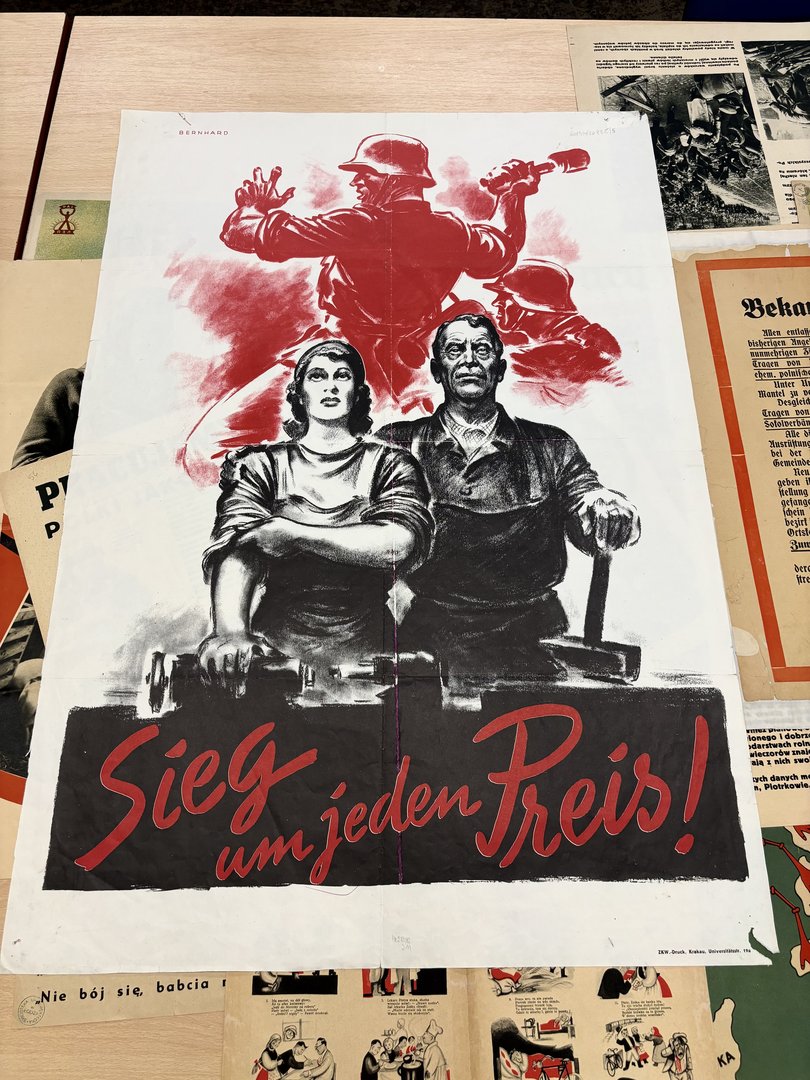
Although posters may appear to be a simple medium, this is a misconception. They were often created by teams of specialists working together to extract the greatest possible impact from an apparently ordinary graphic form. Their effectiveness relied on carefully considered stylistic devices, an appropriate choice of colours, and deliberately emphasised facial expressions and gestures. Combined, these elements produced an unequivocal vision of good and evil, appealing directly to human emotions and leaving little room for further reflection.
Both the hostile occupiers and the Poles themselves were fully aware of the power of propaganda. While Polish posters generally employed a fairly conventional and martyrological set of themes, calling for mobilisation through appeals to national unity, warning of the horrors of war embodied by diabolical and simply ugly depictions of the enemy, or portraying dramatic images of the destruction awaiting the homeland, there were also examples of creative distortion and embellishment of reality intended to present Poland in a more favourable light.
One such case involved a poster bearing the famous slogan“Silni, zwarci, gotowi” [Strong, United, Ready], depicting Marshal Edward Rydz-Śmigły and his staff admiring the might of Polish air power. Intended to raise national morale, the image was in fact a remarkably ironic photomontage, as the aircraft shown were actually planes of the Nazi Luftwaffe.
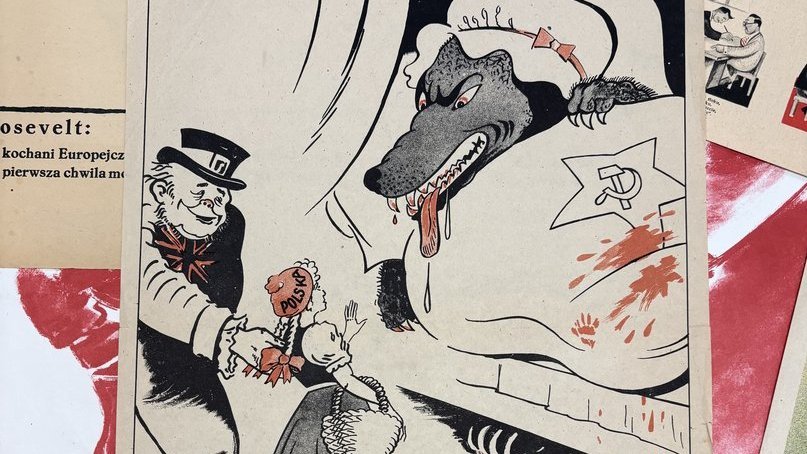
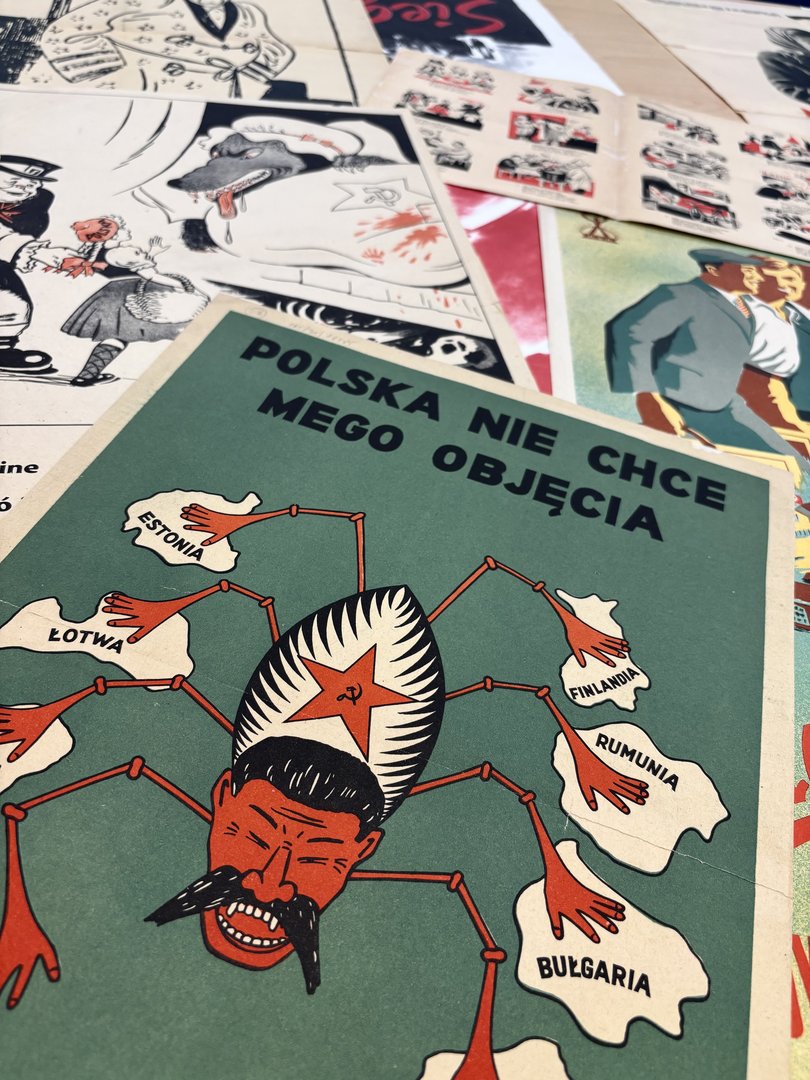
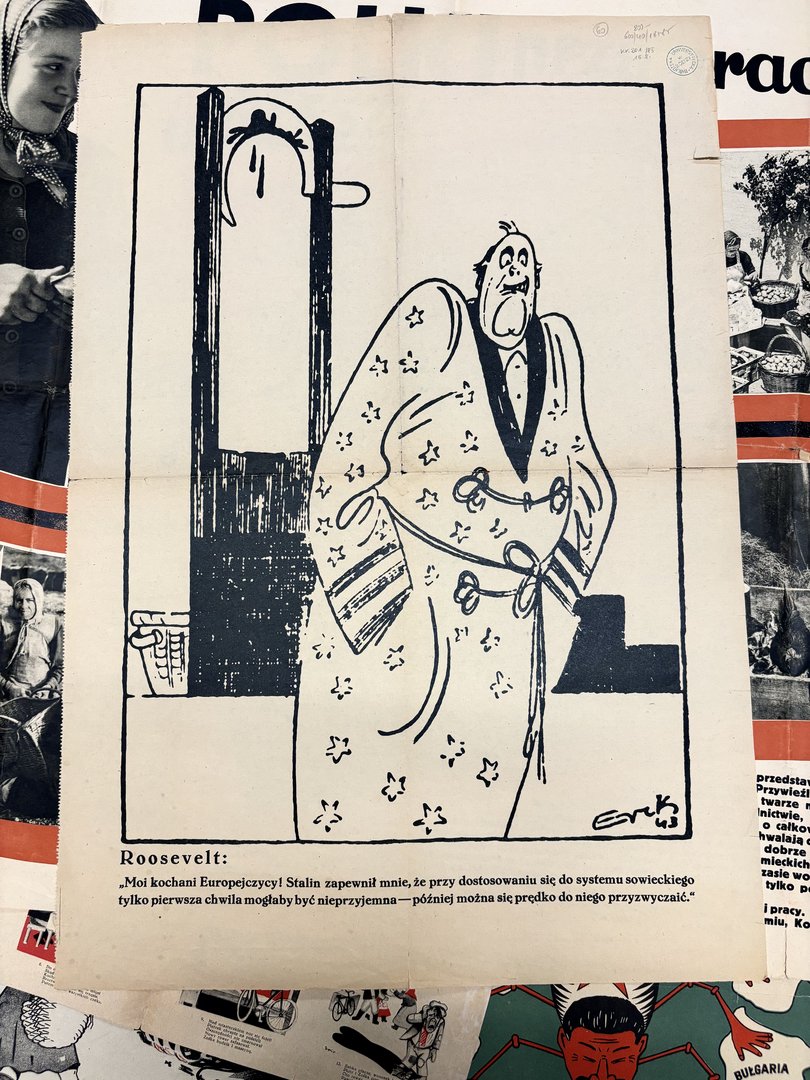
German propaganda operated on many fronts. Posters featured caricatured and sinister portrayals of Soviet Russia, including a monstrous vampire-spider Stalin proclaiming that “Poland does not want my embrace” while already clutching other European nations in his legs. Satirical approaches employing dark humour were also popular and often mocked Allied leaders. An excellent example is the slogan that inspired this article’s title,“Nie bój się, babcia nic ci nie zrobi” [Don’t Be Afraid, Granny Won’t Hurt You], accompanied by an illustration depicting Poland as Little Red Riding Hood, pushed by Winston Churchill directly into the claws and jaws of the bloodthirsty Granny-Wolf, representing the USSR. A poster featuring President Franklin Delano Roosevelt in a dressing gown employed a similar convention, assuring Europeans that adapting to the Soviet system would be almost painless while, in the background, a sinister guillotine loomed, fitted with a bloodstained sickle instead of a blade.
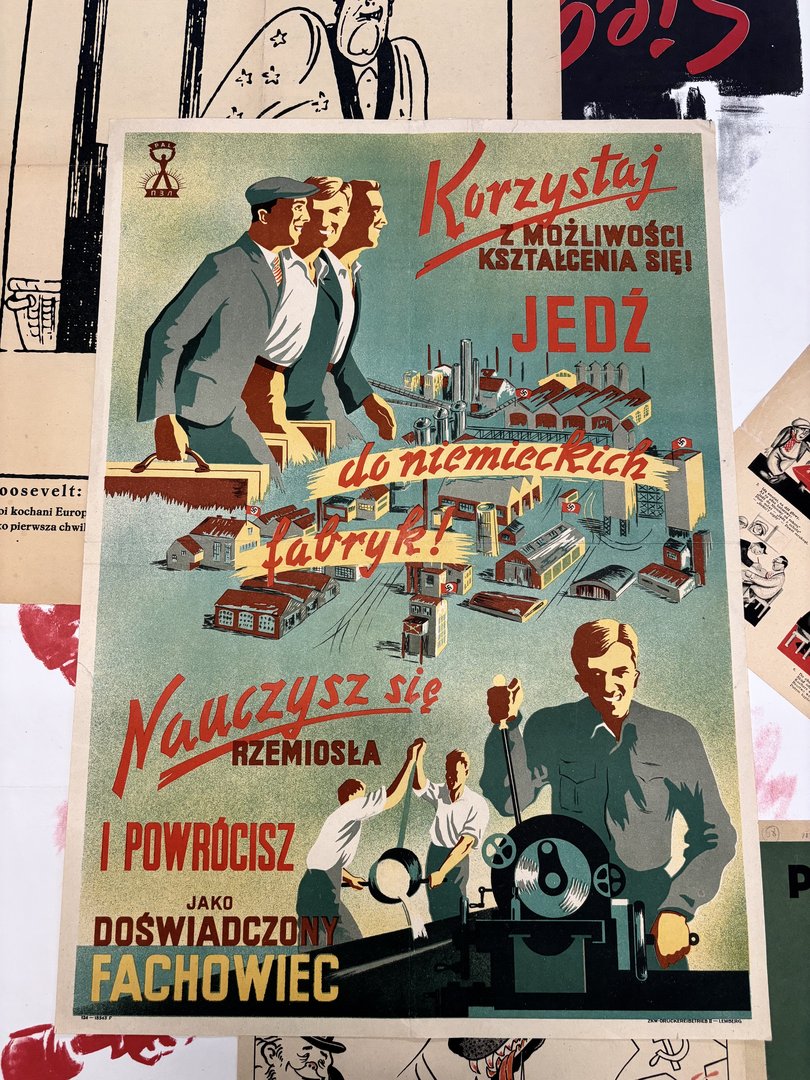
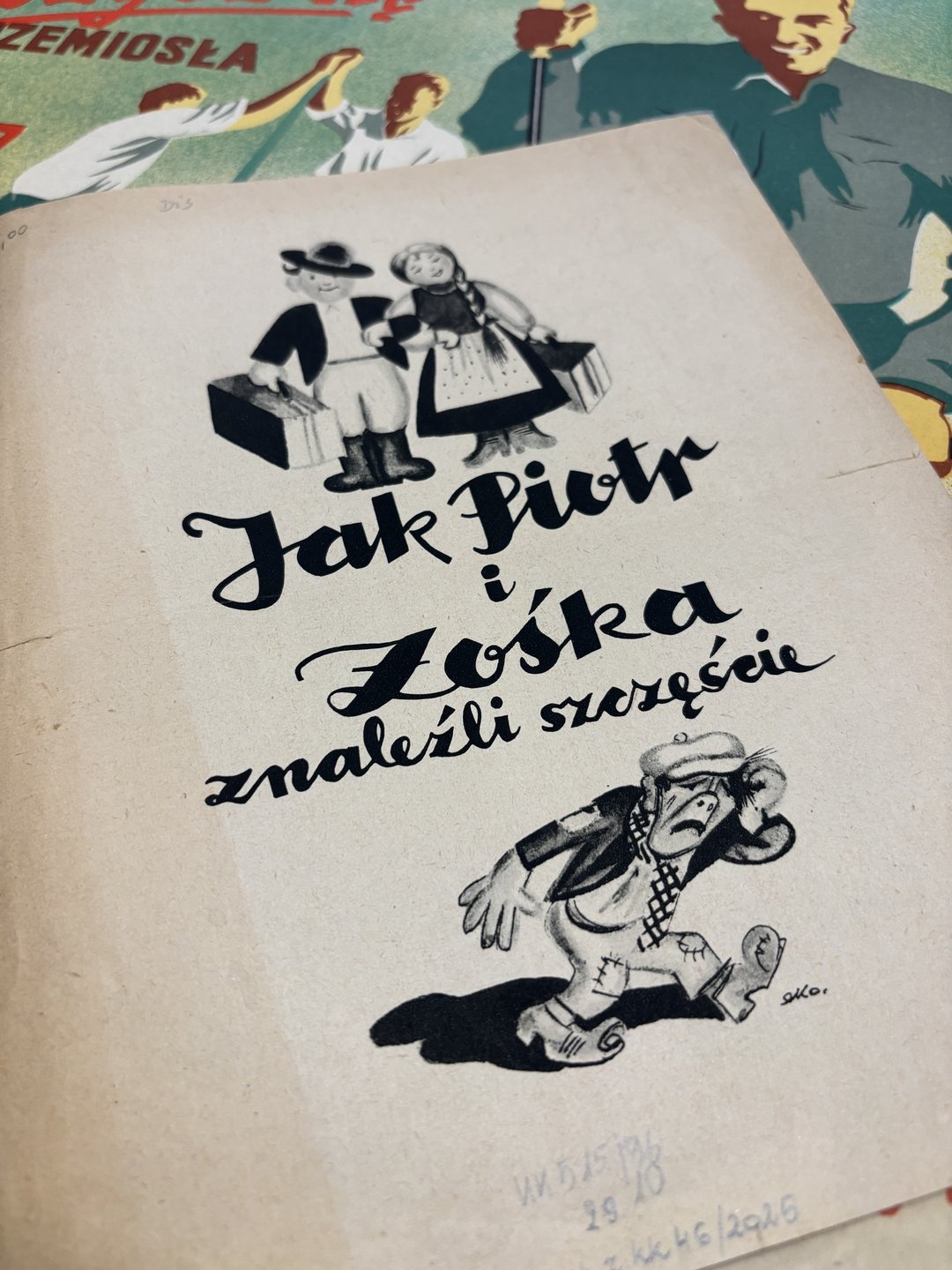
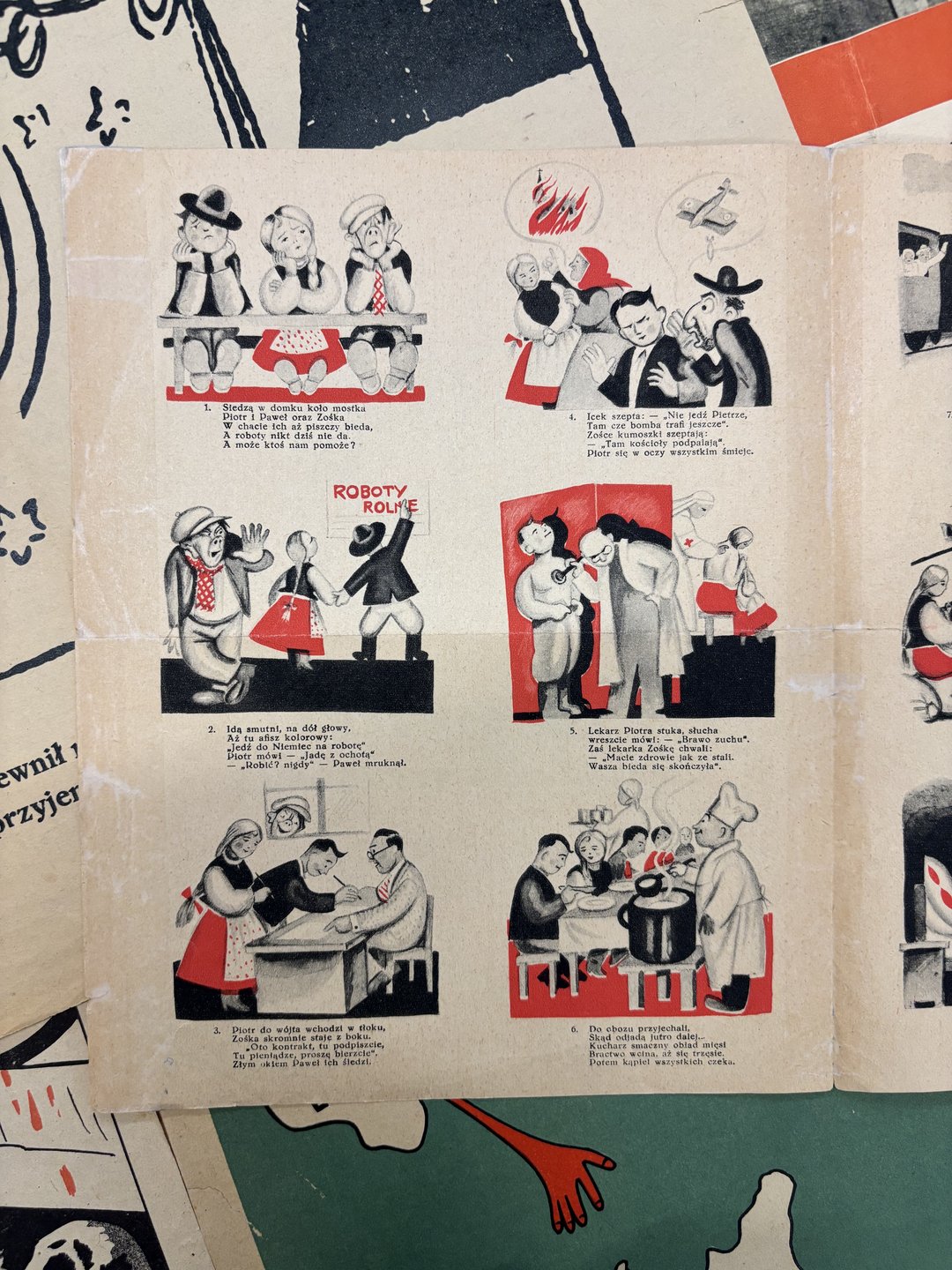
On the other hand, the Third Reich was portrayed in propaganda posters as a land flowing with milk and honey. Great efforts were made to persuade Poles to undertake labour migration, commonly referred to as going “na roboty” [to work in Germany]. Colourful and visually appealing prints presented young, energetic and smiling men enthusiastically gaining experience in German factories, supposedly destined to return home as highly skilled specialists. The brochure “Jak Piotr i Zośka znaleźli szczęście” [How Piotr and Zośka Found Happiness], written in the form of a comic-style rhyming story, told a story of a Polish couple who ignored the warnings of envious and prejudiced compatriots and travelled abroad, where they enjoyed a peaceful and prosperous life, balancing work, church attendance and leisure while steadily building their future wealth.
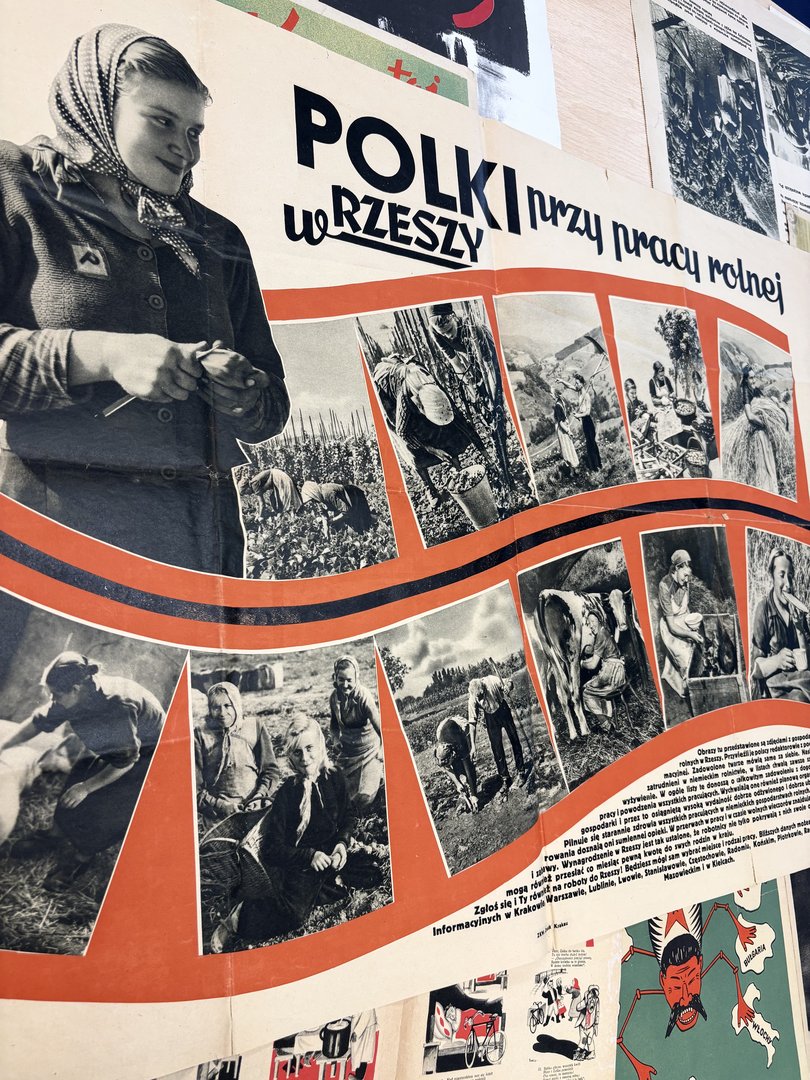
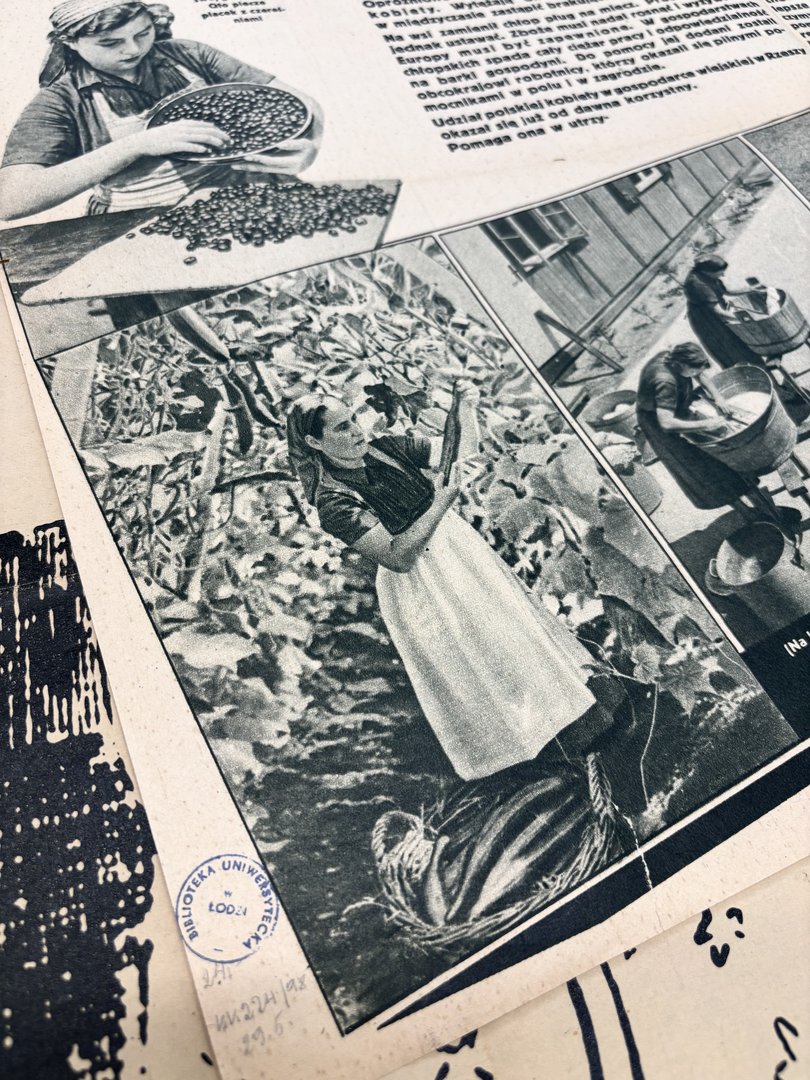
For those unconvinced by illustrated stories, more realistic graphic forms were created using carefully staged photographs. This approach was particularly common in posters encouraging Polish women to leave for work in Germany. Almost idyllic rural scenes depicted contented young women such as Anielcia, Hanusia, Janka and Rózia engaged in various agricultural and household tasks. Accompanied by persuasive captions, these posters promised financial stability, healthcare, wages and an active social life. They manipulated emotions by appealing to Polish women’s sense of duty as homemakers and caregivers, offering them an opportunity to be “useful” during wartime. As numerous testimonies and memoirs demonstrate, the reality of these journeys was, of course, entirely different: bleak and brutal.
Examples could be multiplied endlessly. Propaganda prints were present in Poland not only during the occupation, but also before and after it. Embedded within their historical and social contexts, they evolved and assumed a variety of forms. They freely employed a wide range of persuasive techniques, appealing to humanity’s basest instincts as well as its emotions, fears, needs and desires. For decades, they remained an effective and seemingly harmless means of persuasion.
All the prints and graphics mentioned in this article can be found in the online catalogue of the University of Lodz Library.
Source and edit: team of the Special Collections Department of the University of Lodz Library