
"Autumn begins with mimosas, golden, delicate and sweet" – this is how goldenrod, commonly and incorrectly referred to as “mimosas” in Poland, is celebrated in the opening lines of the song "Wspomnienie” [Remembrance] by Czesław Niemen.
Origin of Invasive Goldenrods
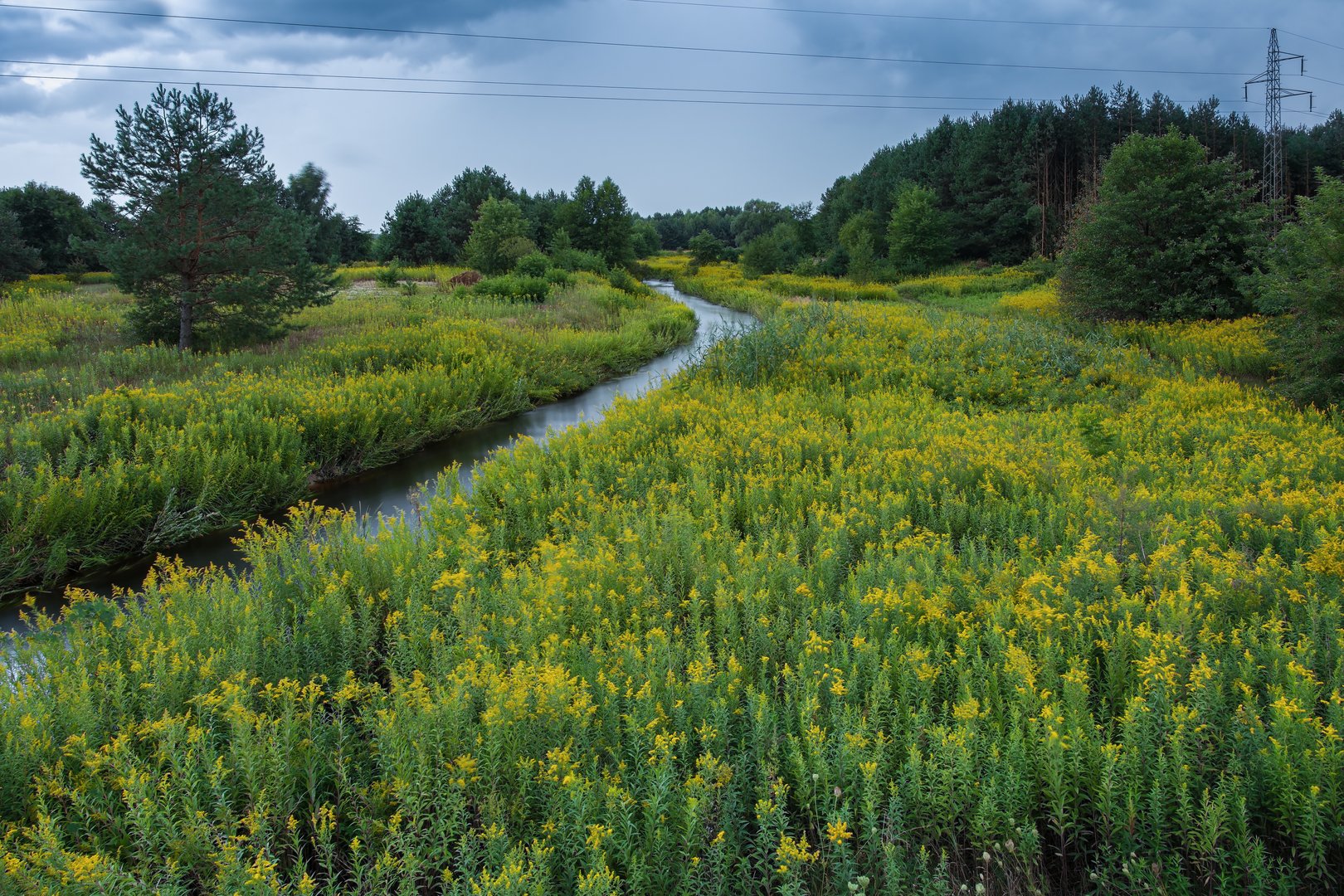
Goldenrod appears to be an entirely natural component of the Polish landscape, but did you know that not all species have been here forever? The two species that currently dominate the environment are Canadian goldenrod (Solidago canadensis) and giant goldenrod (Solidago gigantea). Canadian goldenrod has stems densely covered with short hairs, whereas giant goldenrod has smooth stems coated with a waxy bloom that can be easily rubbed off at the slightest touch. Both species produce complex inflorescences at the top of their stems, consisting of countless tiny flower heads known botanically as capitula. Both species originate from North America and arrived in Poland less than 200 years ago, which is not long ago at all when measured by nature’s clock. Despite their beautiful golden-yellow colour, fluffy appearance and pleasant scent, these plants have a darker side.
How Goldenrods Damage Our Environment
They are aggressive invasive species that are rapidly conquering natural habitats across Poland. Despite their characteristics, they are not legally classified as IAS (Invasive Alien Species) requiring mandatory control due to the damage they cause to Polish nature. Their invasiveness manifests itself in many ways. Once established, they create dense and ecologically inaccessible expanses known as goldenrod stands. Beneath these dense thickets, almost nothing else is able to grow. Goldenrod stands replace diverse and natural meadow and grassland communities, eliminating dozens of native plant species that flower and set seed at different times of the year and thus provide a wide range of ecosystem services. In addition, these goldenrods alter soil chemistry by releasing allelopathic compounds, while simultaneously shading the ground and depriving occupied habitats of minerals and water. They convert these resources into vast quantities of biomass and billions of seeds, allowing them to expand efficiently into new ecosystems year after year. Moreover, mature plants silently take over every available square centimetre of soil through creeping underground rhizomes. These traits qualify them as invasive species belonging to the so-called “transformers” group, species capable of altering natural environments beyond recognition and making them unsuitable for life on multiple ecological levels. Furthermore, these goldenrods carry out a form of genetic invasion by hybridising with Poland’s native goldenrod species, gradually contaminating its gene pool.
We Have a Native Polish Goldenrod!
Yes, we do have our own native species: European goldenrod (Solidago virgaurea). Few people remember it and it is rarely mentioned during the annual media discussions devoted to goldenrod. Native goldenrod occupies similar habitats and is likewise a source of nectar and pollen. It produces numerous flower heads and blooms at the same time as the invasive goldenrod species. Most importantly, however, it is not invasive and coexists harmoniously within ecosystems alongside other native species. This significantly weakens the advantages of alien goldenrods so enthusiastically emphasised by beekeepers. What is more, a much larger group of plant-dependent species is associated with native goldenrod. Unfortunately, deer, roe deer, wild boar, hares, birds and native herbivorous insects are reluctant to feed on alien goldenrods and generally do so only when no alternative food source is available. Canadian and giant goldenrod therefore contribute to the depletion of food resources wherever they occur alongside these animals.
Pollinators Can Cope Without Invasive Species
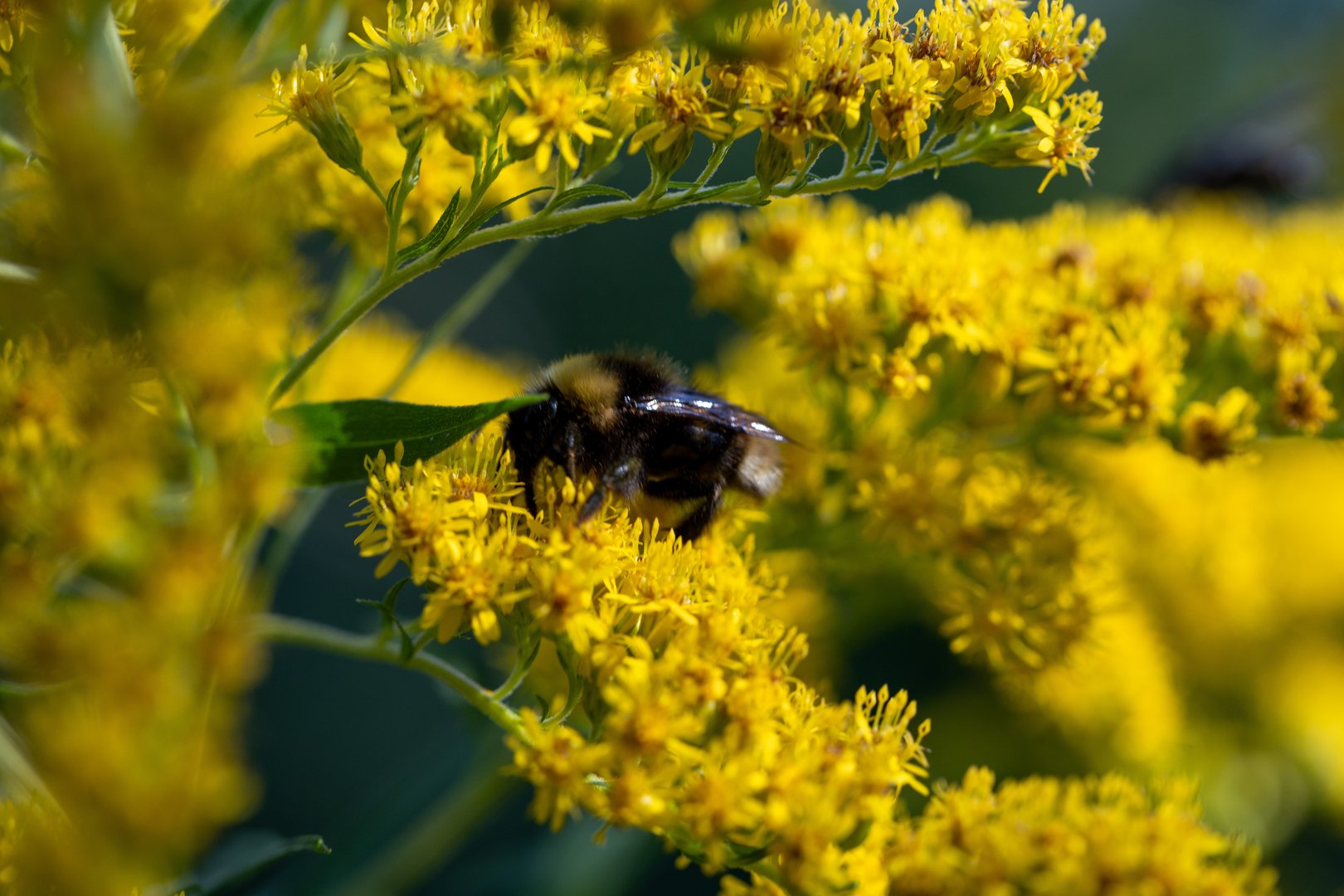
The two invasive goldenrod species also deprive the native species, along with dozens of other native plants, of pollinators through highly effective competition based on their immense numbers of flowers. However, the absence of Canadian and giant goldenrod from our landscape would not result in starvation among wild pollinators or even the much-valued honeybees, despite the alarming, almost apocalyptic scenarios reminiscent of the year 2012 that are sometimes promoted by beekeepers. Many native plant species flower in autumn, including not only European goldenrod but also heather, yarrows, hawkweeds, cat’s-ear species, clovers, St John’s wort, cinquefoils, mulleins, cow-wheats, bird’s-foot trefoils, hawkbits, stonecrops, willowherbs, wild thymes, hemp-nettles, thistles, scabious species and many, many others. Canadian and giant goldenrod represent just one type of food source. It would be like humans eating nothing but potatoes, tomato soup or jam sandwiches all the time. Pollinators, just like people, require a varied diet.
Unverified Medicinal Properties
We should also mention one of the most frequently discussed topics surrounding Canadian and giant goldenrod: their potential medicinal properties. Have you perhaps heard claims about their remarkable health benefits, especially their supposed anti-cancer effects? The reality is far more complex. Although biologically active compounds have indeed been identified in these species and described in numerous studies, research has primarily been conducted in vitro, on animal models, or through analyses of phytochemical content. Researchers themselves often stress the need for much more detailed investigation. Interestingly, the only goldenrod species whose medicinal effects have been reliably confirmed is Poland’s native European goldenrod. This is the only species that has been thoroughly tested in humans and shown to possess verified medicinal properties. However, these effects relate mainly to urinary tract disorders rather than serving as a panacea for serious, life-threatening diseases. European goldenrod is by far the best-researched medicinal species within the genus and constitutes a reliable medicinal raw material. Alien goldenrod species serve merely as substitutes without substantial support from clinical studies. Moreover, Canadian and giant goldenrod differ in their chemical composition not only from one another but also from European goldenrod. Consequently, the beneficial effects documented for European goldenrod cannot automatically be attributed to other species within the genus. Drinking goldenrod tea may not be harmful, but is it really as beneficial as some people claim? Remember: promising does not mean proven.
In summary, the only apparent advantages of invasive goldenrods are their aesthetic appeal and the highly valued goldenrod honey appreciated by enthusiasts.
However, do not be misled. Get to know what is native, because you already know what is alien. Let us appreciate our native European goldenrod and promote it so effectively that, in the future, it may replace these transatlantic intruders in our landscapes.
Source: mgr Konrad Kaczmarek, Dr Anna Bomanowska (Faculty of Biology and Environmental Protection, University of Lodz)
Edit: Michał Gruda (Centre for External Relations, University of Lodz)