This is precisely how the Biosafety Courses offer was created: a training and consultancy service provided by the Faculty of Biology and Environmental Protection at the University of Lodz. It is one of the long-term outcomes of the OsteoRegNET project, “Wielofunkcyjne kompozyty aktywne biologicznie do zastosowań w medycynie regeneracyjnej układu kostnego” [Multifunctional Bioactive Composites for Applications in Regenerative Bone Medicine] (POIR.04.04.00-00-16D7/18), implemented under the TEAM-NET programme of the Foundation for Polish Science.
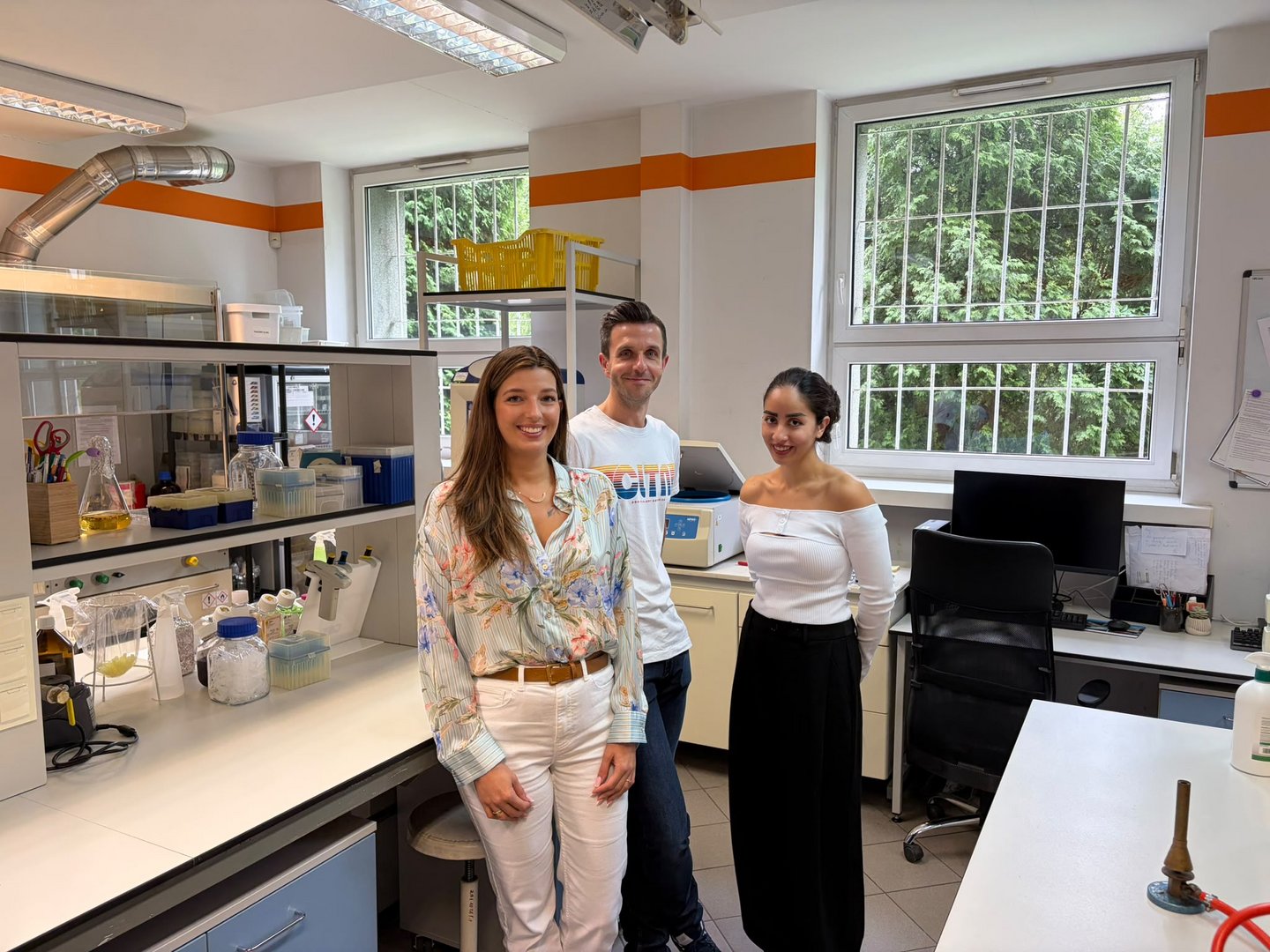
Thanks to this service, the research expertise and competencies developed during the project can now be shared with scientists, research teams, institutions and entrepreneurs through specialised training courses, consultancy services and internships.
The two-week internship completed in July by Shukufe Amukarimi, a doctoral student from the Department of Polymer Engineering and Technology, Faculty of Chemistry, Wrocław University of Science and Technology, undertaking her doctoral studies under the supervision of dr hab. inż. Konrad Szustakiewicz, is a good example.
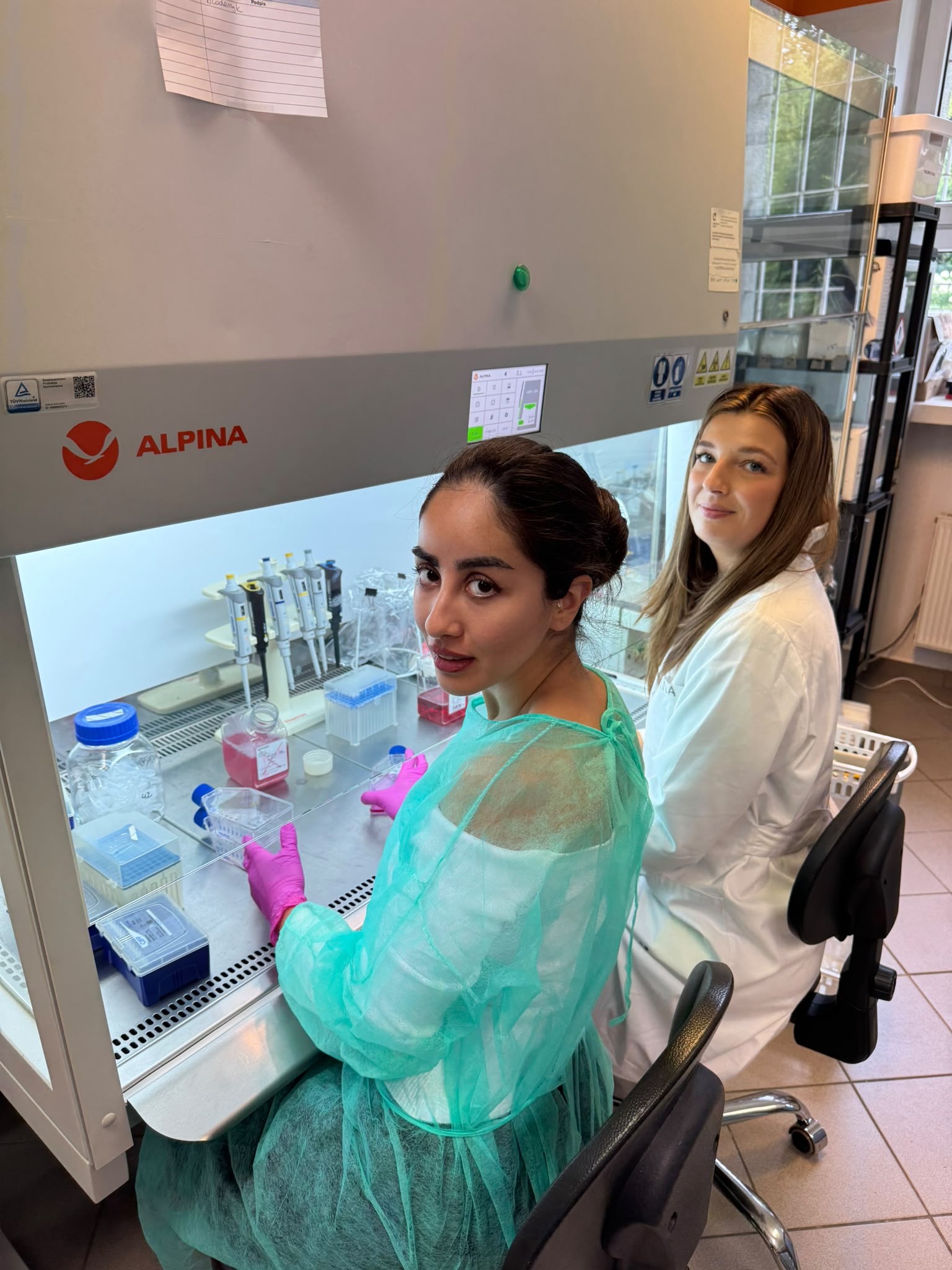
During her internship at the Department of Immunology and Infectious Biology, Faculty of Biology and Environmental Protection, University of Lodz, Shukufe developed practical skills in cell culture techniques, biomaterial safety assessment and microbiology.
Her work included:
- assessment of the cytocompatibility of biomaterials,
- studies of cell adhesion and cell imaging using confocal microscopy,
- evaluation of the biological functionality of scaffolds for cells and tissues,
- investigation of the antimicrobial and osteoconductive properties of biomaterials.
The research focused on biomaterials containing, among others, PLLA modified with Bio-Glass and GelMA hydrogel, designed as cell scaffolds for future implantology applications.
The internship was supervised by Dr Aleksandra Szwed-Georgiou, Dr Marcin Włodarczyk and Dr Nina Pietrzyk from the Department of Immunology and Infectious Biology at the University of Lodz.
This is one of the long-term outcomes of the project that we value particularly highly: funding makes it possible to build competencies, expertise and infrastructure, while well-utilised results can later support subsequent researchers, foster cooperation between teams and become the foundation for services provided by the university.
Source and photos: Dr Karolina Rudnicka, Associate Professor at the University of Lodz (Department of Immunology and Infectious Biology, Faculty of Biology and Environmental Protection, University of Lodz)
Edit: Mateusz Kowalski (Promotion Centre, Faculty of Biology and Environmental Protection, University of Lodz)