![[Translate to English:] Jura 2026](/fileadmin/Wydzialy/Wydzial_Filozoficzno-Historyczny/Jednostki/Instytut_Archeologii/fotografie_i_ilustracje/aktualno%C5%9Bci/Jura_2026/Jura_2026__Zamkowa_Ska%C5%82a__028.jpg)
![[Translate to English:] Jura 2026](/fileadmin/Wydzialy/Wydzial_Filozoficzno-Historyczny/Jednostki/Instytut_Archeologii/fotografie_i_ilustracje/aktualno%C5%9Bci/Jura_2026/Jura_2026__Zamkowa_Ska%C5%82a__029.jpg)
![[Translate to English:] Jura 2026](/fileadmin/Wydzialy/Wydzial_Filozoficzno-Historyczny/Jednostki/Instytut_Archeologii/fotografie_i_ilustracje/aktualno%C5%9Bci/Jura_2026/Jura_2026__Zamkowa_Ska%C5%82a__030.jpg)
![[Translate to English:] Jura 2026](/fileadmin/Wydzialy/Wydzial_Filozoficzno-Historyczny/Jednostki/Instytut_Archeologii/fotografie_i_ilustracje/aktualno%C5%9Bci/Jura_2026/Jura_2026__Zamkowa_Ska%C5%82a__031.jpg)
![[Translate to English:] Jura 2026](/fileadmin/Wydzialy/Wydzial_Filozoficzno-Historyczny/Jednostki/Instytut_Archeologii/fotografie_i_ilustracje/aktualno%C5%9Bci/Jura_2026/Jura_2026__Zamkowa_Ska%C5%82a__032.jpg)
![[Translate to English:] Jura 2026](/fileadmin/Wydzialy/Wydzial_Filozoficzno-Historyczny/Jednostki/Instytut_Archeologii/fotografie_i_ilustracje/aktualno%C5%9Bci/Jura_2026/Jura_2026__Zamkowa_Ska%C5%82a__033.jpg)
![[Translate to English:] Jura 2026](/fileadmin/Wydzialy/Wydzial_Filozoficzno-Historyczny/Jednostki/Instytut_Archeologii/fotografie_i_ilustracje/aktualno%C5%9Bci/Jura_2026/Jura_2026__Zamkowa_Ska%C5%82a__034.jpg)
![[Translate to English:] Jura 2026](/fileadmin/Wydzialy/Wydzial_Filozoficzno-Historyczny/Jednostki/Instytut_Archeologii/fotografie_i_ilustracje/aktualno%C5%9Bci/Jura_2026/Jura_2026__Zamkowa_Ska%C5%82a__035.jpg)
![[Translate to English:] Jura 2026](/fileadmin/Wydzialy/Wydzial_Filozoficzno-Historyczny/Jednostki/Instytut_Archeologii/fotografie_i_ilustracje/aktualno%C5%9Bci/Jura_2026/Jura_2026__Zamkowa_Ska%C5%82a__036.jpg)
This year’s archaeological research in the Kraków-Częstochowa Upland marks an entirely new stage in investigations carried out in 2022, 2023, 2024 and 2025, as the work was conducted in previously unexplored archaeological locations. The idea of researching the Castle on the Rock in Przewodziszowice is the outcome of many years of cooperation with local communities in the Jura region, established during the implementation of the NPRH project "Miejsca pamięci i zapomnienia. Badania interdyscyplinarne północnych terenów Jury Krakowsko-Częstochowskiej” [Places of Memory and Oblivion. An Interdisciplinary Study of the Northern Areas of the Kraków-Częstochowa Upland] between 2014 and 2019. It also stems from long-standing research interests in castle studies and arms and armour studies developed within the Department of Historical Archaeology and Weapon Studies at the Institute of Archaeology of the University of Lodz.
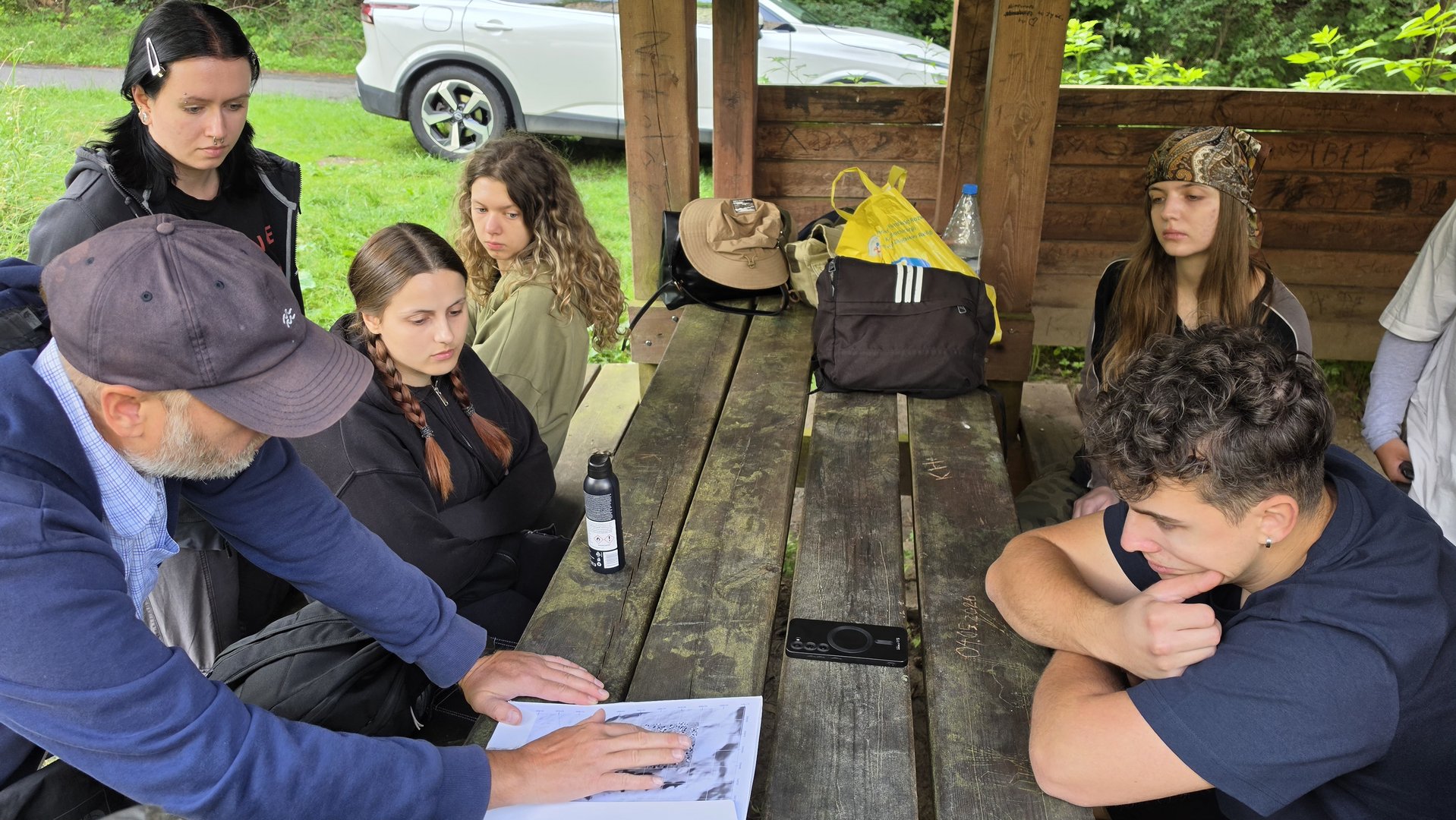
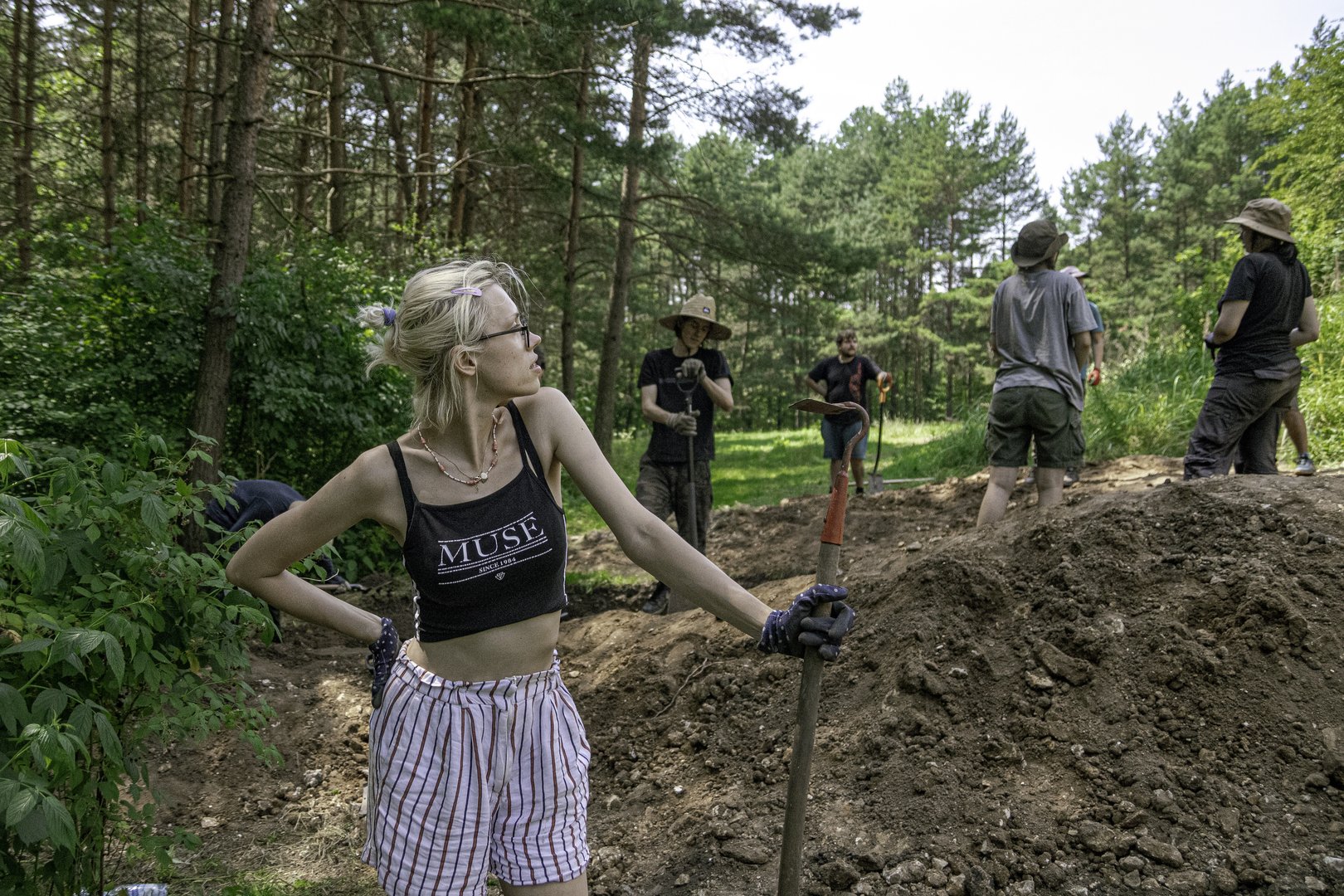
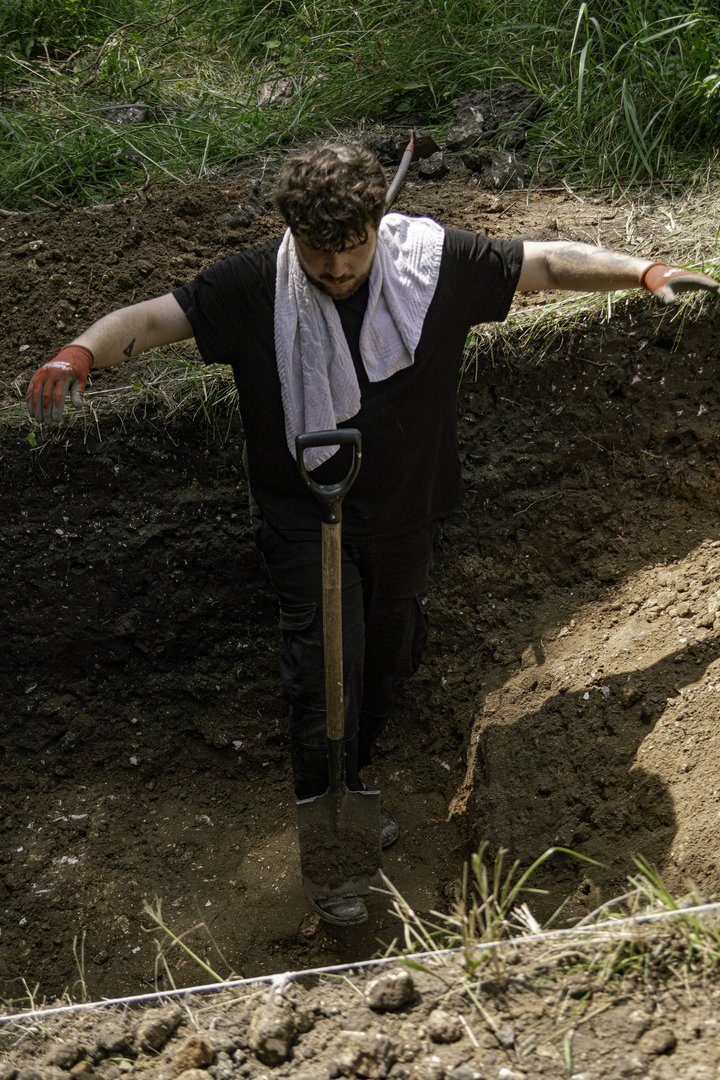
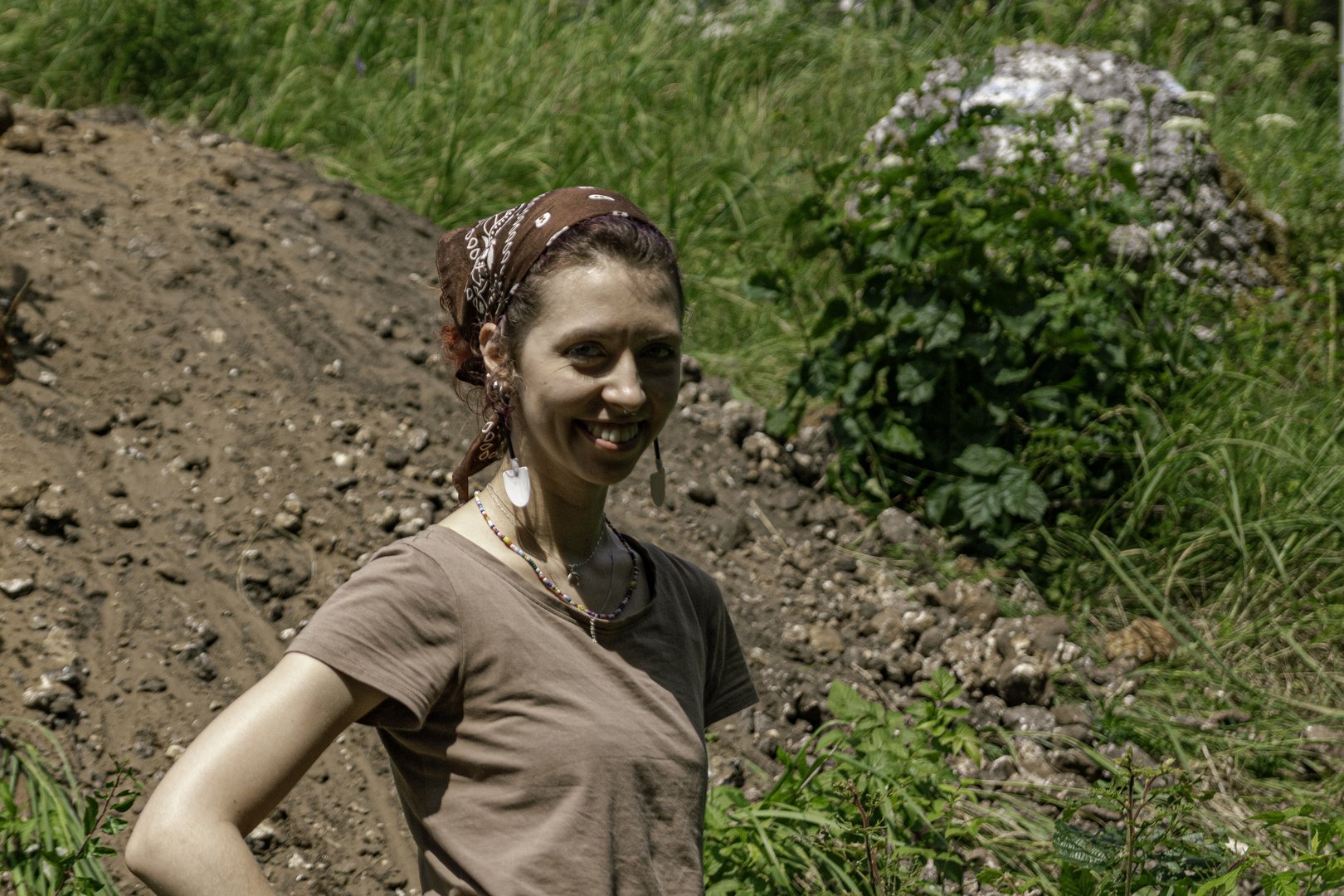
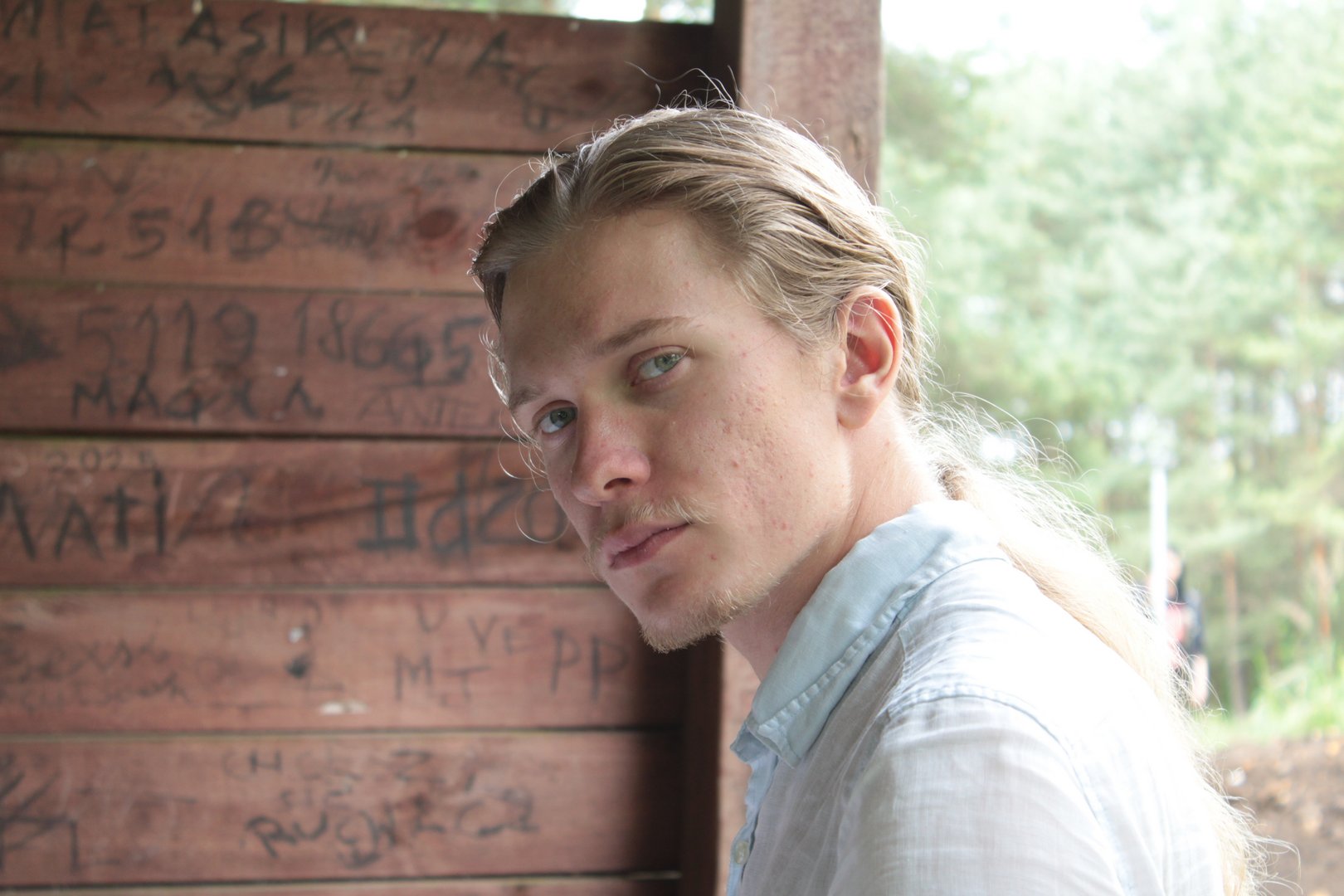
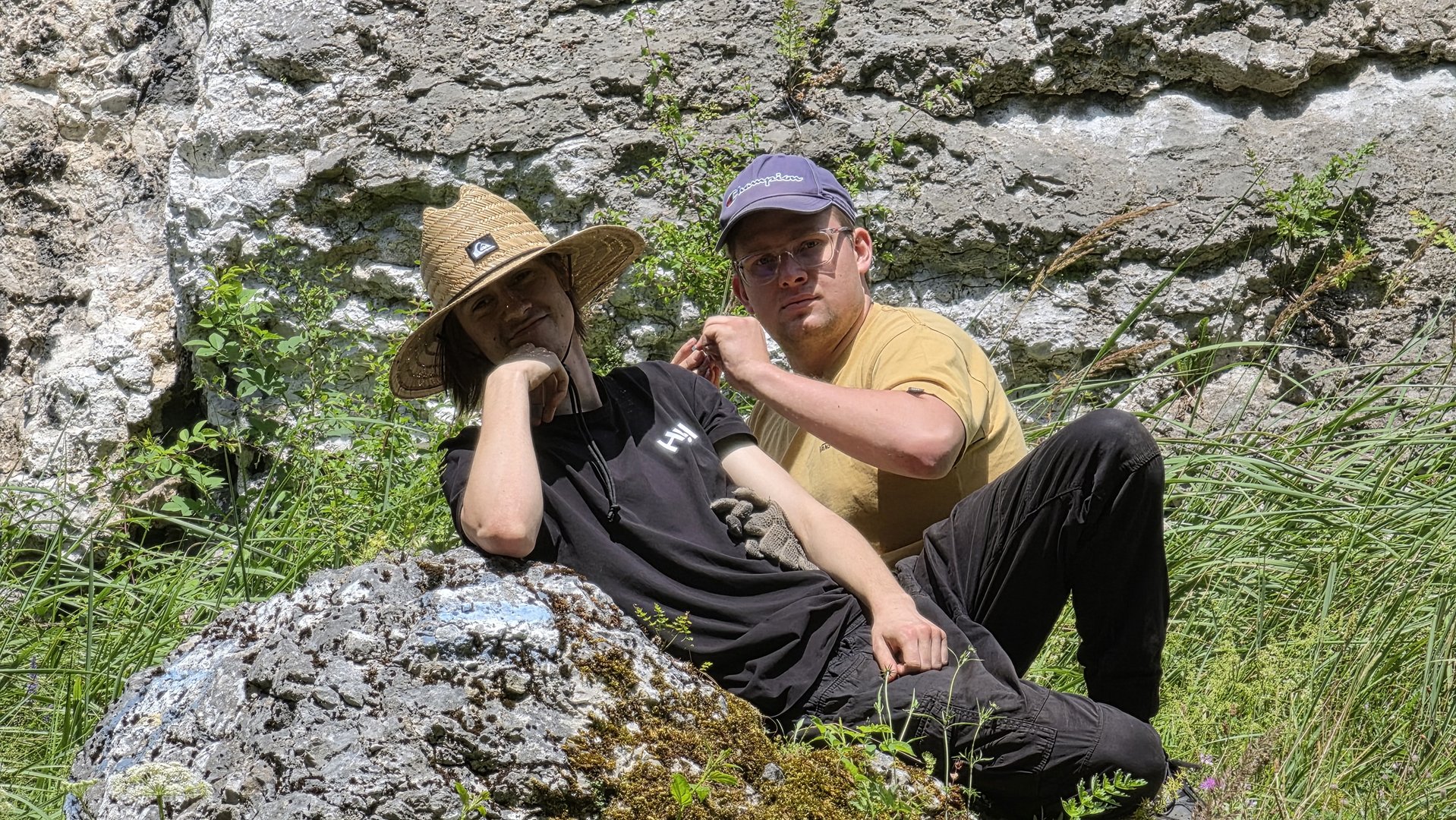
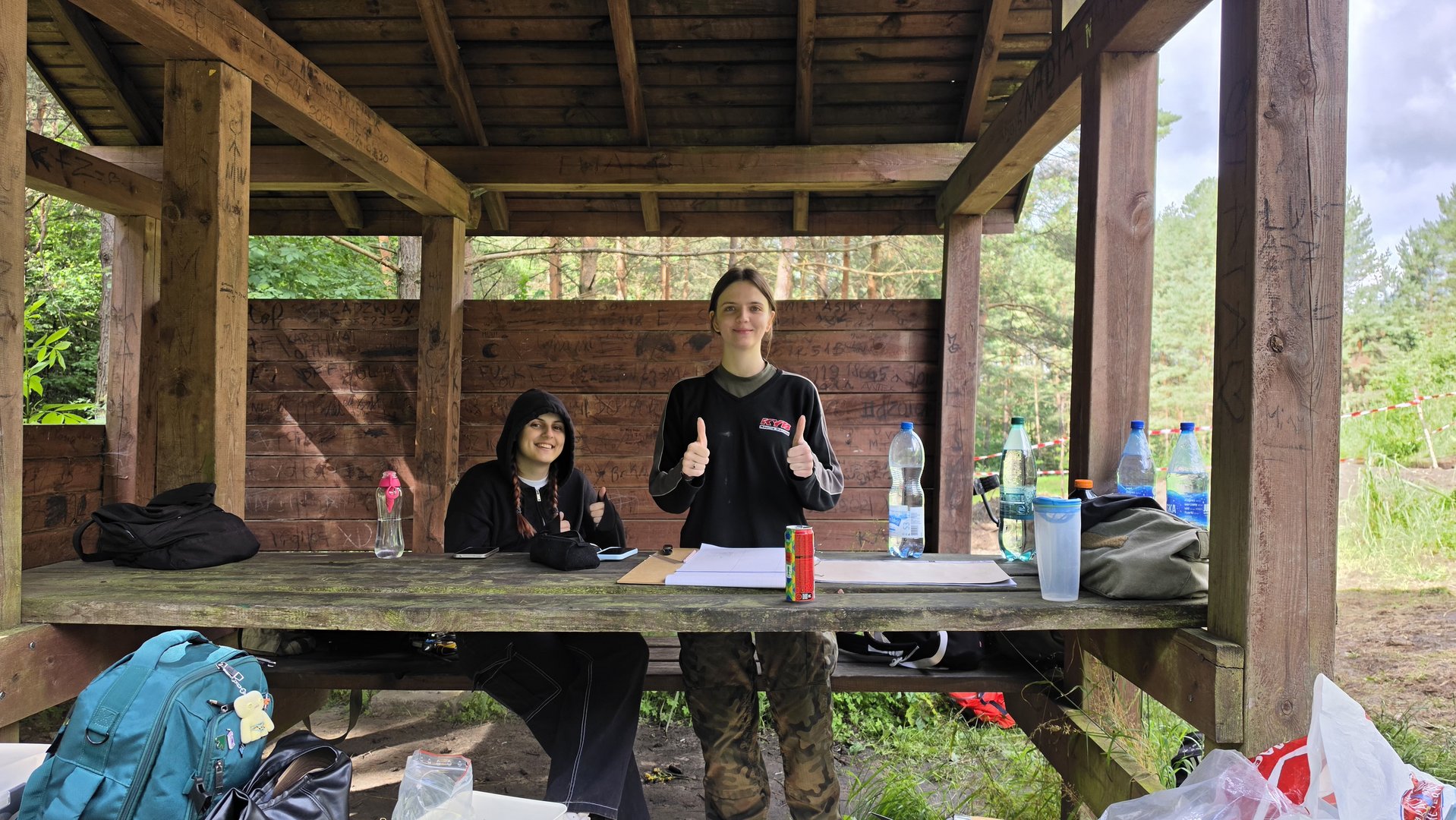
The research in Przewodziszowice was directed by Dr Radosław Zdaniewicz (Upper Silesian Archaeological Office), with support from Dr Olgierd Ławrynowicz (Department of Historical Archaeology and Weapon Studies, University of Lodz; Scientific Association of Polish Archaeologists, Łódź Branch). The fieldwork, conducted between 5 and 17 July 2026, received funding from the Faculty of Philosophy and History, University of Lodz, and the Provincial Office for Monument Protection in Katowice. The project was carried out in cooperation with the Municipal Office of Żarki. Participants included archaeology students from the University of Lodz and the Universiteit van Amsterdam.
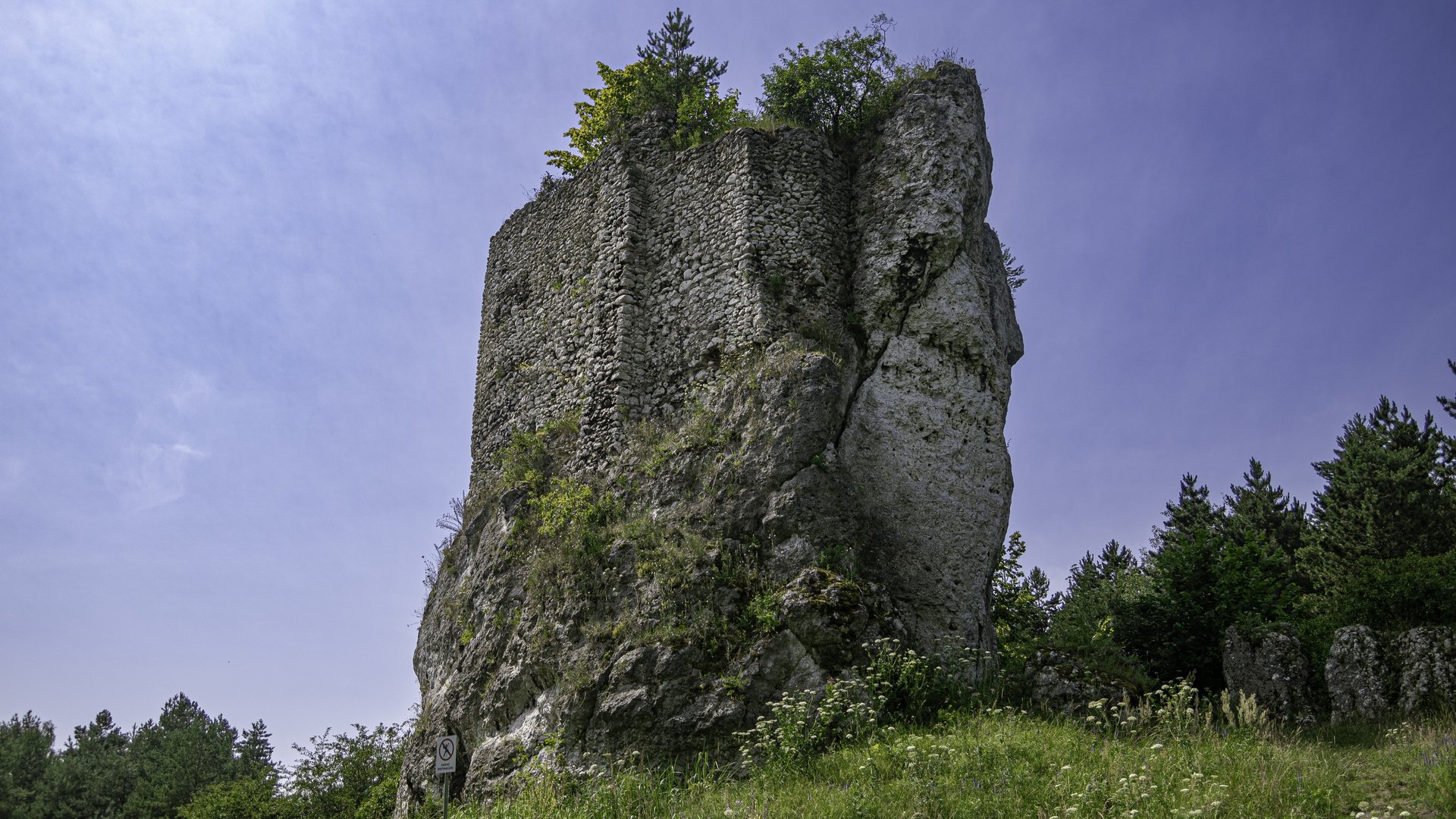
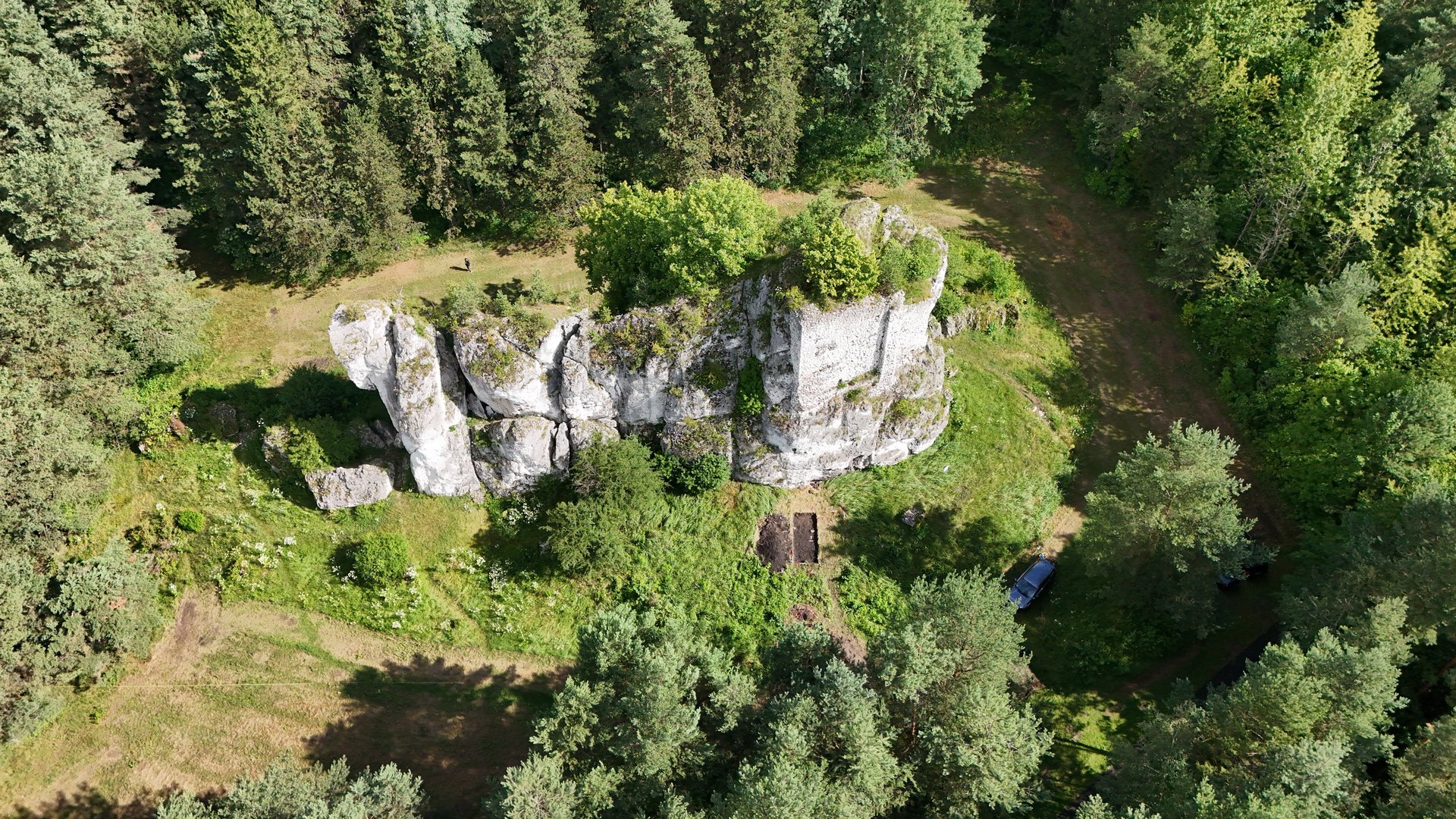
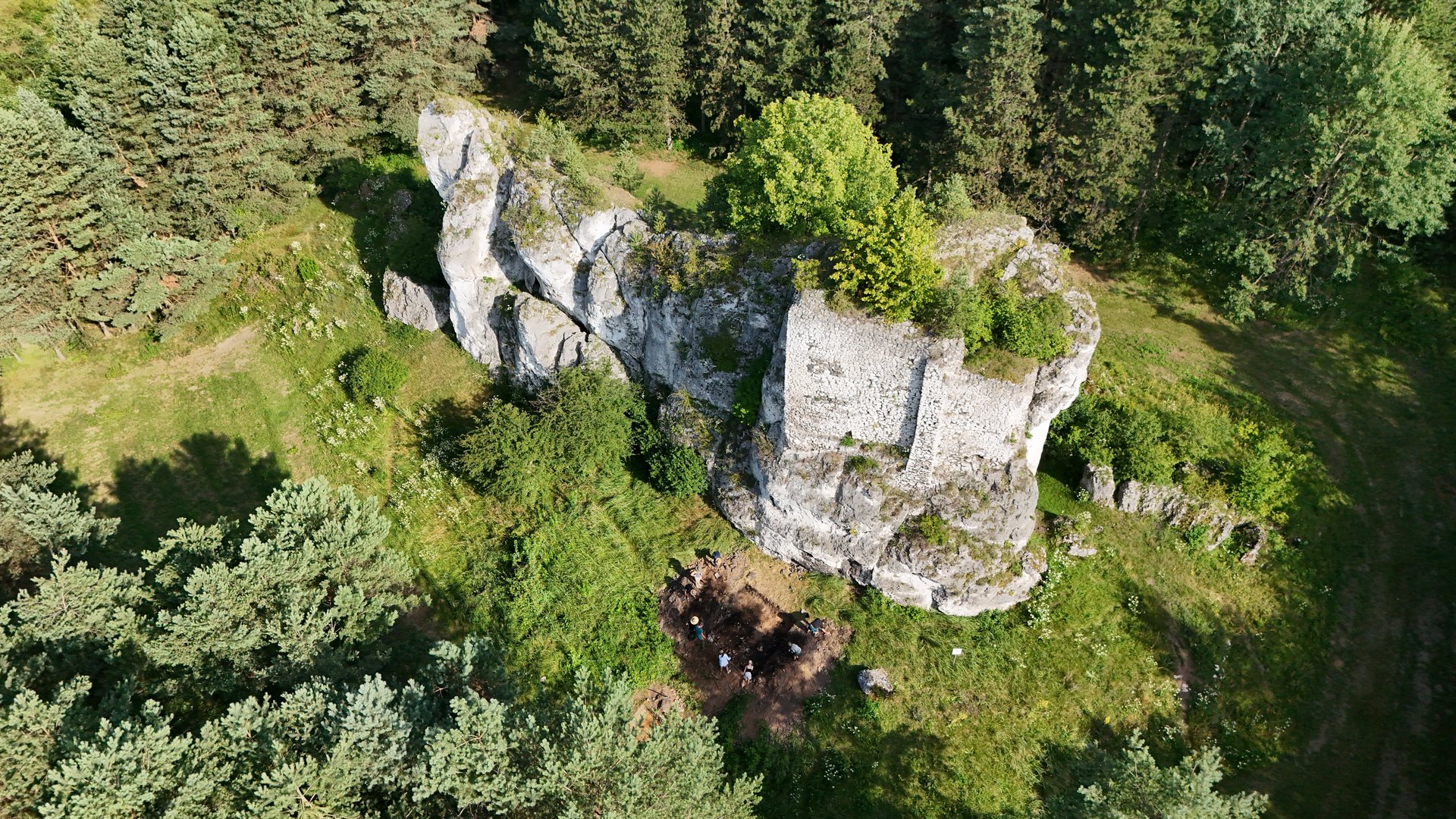
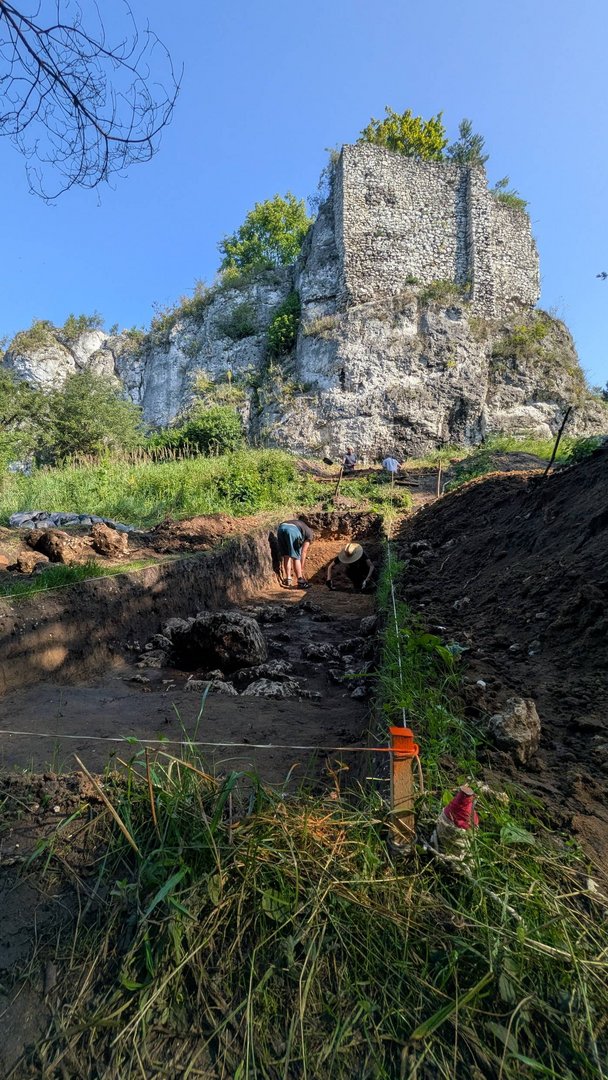
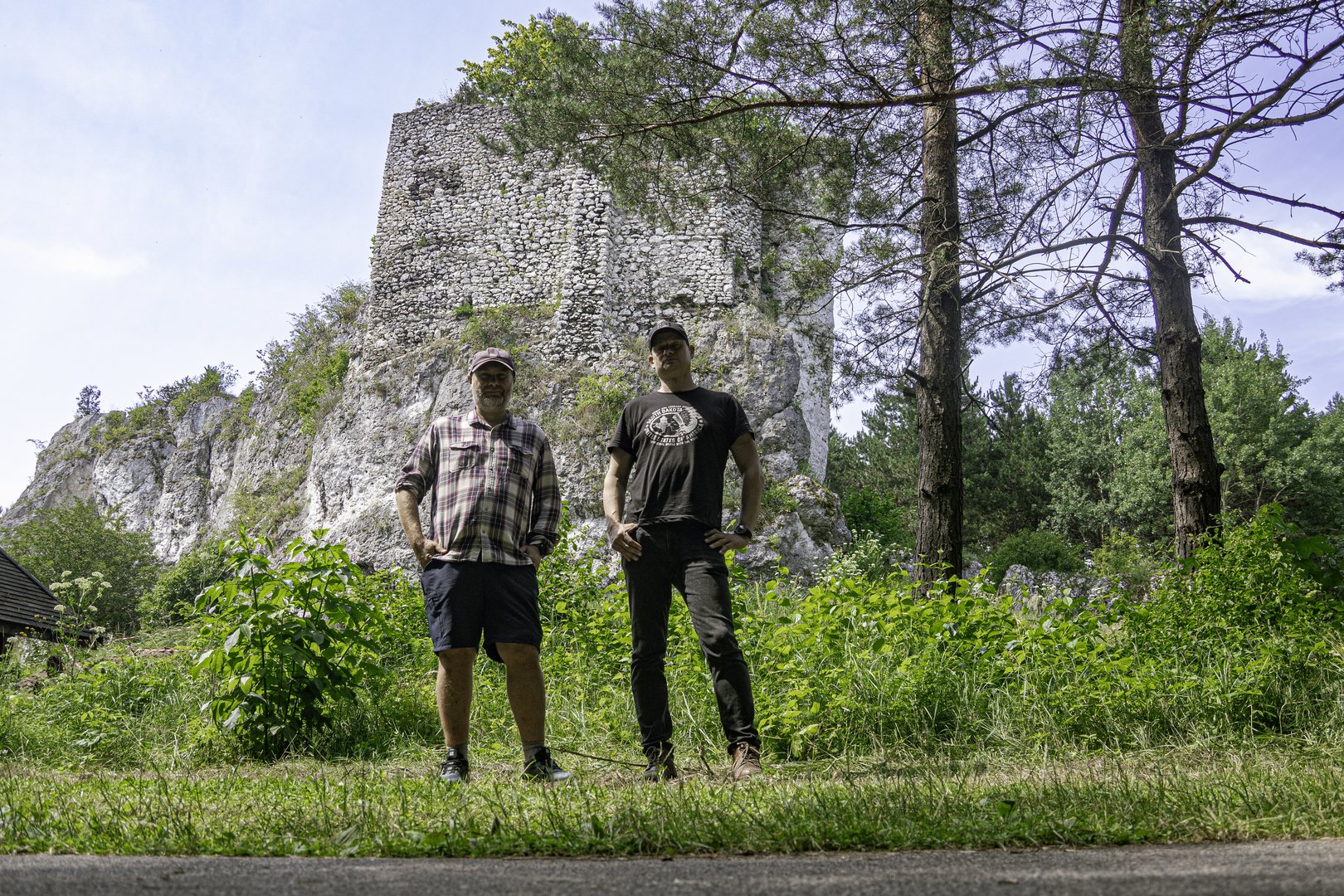
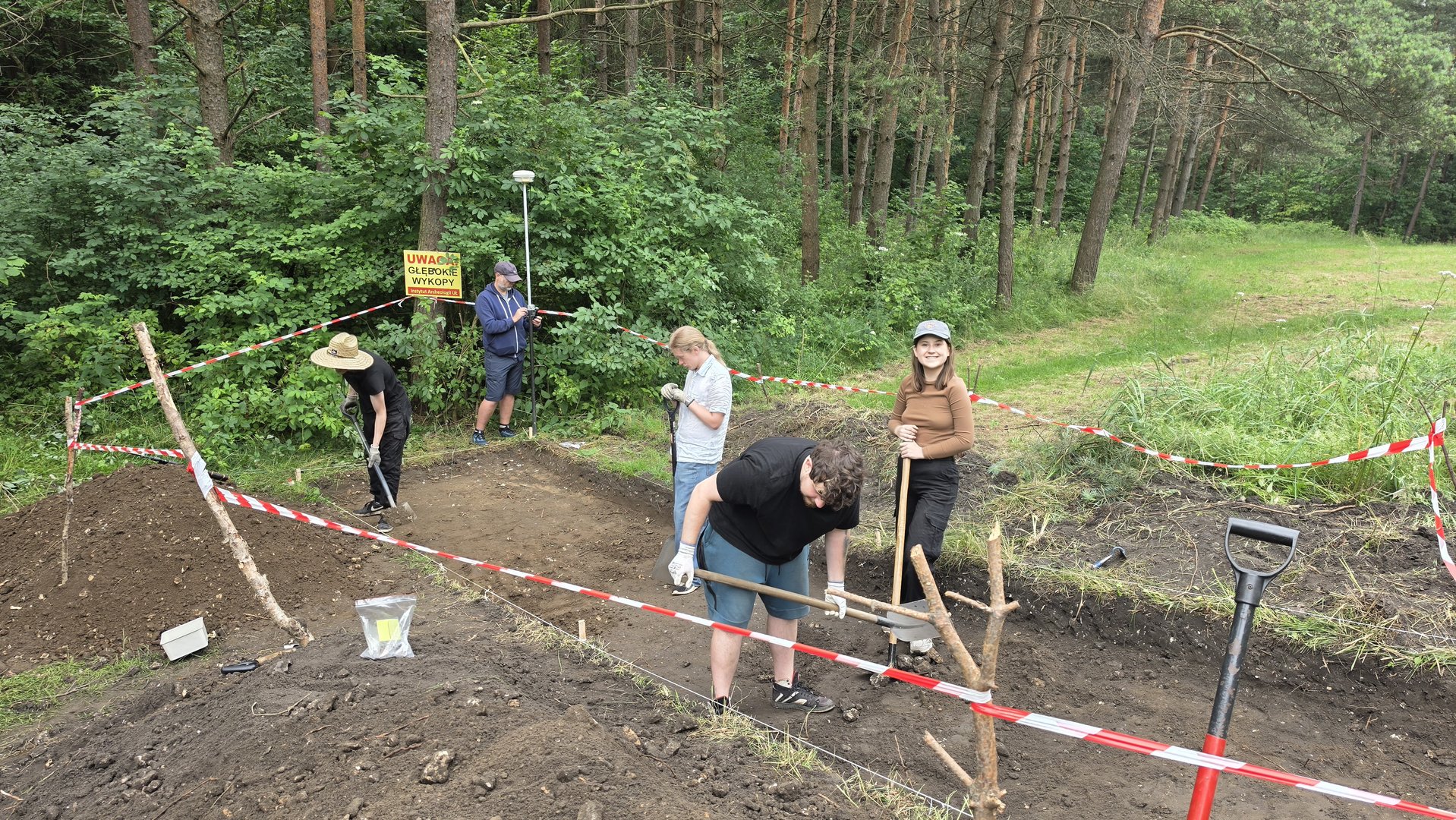
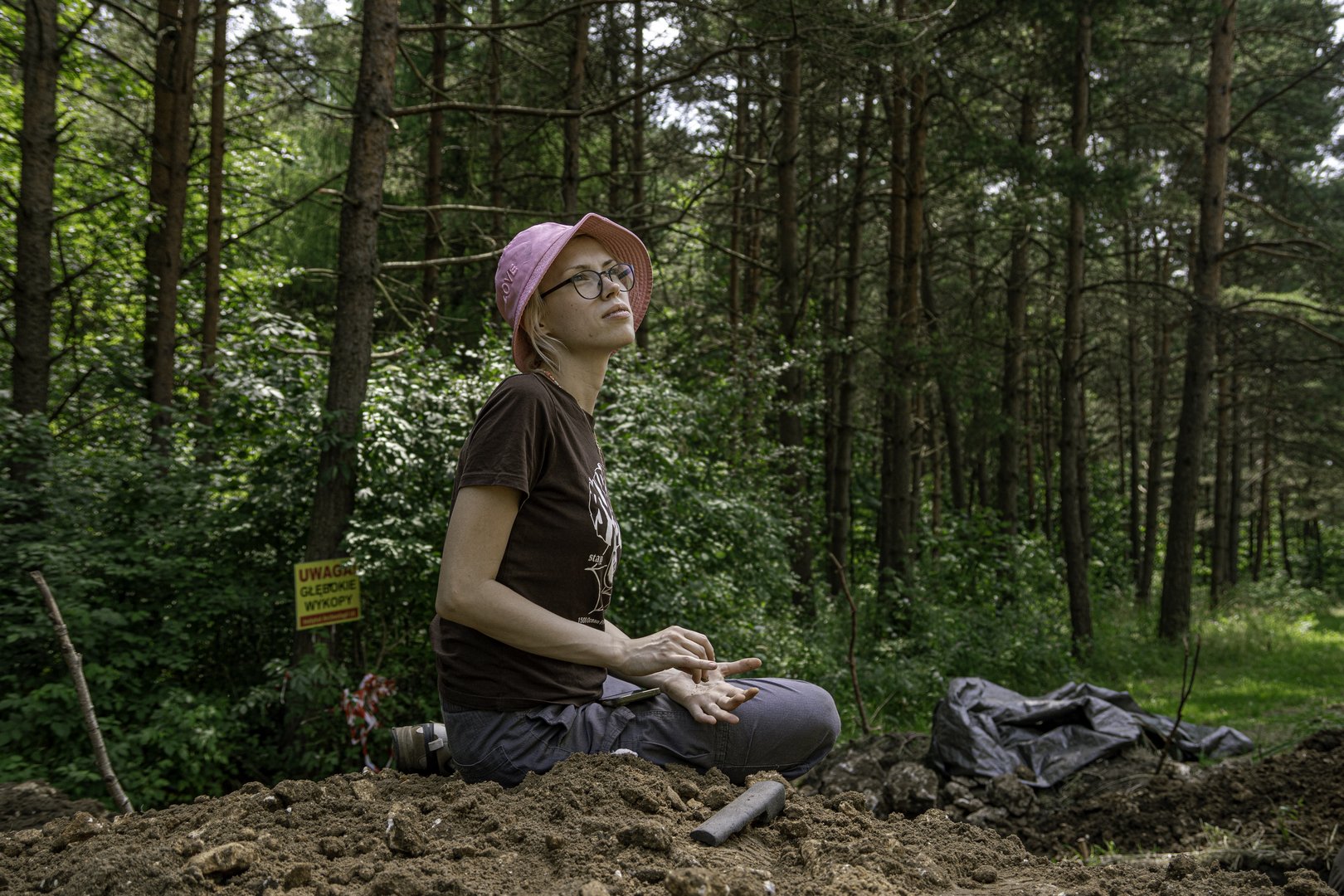
For decades, the medieval strongholds of the Kraków-Częstochowa Upland have attracted the attention of both researchers and tourists exploring the region’s trails. One such site, which until now has remained only poorly recognised, is the castle situated on a limestone outcrop near the village of Przewodziszowice, close to Żarki, historically known as Zamkowa Skała. Today, the remains of the former fortress are difficult to access, and climbing the high limestone crag requires professional equipment. The researchers therefore decided to open trial trenches at the foot of the outcrop, where they expected to find remains of the former outer bailey.
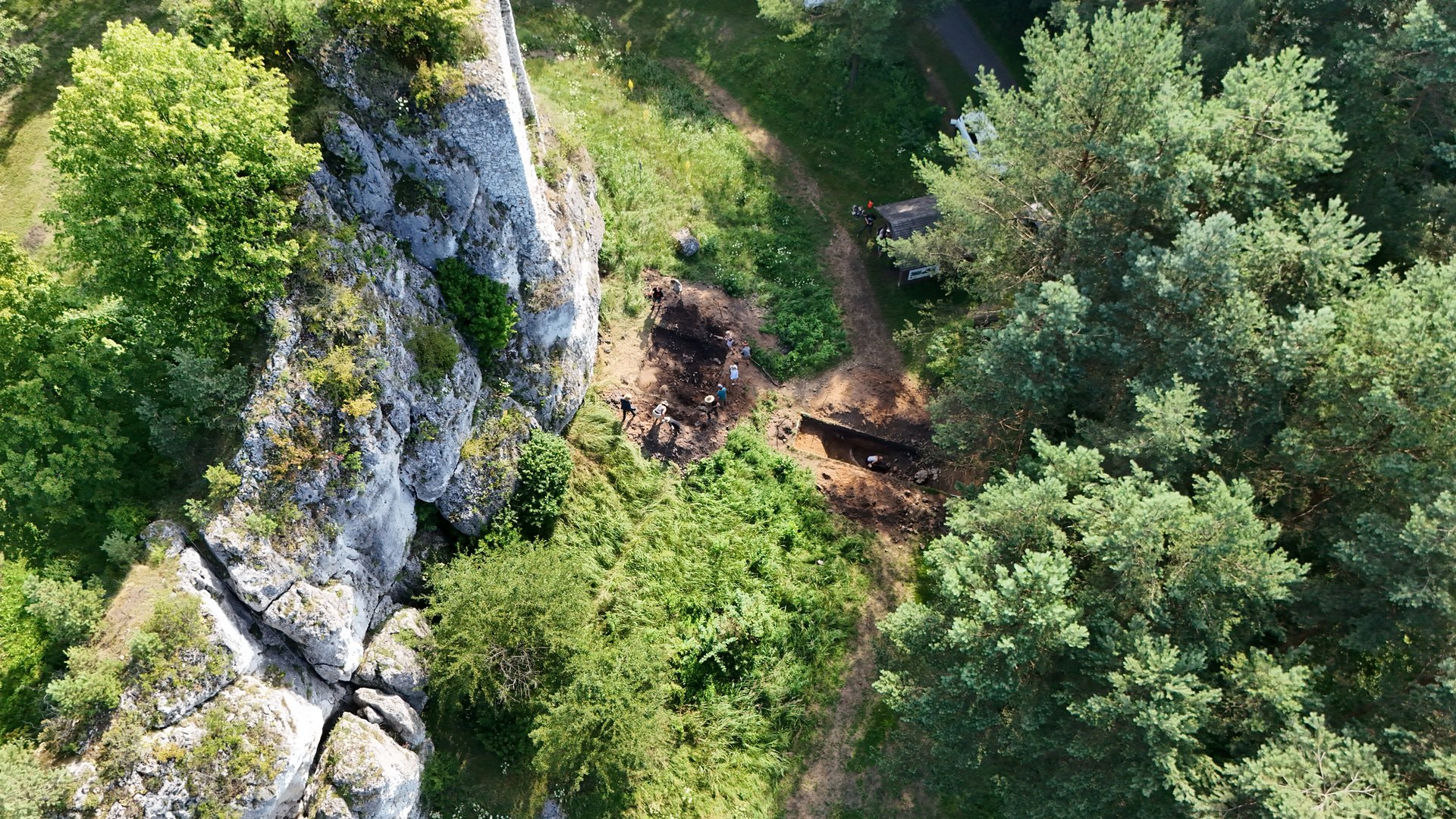
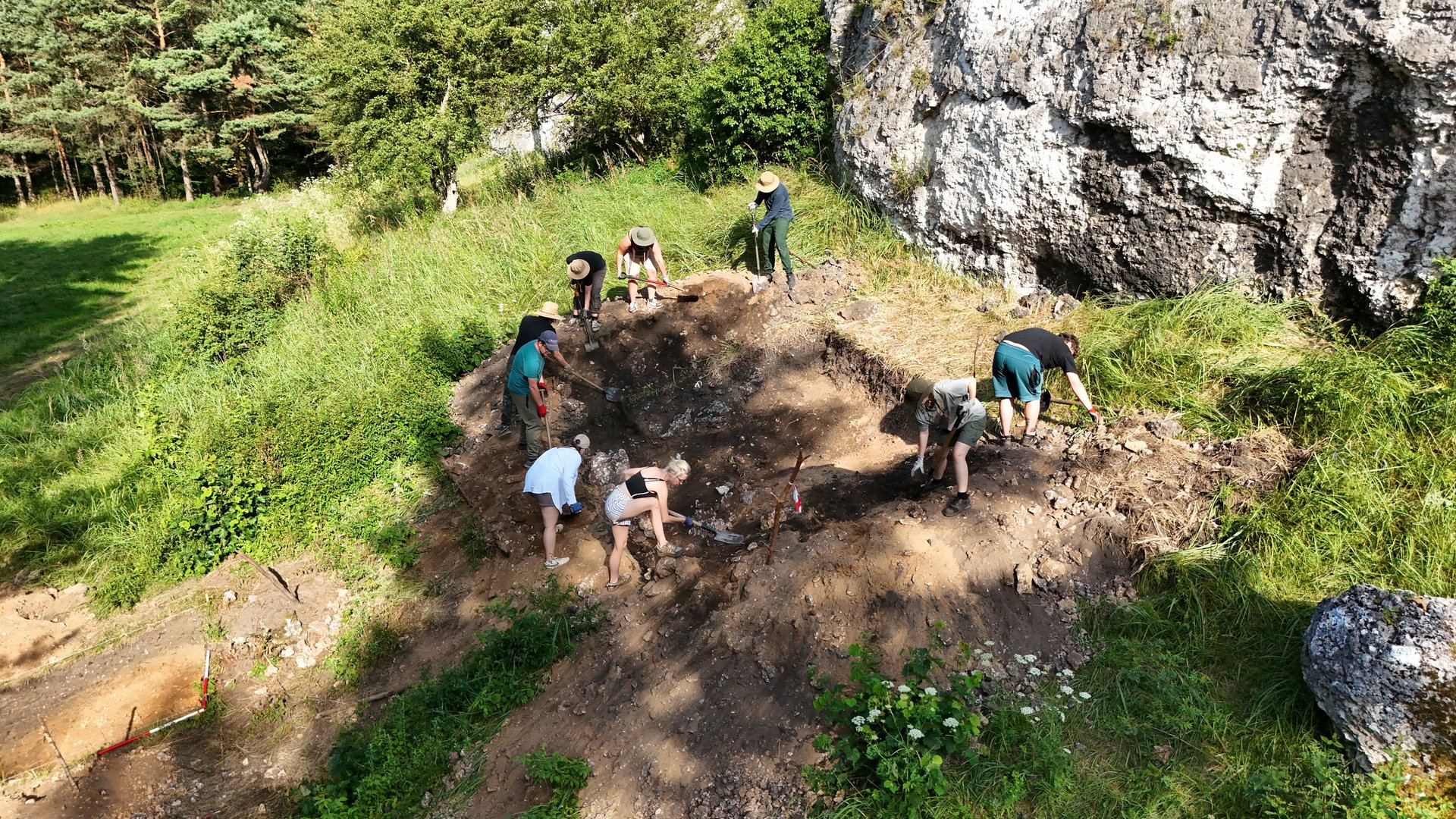
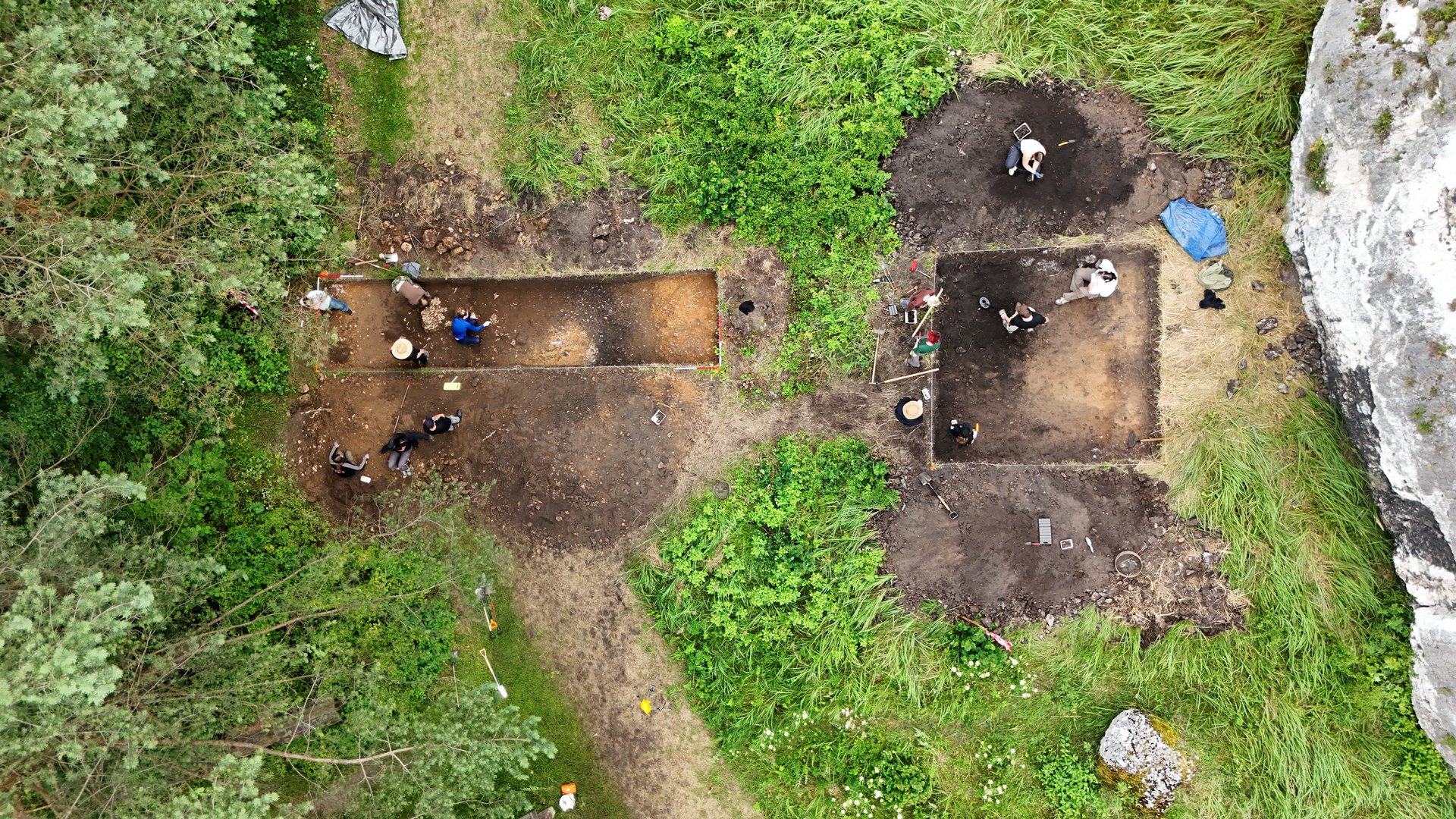
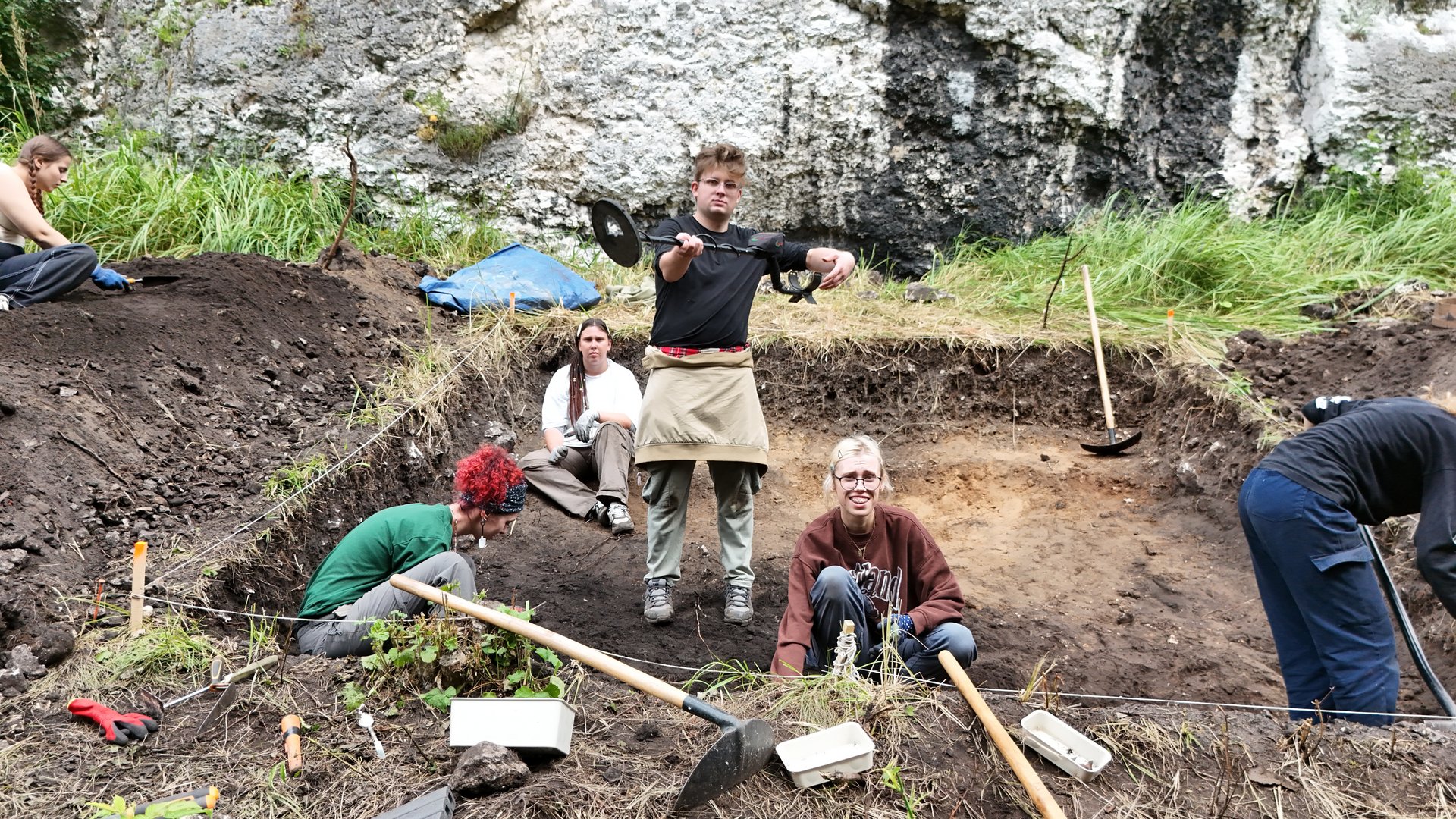
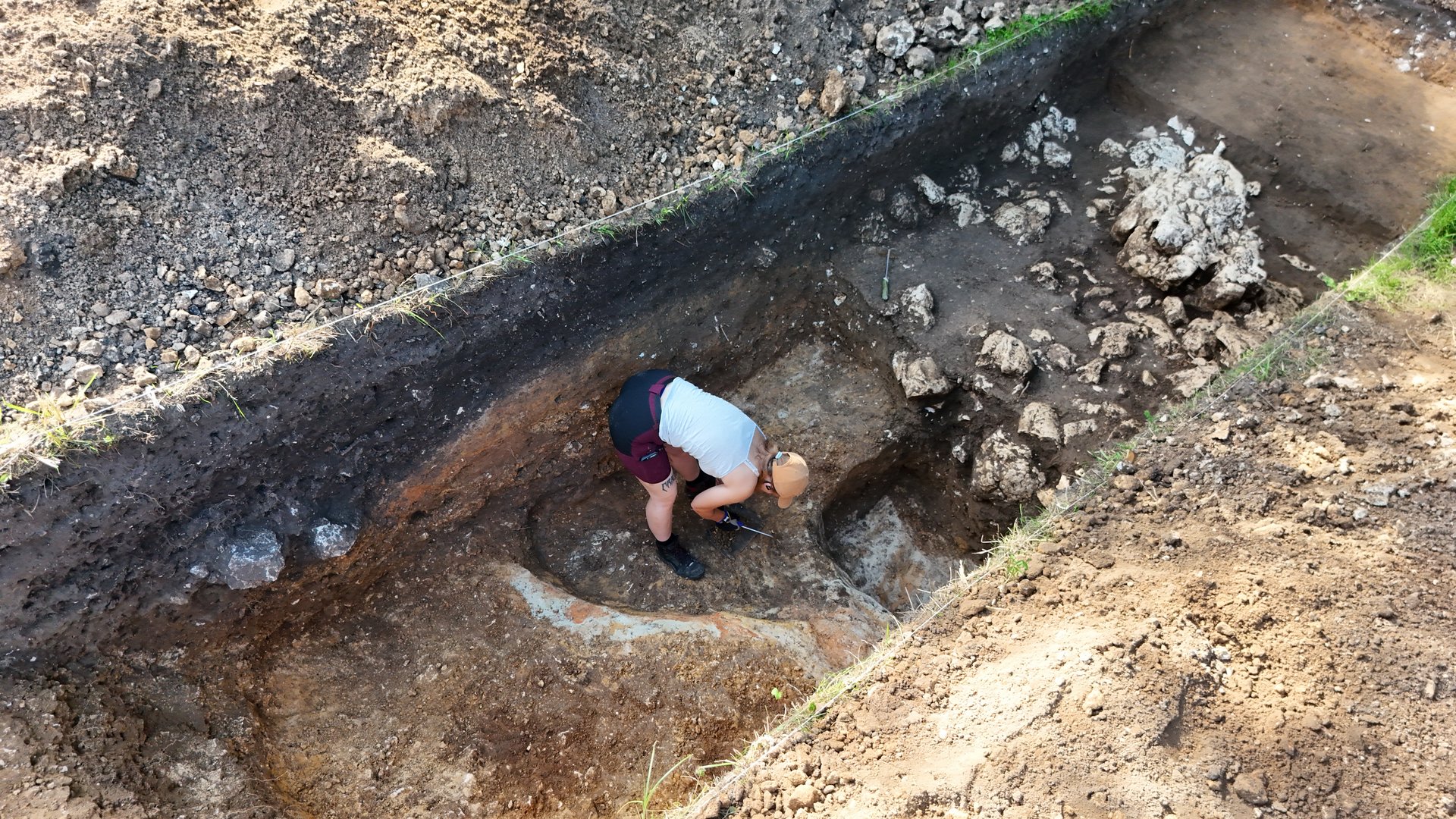
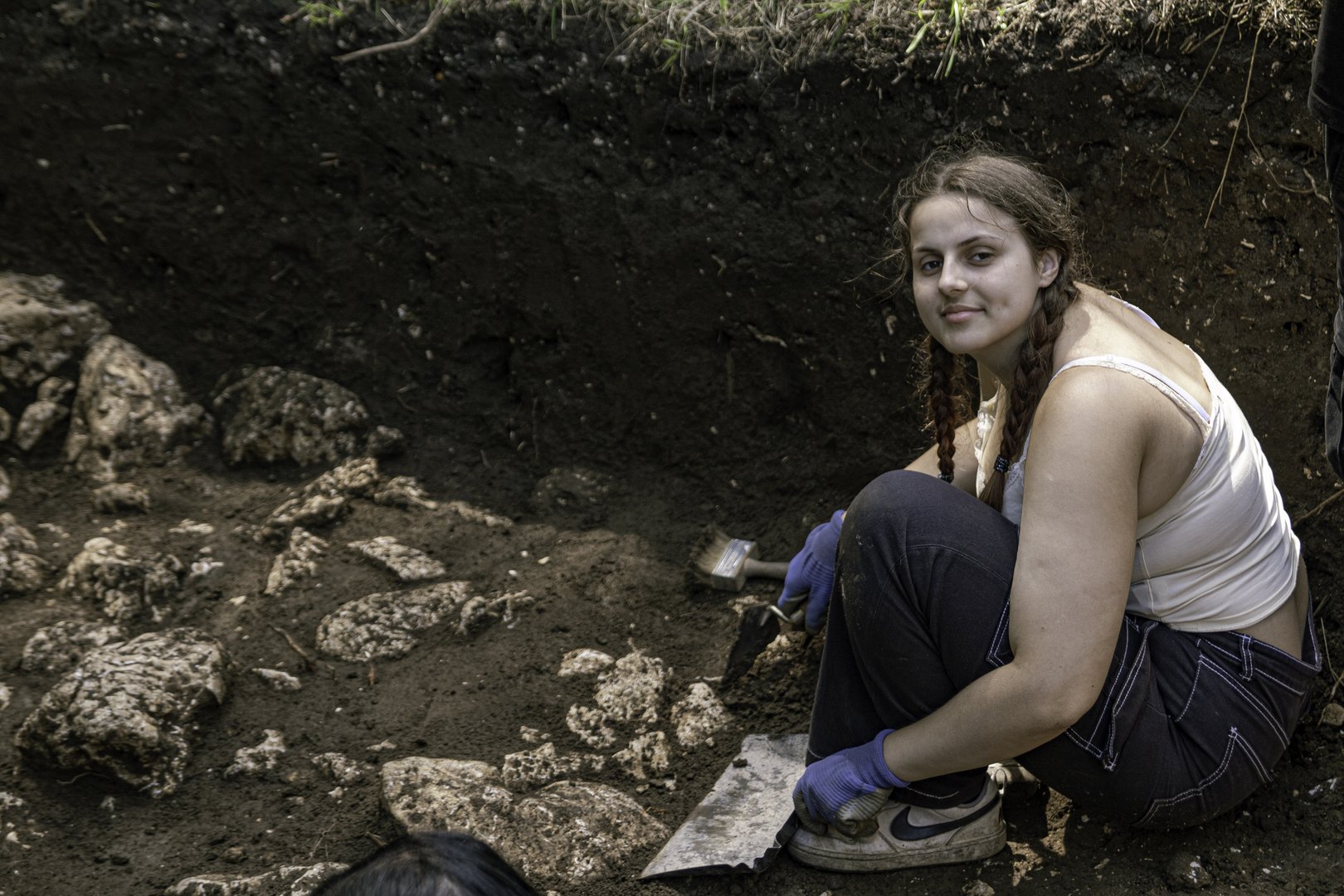
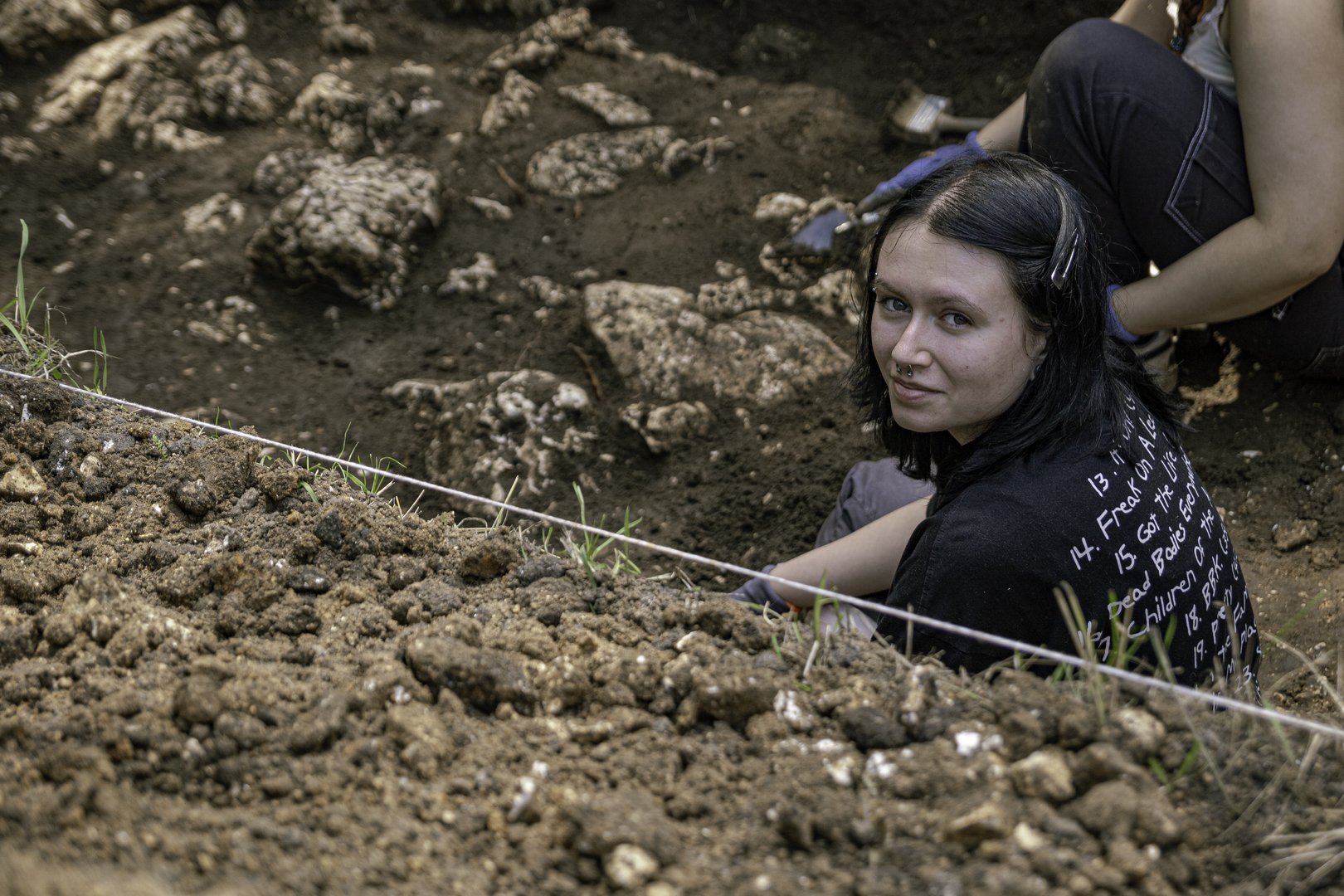
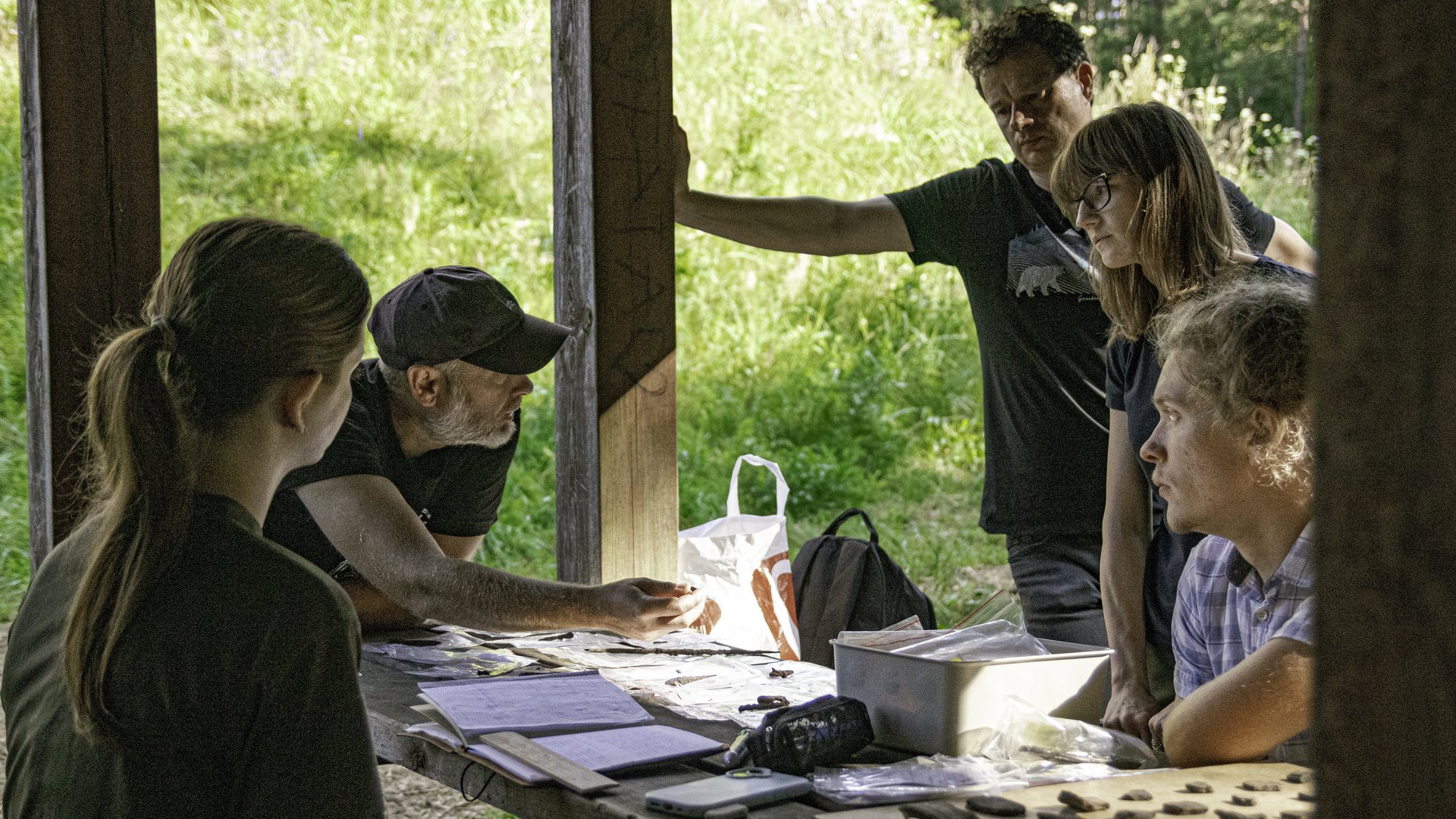
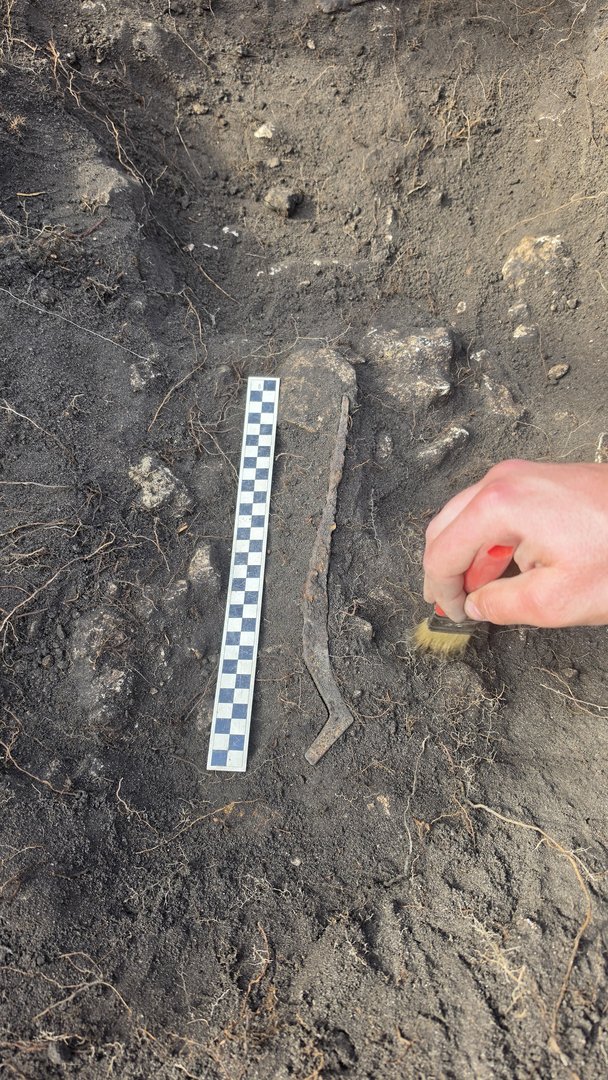
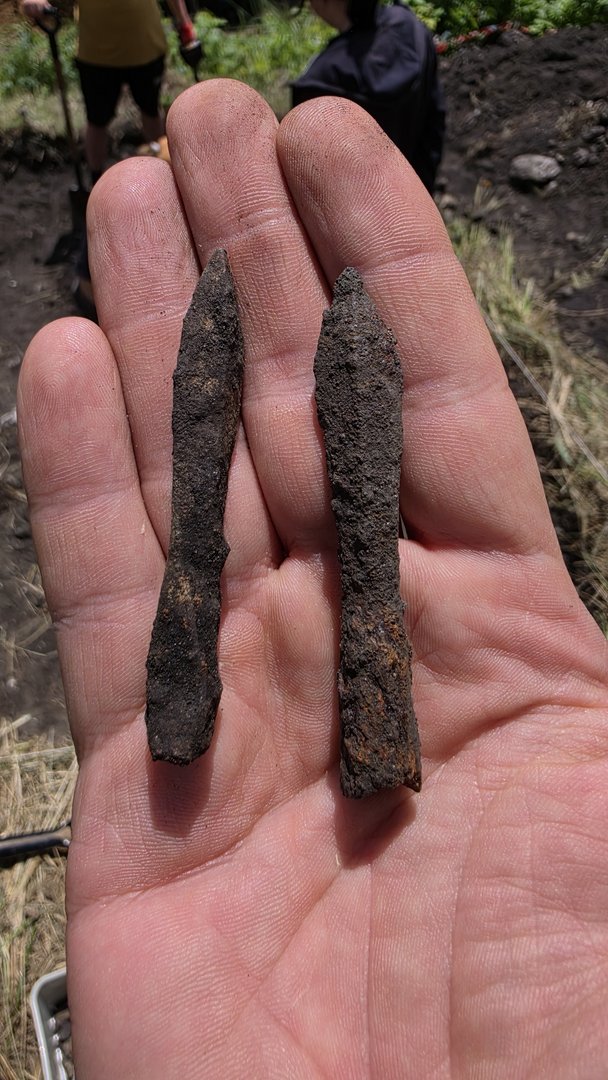
The two-week investigation produced extremely interesting results. In a trench located directly below the preserved wall of a former tower building, archaeologists uncovered an occupation layer containing a very large quantity of pottery fragments and animal bones left after consumption. Numerous military artefacts were also discovered, including crossbow components, a fragment of an axe, and what are believed to be large plates from a medieval suit of armour. The trench also yielded several dozen crossbow bolt heads and arrowheads, which probably constitute evidence of an attack on the castle during the medieval period. Researchers additionally uncovered everyday objects, including a bow-shaped fire striker, fragments of knife sheath fittings, and a relatively large number of costume accessories such as buckles and decorative belt mounts. Metal structural elements from the former buildings, including iron nails and fittings, were also found.
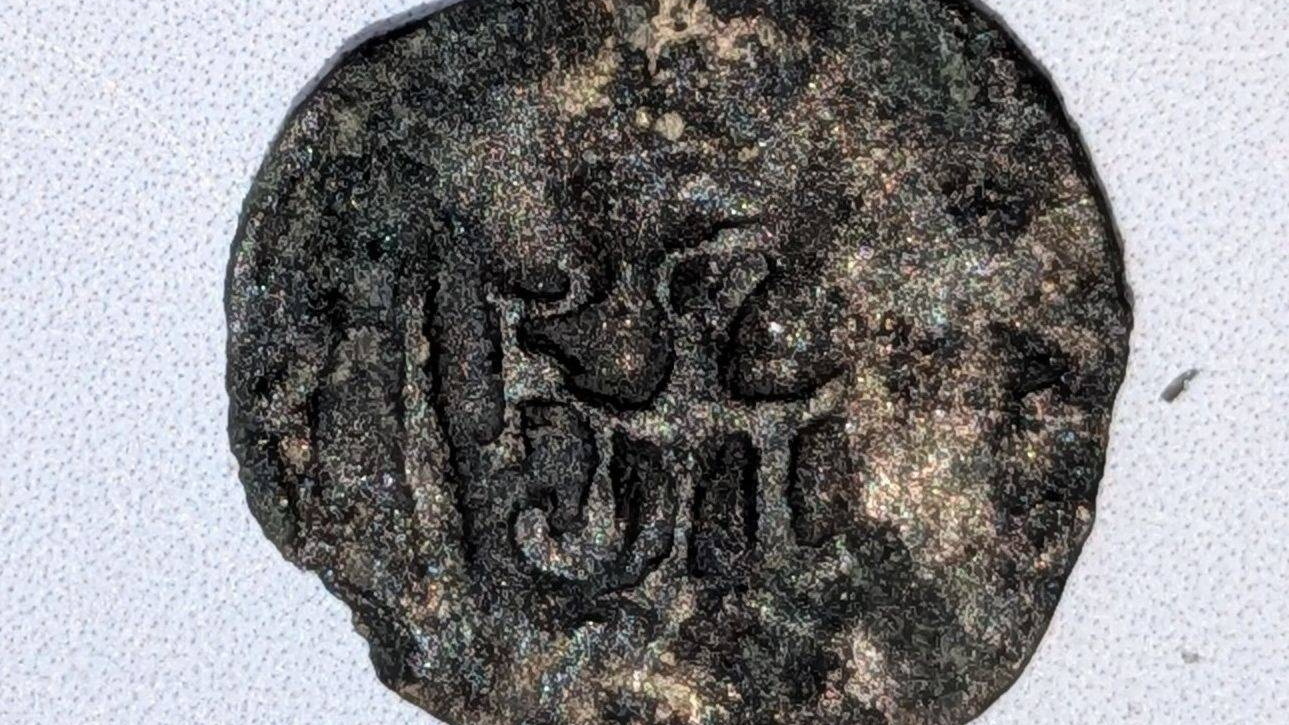
An exceptionally significant discovery was made in a second trench at the foot of the complex, where researchers identified the remains of a former moat surrounding the outer bailey. Originally, the moat measured approximately 7 metres in width and up to 2 metres in depth. Within its fill, alongside numerous pottery fragments and bones, archaeologists found a beautifully decorated costume fitting (possibly from a belt) and a silver coin, most likely a parvus minted in one of the Silesian duchies during the first quarter of the fourteenth century.
The artefacts recovered during the excavations indicate that the castle was occupied during the fourteenth century and possibly into the early fifteenth century. It may have been destroyed during the conflicts between Władysław of Opole and King Władysław Jagiełło at the end of the fourteenth century. Written sources remain silent regarding the castle’s history and ownership, but these issues will form the subject of further historical research. Unlike other castles in the Kraków-Częstochowa Upland, such as those at Olsztyn and Ogrodzieniec, the castle was no longer inhabited during the second half of the fifteenth century or in the early modern period. A large number of samples were collected for archaeobotanical analyses, from which researchers hope to isolate organic material suitable for more precise dating.
As has become customary, the fieldwork also provided an opportunity to explore the surrounding area and welcome distinguished visitors, including Professors: Anna Marciniak-Kajzer, Kalina Skóra, Piotr Strzyż and Piotr Boroń, as well as our graduate and friend Sylwester Chmielowiec.
This year’s research in the Kraków-Częstochowa Upland also included a second stage connected with investigating the circumstances surrounding the tragic history of a married couple who died during the Second World War in Biała Wielka, Lelów municipality. Information about this part of the project will be published soon.
Source and edit: R. Zdaniewicz, O. Ławrynowicz
Photos: W. Bednarska, N. Jaroniak, O. Ławrynowicz