The project investigates the potential of floodplain parks as nature-based solutions supporting cities’ adaptation to climate change through, among other measures, water retention, river restoration, microclimate improvement and biodiversity enhancement.
AQUAlive is coordinated by the University of Antwerp and involves partners from six countries: Belgium, Bulgaria, Italy, Portugal, Poland and Türkiye. Poland is represented by the Institute of Urban and Regional Development (IRMiR) as coordinator, as well as the City of Kraków and the University of Lodz.
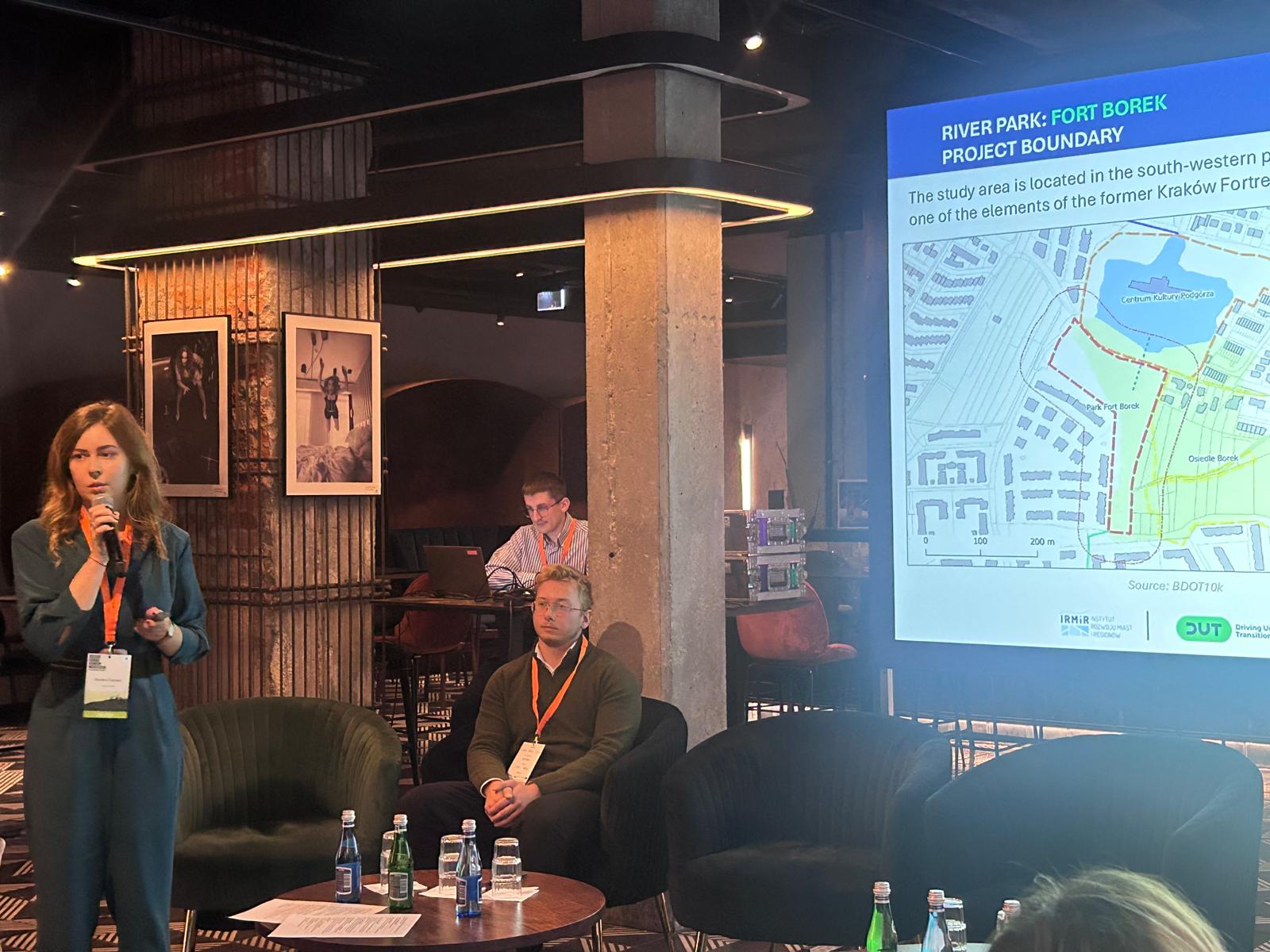
As part of their MA research projects, Karolina and Jakub are studying plant communities and their relationships with the microclimate. In addition, Karolina models water-flow pathways and designs nature-based solutions within an urban catchment area. Jakub models water flow in a river valley and analyses different river restoration scenarios. The students will use their findings to develop concepts for future floodplain parks in Kraków: in the Dłubnia Valley and near Fort Borek. The projects are being carried out in the UNESCO Chair of Ecohydrology and Applied Ecology under the supervision of dr hab. Iwona Wagner, Associate Professor at the University of Lodz.
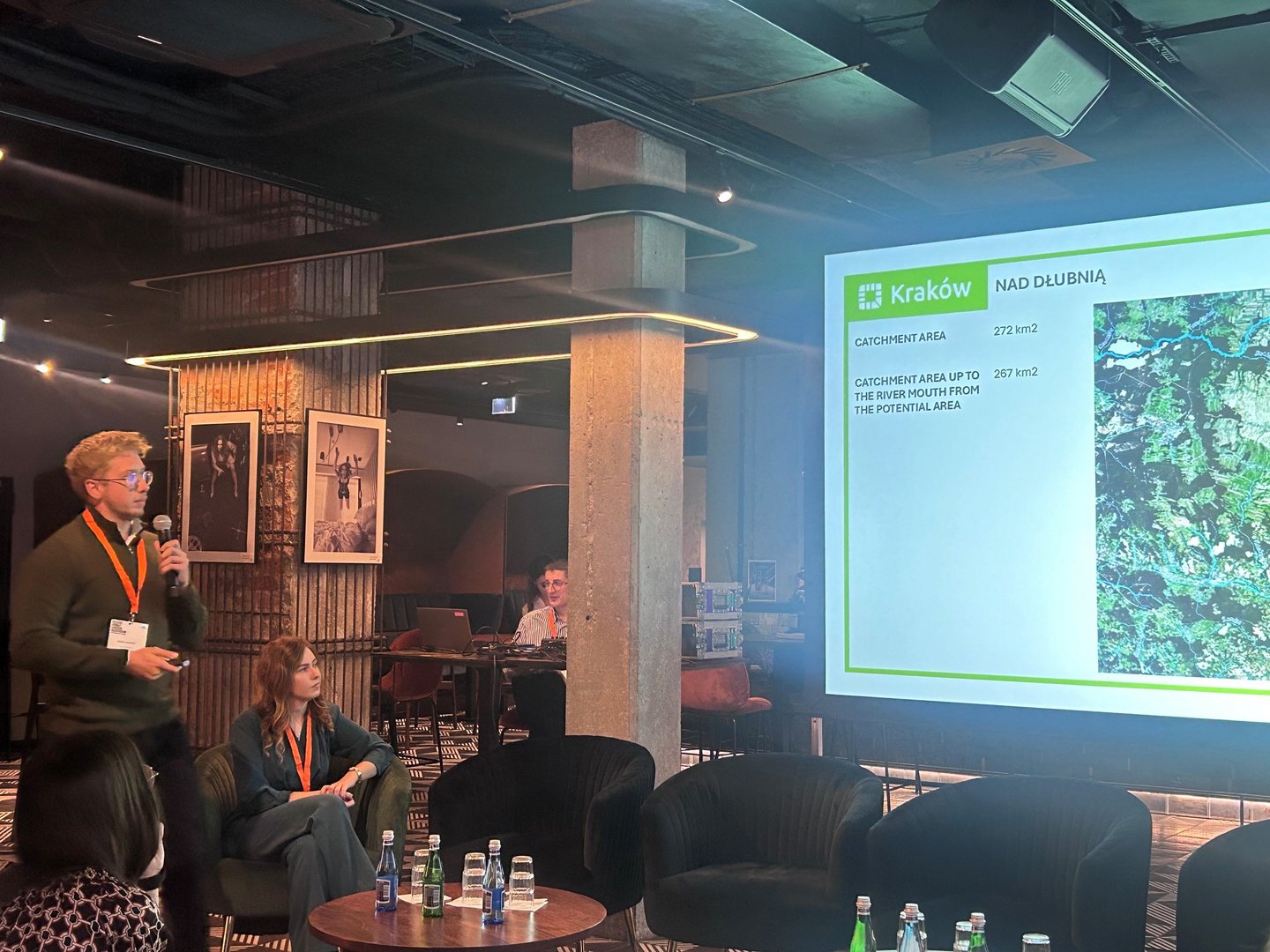
The session was organised and conducted by the Institute of Urban and Regional Development (IRMiR), the leader of the Polish part of the AQUAlive project.
We are delighted that research conducted within the Chair can directly support the design of greener, more climate-resilient and resident-friendly cities!
Source and photos: dr hab. Iwona Wagner, Associate Professor at the University of Lodz (UNESCO Chair of Ecohydrology and Applied Ecology, Faculty of Biology and Environmental Protection, University of Lodz)
Edit: Mateusz Kowalski (Promotion Centre, Faculty of Biology and Environmental Protection, University of Lodz)